Baobab Oil: Comedogenic Rating & Ingredient Analysis
Baobab oil is a golden, nutty oil pressed from the seeds of the iconic African baobab tree, the huge, bottle-shaped tree of the savannah. It is a well-balanced, easy-going facial oil that sits comfortably between the light linoleic oils and the rich oleic ones, which makes it flexible across a range of skin types. It absorbs at a moderate pace, has a mild scent and stores reasonably well, so it has become a popular base oil in nourishing serums and balms for dry and mature skin without being especially heavy.
Quick facts
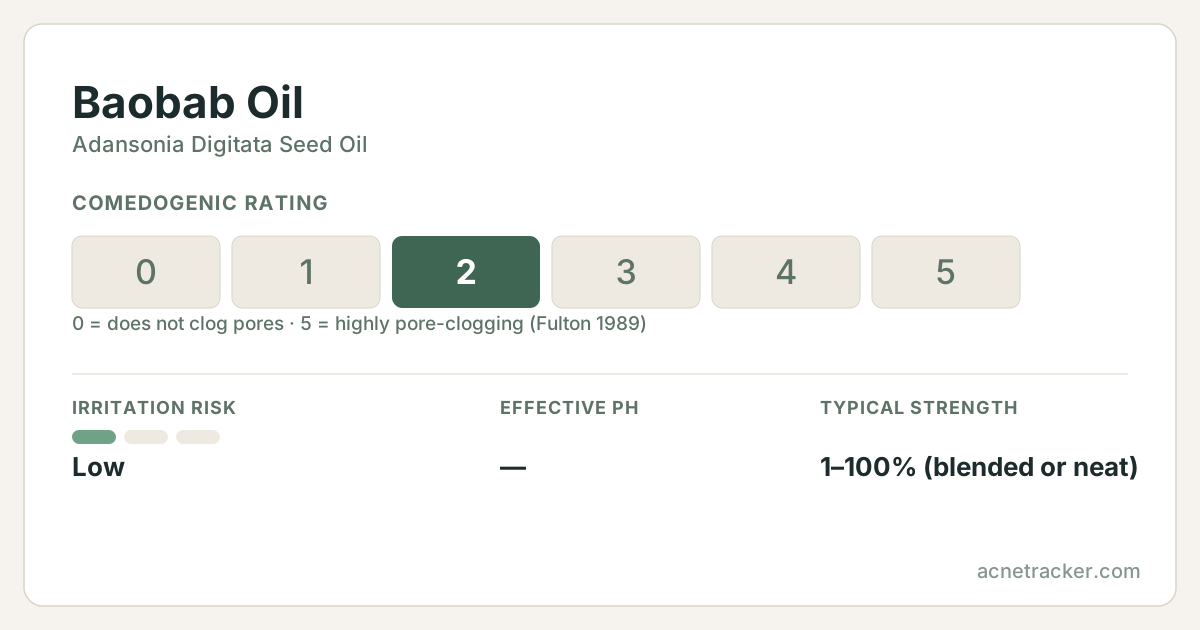
- Comedogenic rating
- our estimate — not measured
- Irritation risk
- Low
- Effective pH
- —
- Typical strength
- 1–100% (blended or neat)
- Pregnancy
- Considered safe
- Suits skin types
- drynormalcombinationmaturesensitive
Where this number comes from
No one has published a comedogenic rating for this ingredient. Fulton's 1989 table tested about 250 raw materials and this was not among them, and we found no later study measuring it. The figure shown is our own reasoning from the ingredient's chemistry and how it is used — treat it as an estimate, not a measurement.
Fulton read his own scale as 0-1 not significant, 2-3 borderline, 4-5 positive. The assay is the rabbit ear at 10% dilution, which the paper itself calls extremely sensitive and not fully predictive of human skin. Ratings describe the raw ingredient; concentration and formulation change real-world behaviour.
Caution profile
The four published fields on this page, on one 0–5 scale. Further from the centre means more care is needed — never that the ingredient is worse.
Derived, not measured: pore-clogging is the published comedogenic rating; irritation maps low/moderate/high to 1/3/5; pregnancy maps safe/caution/avoid to 0/3/5; skin-type limits is how many of the seven skin types this entry does NOT list. Every input is printed in words in the quick-facts card above.
Show the numbers
| Metric | 0–5 | Published field |
|---|---|---|
| Pore-clogging | 2 | 2/5 |
| Irritation | 1 | Low |
| Skin-type limits | 1.4 | 5/7 |
| Pregnancy | 0 | Considered safe |
Working pH and typical strength
Where this ingredient is formulated to sit, and at what concentration.
Both bars come from the fields above: the pH window and the typical strength range published for this ingredient. The tinted column is healthy skin's surface pH (about 4.7–5.75).
Show the numbers
| Metric | 0–5 |
|---|---|
| Typical strength | 1–100% (blended or neat) |
What is it?
Baobab oil has a fairly even split between oleic, linoleic and palmitic fatty acids, which is why it feels balanced rather than very rich or very dry. That mixed profile gives it decent stability and a versatile, cushioning-but-not-greasy finish. It also carries vitamin E and other antioxidants that support the skin surface. Because the fatty-acid balance is moderate rather than oleic-dominant, its pore-clogging potential is middling; its comedogenic rating is not in Fulton's tables, so based on the profile we estimate it at around 2, low-to-moderate.
Benefits
Well-balanced fatty-acid profile
Its even mix of oleic and linoleic acids gives it a versatile feel that suits many skin types, sitting between the lightest and the richest facial oils.
Comforts dry, tight skin
The oil forms a soft, cushioning layer that eases the tightness and flakiness of dry and mature skin without the heaviness of a pure oleic oil.
Antioxidant support
Baobab carries vitamin E and other antioxidants that help protect the skin surface from everyday oxidative stress while it conditions.
Gentle and easy to use
With a mild scent, moderate absorption and reasonable stability, baobab is an uncomplicated oil that layers well over serums and under creams.
How to use
Press a few drops into cleansed, slightly damp skin morning or night, either neat or blended into a moisturiser or another oil such as marula-oil. Its balanced profile makes it suitable for most skin types, though very oily skin should keep the amount modest and combination skin can focus it on drier zones. It works nicely as a final barrier step after a hydrating serum with hyaluronic-acid. Store it cool and dark, and although it is more stable than delicate seed oils, replace it if the smell turns sharp.
Side effects
Baobab oil is generally gentle and well tolerated, with a low irritation risk. Its balanced richness means it is unlikely to feel heavy for most people, though very oily skin may still prefer a lighter oil. As with any botanical oil, occasional individual sensitivity is possible, so patch test if your skin is reactive.
Who should avoid it
There are few restrictions. Very oily, congestion-prone skin should use it in modest amounts or choose a lighter, linoleic-rich oil instead. Patch test first if you have reacted to seed oils before. Topical baobab oil is generally regarded as fine to use during pregnancy, but confirm with your doctor if you are unsure about a specific product.
Pairs well with
Avoid combining with
Frequently asked questions
Is baobab oil good for all skin types?
Its balanced fatty-acid profile makes it one of the more versatile facial oils, comfortable on dry, normal, combination and mature skin. Very oily skin can use it too, but in modest amounts or focused on drier areas.
Does baobab oil clog pores?
Its comedogenic rating is an estimated 2, so it carries a low-to-moderate risk. Most people tolerate it well; if you are very acne-prone, apply it thinly and monitor how congestion-prone areas respond.
How does baobab oil compare to marula oil?
Both are well-tolerated African seed oils, but marula-oil leans more oleic and slightly richer, while baobab has a more even oleic-to-linoleic balance. They layer well together and are often blended.
Can I use baobab oil in the morning?
Yes. Its moderate absorption and mild scent make it fine for daytime, applied as a thin final step under sunscreen. If your skin is oily, keep the amount small so it does not feel heavy under makeup.
Sources & further reading
Medical disclaimer
Find your personal acne triggers
Our free Acne Tracker lets you log breakouts, sleep, stress and diet, and shows you which factors correlate with your flare-ups.