Caprylic/Capric Triglyceride: Comedogenic Rating & Ingredient Analysis
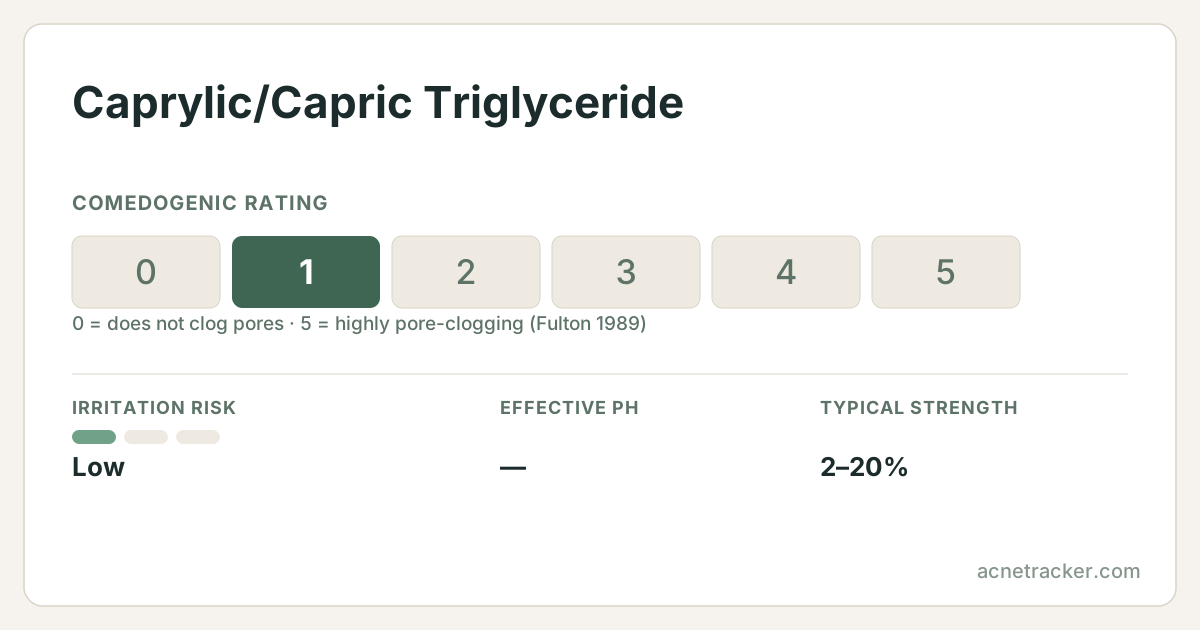
Caprylic/capric triglyceride is one of the most widely used emollients in all of skincare, and if you scan almost any moisturizer, serum or cleansing oil you will likely find it near the top of the list. Derived from coconut oil and glycerin, it is a light, silky, fast-absorbing oil that softens the skin without the greasy, heavy feel of many plant oils. It also doubles as a solvent that helps dissolve oil-loving actives and pigments, which is why it is such a formulating favorite across product types.
Quick facts
- Comedogenic rating
- our estimate — not measured
- Irritation risk
- Low
- Effective pH
- —
- Typical strength
- 2–20%
- Pregnancy
- Considered safe
- Suits skin types
- oilydrycombinationsensitivenormalacne-pronemature
Where this number comes from
No one has published a comedogenic rating for this ingredient. Fulton's 1989 table tested about 250 raw materials and this was not among them, and we found no later study measuring it. The figure shown is our own reasoning from the ingredient's chemistry and how it is used — treat it as an estimate, not a measurement.
Fulton read his own scale as 0-1 not significant, 2-3 borderline, 4-5 positive. The assay is the rabbit ear at 10% dilution, which the paper itself calls extremely sensitive and not fully predictive of human skin. Ratings describe the raw ingredient; concentration and formulation change real-world behaviour.
Caution profile
The four published fields on this page, on one 0–5 scale. Further from the centre means more care is needed — never that the ingredient is worse.
Derived, not measured: pore-clogging is the published comedogenic rating; irritation maps low/moderate/high to 1/3/5; pregnancy maps safe/caution/avoid to 0/3/5; skin-type limits is how many of the seven skin types this entry does NOT list. Every input is printed in words in the quick-facts card above.
Show the numbers
| Metric | 0–5 | Published field |
|---|---|---|
| Pore-clogging | 1 | 1/5 |
| Irritation | 1 | Low |
| Skin-type limits | 0 | 7/7 |
| Pregnancy | 0 | Considered safe |
Working pH and typical strength
Where this ingredient is formulated to sit, and at what concentration.
Both bars come from the fields above: the pH window and the typical strength range published for this ingredient. The tinted column is healthy skin's surface pH (about 4.7–5.75).
Show the numbers
| Metric | 0–5 |
|---|---|
| Typical strength | 2–20% |
What is it?
Caprylic/capric triglyceride is made by combining glycerin with two medium-chain fatty acids, caprylic acid and capric acid, that are isolated from coconut or palm oil. This produces a purified, stable oil often called fractionated coconut oil or MCT oil. Because the fatty acids are medium-length, the resulting oil is much lighter and less greasy than whole coconut oil, and it resists oxidation, so it stays fresh. On the skin it acts as an emollient that smooths and softens the surface and reinforces the feel of the moisture barrier, while carrying oil-soluble ingredients evenly through the formula.
Benefits
Lightweight softening
It smooths and conditions the skin with a silky, fast-absorbing feel that lacks the heaviness of richer plant oils.
Supports the moisture barrier
As an emollient it fills in and softens the skin surface, helping reduce roughness and the tight feel of dryness.
Dissolves oil-loving actives
It works as a mild solvent, helping distribute oil-soluble ingredients and pigments evenly through a product.
Stable and clean-feeling
Its resistance to oxidation keeps formulas fresh, and its neutral, near-odorless nature suits sensitive and fragrance-free products.
How to use
Caprylic/capric triglyceride is already part of the moisturizer, serum, oil or cleanser, so simply use the product as normal. It suits nearly all skin types thanks to its light feel, and even oily skin usually tolerates it well. There are no special layering rules; it is an emollient and carrier that improves texture and helps condition the skin.
Side effects
Caprylic/capric triglyceride is considered low-irritation with a comedogenic rating of about 1, so it is a low risk for clogging pores relative to heavier oils. It is generally very well tolerated, including by sensitive skin. A minority of highly congestion-prone individuals may still prefer to keep total oil content low, judging the whole formula rather than this one ingredient.
Who should avoid it
Almost no one needs to avoid it. Fractionation is the reason why: stripping coconut oil down to its medium-chain fatty acids removes the heavier components, which is why acne-prone skin usually gets on with this ester where whole coconut oil is a different proposition entirely. The most congestion-prone users can still watch the total oil load across a routine rather than a single ingredient. Nothing about pregnancy or breastfeeding changes the answer either — this is a fractionated fat, not an active, and no restriction attaches to it.
Pairs well with
Frequently asked questions
Is caprylic/capric triglyceride safe?
Yes. It is a lightweight, purified coconut-derived emollient with a comedogenic rating around 1 and low irritation potential, considered safe and extremely widely used.
What does caprylic/capric triglyceride do?
It is an emollient that softens and conditions the skin with a light, silky feel, and it acts as a solvent that helps distribute oil-soluble actives evenly.
Does caprylic/capric triglyceride clog pores?
It has a low comedogenic rating (about 1) and is lighter than most oils, so it is generally fine for acne-prone skin, though very congestion-prone users watch total oil load.
Is it the same as coconut oil?
No. It is derived from coconut oil but fractionated to keep only lighter medium-chain fatty acids, making it far lighter and less pore-clogging than whole coconut oil.
Is caprylic/capric triglyceride good for sensitive skin?
Yes. It is neutral, nearly odorless, stable and non-irritating, which makes it a common choice in gentle and fragrance-free formulations.
Where this ingredient shows up here
Counted across this database, not the web — these are the pages on this site that reason about this ingredient.
Buying guides 1
Sources & further reading
Medical disclaimer
Find your personal acne triggers
Our free Acne Tracker lets you log breakouts, sleep, stress and diet, and shows you which factors correlate with your flare-ups.