Lecithin: Comedogenic Rating & Ingredient Analysis
Lecithin is a natural mixture of phospholipids, most often derived from soybeans or sunflower, that has quietly served skincare for decades as both an emollient and an emulsifier. Phospholipids are the same class of molecules that make up cell membranes, so lecithin is inherently skin-compatible. In a formula it helps blend oil and water into a smooth, stable cream, softens and conditions the skin, and, because it forms membrane-like structures, can help carry other ingredients into the upper layers. It is a versatile, gentle building-block ingredient rather than a headline active, but it improves both the feel and function of the products it appears in.
Quick facts
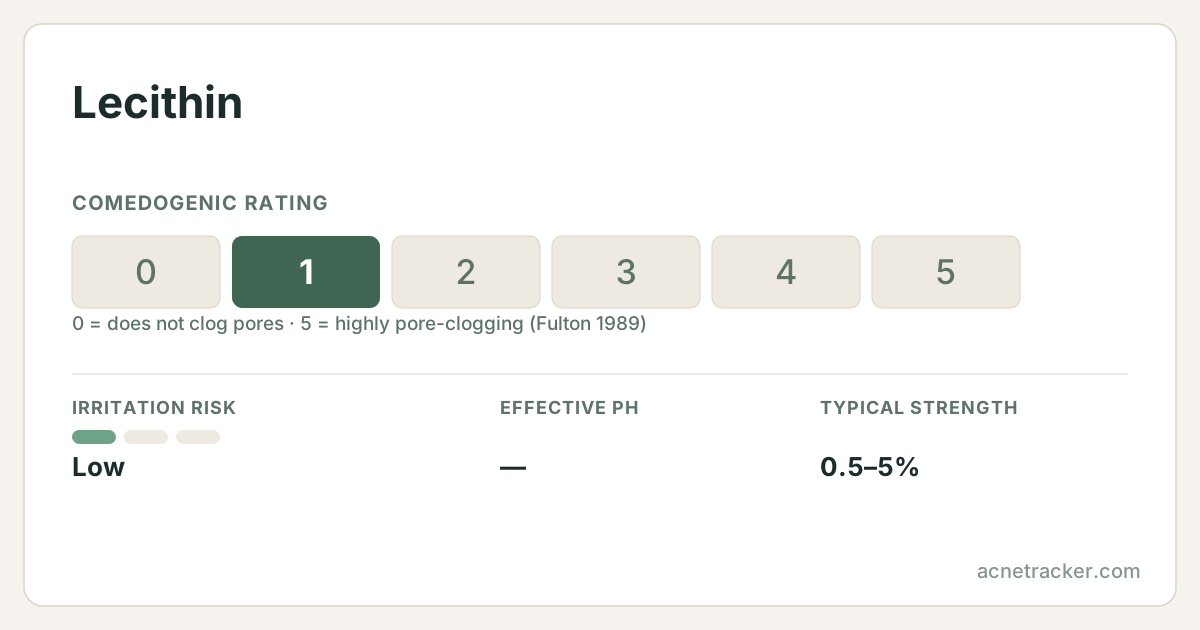
- Comedogenic rating
- our estimate — not measured
- Irritation risk
- Low
- Effective pH
- —
- Typical strength
- 0.5–5%
- Pregnancy
- Considered safe
- Suits skin types
- drysensitivenormalcombinationmatureacne-prone
Where this number comes from
No one has published a comedogenic rating for this ingredient. Fulton's 1989 table tested about 250 raw materials and this was not among them, and we found no later study measuring it. The figure shown is our own reasoning from the ingredient's chemistry and how it is used — treat it as an estimate, not a measurement.
Fulton read his own scale as 0-1 not significant, 2-3 borderline, 4-5 positive. The assay is the rabbit ear at 10% dilution, which the paper itself calls extremely sensitive and not fully predictive of human skin. Ratings describe the raw ingredient; concentration and formulation change real-world behaviour.
Caution profile
The four published fields on this page, on one 0–5 scale. Further from the centre means more care is needed — never that the ingredient is worse.
Derived, not measured: pore-clogging is the published comedogenic rating; irritation maps low/moderate/high to 1/3/5; pregnancy maps safe/caution/avoid to 0/3/5; skin-type limits is how many of the seven skin types this entry does NOT list. Every input is printed in words in the quick-facts card above.
Show the numbers
| Metric | 0–5 | Published field |
|---|---|---|
| Pore-clogging | 1 | 1/5 |
| Irritation | 1 | Low |
| Skin-type limits | 0.7 | 6/7 |
| Pregnancy | 0 | Considered safe |
Working pH and typical strength
Where this ingredient is formulated to sit, and at what concentration.
Both bars come from the fields above: the pH window and the typical strength range published for this ingredient. The tinted column is healthy skin's surface pH (about 4.7–5.75).
Show the numbers
| Metric | 0–5 |
|---|---|
| Typical strength | 0.5–5% |
What is it?
Lecithin is not a single molecule but a blend of phospholipids, chiefly phosphatidylcholine, along with some fatty acids and other lipids. Each phospholipid has a water-loving head and two oil-loving tails, exactly the structure that lets cell membranes and the skin barrier hold together. This dual nature is why lecithin works as an emulsifier, bridging the oil and water phases so a cream stays uniform, and why it can self-assemble into liposomes — tiny spheres that can encapsulate and help deliver other actives. On the skin it acts as an emollient, softening and smoothing, and its phospholipids are compatible with the barrier. Standard lecithin contains some unsaturated fatty acids, so it is more prone to oxidation than its hydrogenated form; it carries a low comedogenic rating.
Benefits
Softens and conditions
As a phospholipid emollient, lecithin smooths and softens the skin surface, easing dryness and improving suppleness.
Blends oil and water
Its dual-natured structure lets it emulsify formulas, keeping creams and lotions smooth, stable and pleasant to apply.
Helps deliver actives
Lecithin can form liposomes that encapsulate other ingredients and help carry them into the upper layers of the skin.
Barrier-compatible lipids
Being made of the same phospholipids as cell membranes, it is inherently compatible with and supportive of the skin barrier.
How to use
You use lecithin simply through the products that contain it, morning or night. As an emollient and emulsifier it is usually part of the base of a moisturiser or serum rather than something you dose. If you have very oily, acne-prone skin, note that standard lecithin is a mild penetration enhancer and richer than its hydrogenated version, so judge the whole formula. It pairs naturally with barrier lipids like ceramides, softening emollients like squalane, and humectants such as hyaluronic acid. Nothing needs easing in, and the one thing worth watching is not the sun but the calendar: an unsaturated lipid ages in the jar, so finish the bottle rather than keeping it for years.
Side effects
Lecithin is generally well tolerated, with irritation and allergy being uncommon. It has a low comedogenic rating, though very rich formulas built around it may feel heavy on oily skin. Because standard lecithin contains unsaturated fatty acids, it can oxidise over time, which is one reason hydrogenated lecithin is often preferred for stability. It does not increase sun sensitivity. Those with a soy allergy usually tolerate soy-derived lecithin, as it is highly purified, but may prefer sunflower-derived versions.
Who should avoid it
No skin type strictly needs to avoid lecithin. Very oily or acne-prone skin may prefer lighter formulas or the hydrogenated form. People with severe soy allergies who are cautious can choose sunflower-derived lecithin or patch test first.
Pairs well with
Frequently asked questions
What does lecithin do in skincare?
It works as an emollient that softens skin, an emulsifier that blends oil and water into stable creams, and a carrier that can help deliver other actives into the upper skin layers.
Is lecithin comedogenic?
It has a low comedogenic rating. Standard lecithin is richer than its hydrogenated form, so very oily skin should judge the overall formula rather than the ingredient alone.
Is lecithin safe for soy allergy?
Soy-derived lecithin is highly purified and usually tolerated, but if you are concerned, sunflower-derived lecithin is a common alternative. Patch testing can help you check.
What is the difference between lecithin and hydrogenated lecithin?
Hydrogenated lecithin has had its fatty acids saturated, making it more stable and resistant to oxidation, with a lighter feel. Standard lecithin is richer but more prone to going off.
Sources & further reading
Medical disclaimer
Find your personal acne triggers
Our free Acne Tracker lets you log breakouts, sleep, stress and diet, and shows you which factors correlate with your flare-ups.