How to Choose a Face Mask for a Damaged Barrier
The most useful advice on this page is that you probably should not buy anything. A damaged barrier is a stratum corneum whose lipid matrix has been disrupted — usually by too many actives, too often, sometimes by over-cleansing or a course of something strong — and it presents as stinging from products that never stung, tightness, flaking, redness, and a face that reacts to everything. It is also self-repairing. Given a few weeks without further insult, skin rebuilds its own lipids, which means the intervention with the best evidence is subtraction. Every mask you add is another exposure to a surface that is currently letting everything through, and the format's selling point — driving more of a formula into the skin — is precisely the wrong feature right now.
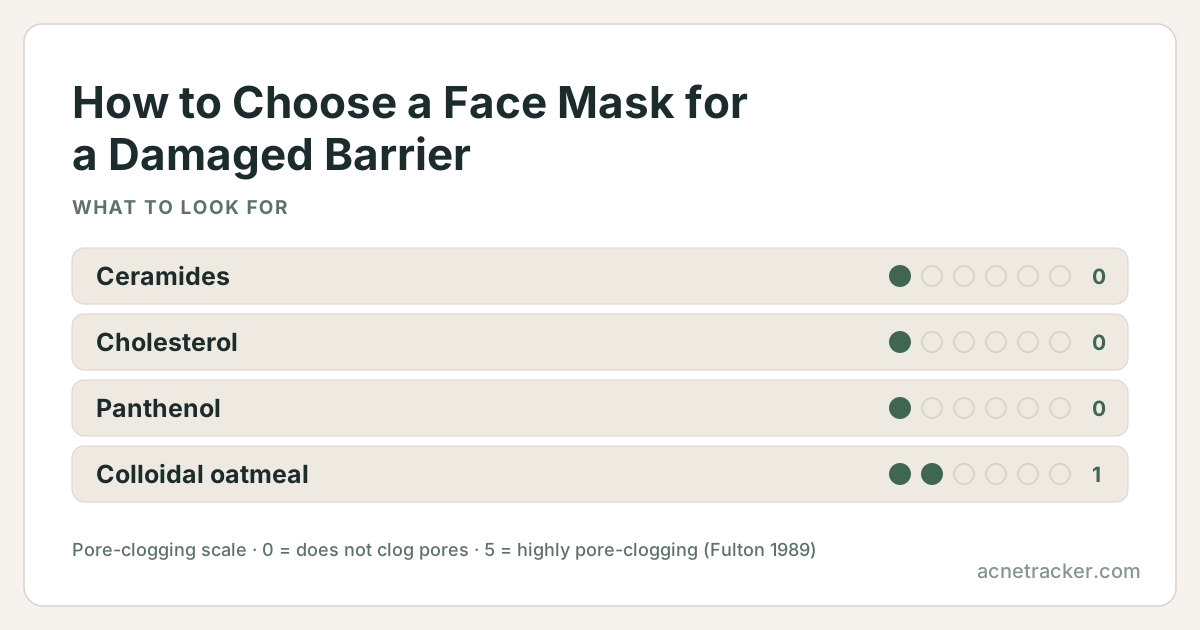
Ingredients to look for
| Ingredient | Why it matters |
|---|---|
| Ceramides | The lipid class the damaged matrix is short of, and the most direct thing you can supply. A cream mask is simply a longer application of a good ceramide moisturiser. |
| Cholesterol | One of the three lipids the barrier is built from. Formulas combining ceramides, cholesterol and fatty acids reflect how the barrier is actually assembled rather than a single hero. |
| Panthenol | Among the better-evidenced ingredients for barrier recovery specifically, rather than for hydration in general. Fulton rates it 0 and it rarely stings, which matters now. |
| Colloidal oatmeal | Protective and anti-inflammatory, recognised by the FDA as an OTC skin protectant. Fulton lists no rating for it, so none is claimed here. |
| Glycerin | Hydrates without any mechanism to misfire, and there is nothing in it to react to. Boring is the entire specification while you are healing. |
| Squalane | A simple emollient with a very low irritation profile. Fulton rates it 1. It fills surface gaps without adding anything your skin has to process. |
Ingredients to avoid
| Ingredient | Why it matters |
|---|---|
| Every acid, retinoid and exfoliating mask | Not reduced — stopped, completely, until the stinging goes. This is the whole treatment. People try to keep a 'gentle' acid going through repair and that is why repair takes months instead of weeks. |
| Clay masks | Absorbency removes the lipids you are trying to rebuild. A barrier mid-repair is the worst possible candidate for a product designed to strip the surface. |
| Sheet masks and heavy occlusion of unknown formulas | A compromised barrier is more permeable, so anything in that essence gets further in than it would on healthy skin. The gentle reputation of the format does not survive the physics. |
| Fragrance, essential oils and any tingle | Compromised skin is far more reactive, and this is when a fragrance you tolerated for years becomes a sensitisation. Tingling now is damage, without any interpretive room. |
| Adding a 'barrier repair' mask on top of the routine that broke it | The commonest mistake in this concern. You cannot out-repair ongoing damage — the actives come out first, and then the skin does the work itself. |
How to choose
Reframe the question, because 'which mask' is not really the one you need answered. Barrier repair is a subtraction problem: strip your routine to a gentle non-foaming cleanser, a bland moisturiser with ceramides, and daily sunscreen. Nothing else. No acids, no retinoids, no vitamin C, no exfoliation, no clay, no tools. Most people see a clear improvement in one to two weeks and full recovery in four to six, and that timeline is set by how fast your skin makes lipids, not by what you buy. Within that, one kind of mask is defensible: a bland, fragrance-free cream mask with ceramides and panthenol, used as a long moisturiser application. It is not doing anything a good moisturiser is not — you are giving the same lipids twenty minutes instead of two — but it is harmless and it feels like progress, which matters more than it sounds when the alternative is impatiently reintroducing an acid. Judge candidates on the length of the ingredient list and the absence of anything active. If you cannot tell whether a mask is safe, the answer is to skip it and moisturise; the cost of being wrong is measured in weeks. And once healed, reintroduce one thing at a time, every two weeks, at half the frequency you used before — because barrier damage is almost always a story about how fast someone rebuilt their routine after the last time.
How to apply
Cool or lukewarm water only — hot water strips further and stings compromised skin. No cloths, no brushes, no massage; use fingertips and light pressure. Do not rinse a cream mask off if you can massage it in instead, since the residue is the product. Stop immediately at any sting rather than waiting to see. Twice a week is plenty and daily moisturiser matters far more. If your skin is stinging, weeping, cracked or has spreading redness, that is beyond a barrier story and worth a doctor's eyes — dermatitis and an over-exfoliated barrier look similar and are managed differently.
Frequently asked questions
Can a mask repair a damaged skin barrier?
No mask repairs it — your skin does, by rebuilding its own lipids once you stop the damage. A bland ceramide cream mask can supply raw material and comfort while that happens, which is a supporting role. The active step is stopping, not applying.
How long should I stop masking for while my barrier recovers?
Until nothing stings — typically one to two weeks before the sensitivity settles and four to six before the barrier is genuinely rebuilt. Anything absorbent or exfoliating stays off for that whole window. A bland cream mask is optional throughout and changes nothing about the timeline.
Are hydrating sheet masks safe for a damaged barrier?
Less safe than they sound. A compromised barrier is more permeable, so the essence penetrates further than it would on healthy skin — and sheet essences are commonly fragranced. A plain cream mask is the safer choice.
Why does everything sting on my face now?
Because the lipid matrix that normally keeps irritants out has been disrupted, so ingredients reach nerve endings they would not normally reach. Stinging from products you used happily for years is the classic signature of a compromised barrier.
When can I use acids again after barrier damage?
Once nothing has stung for two consecutive weeks — then reintroduce one product, at half your old frequency, and wait a fortnight before adding anything else. Rushing this is how most people end up back where they started.
Sources & further reading
There is no single study of this exact question. The guidance here is reasoned from the ingredient profiles below, each of which carries its own references:
- Ceramides3 refs
- Cholesterol2 refs
- Panthenol3 refs
- Colloidal Oatmeal2 refs
- Glycerin3 refs
- Squalane3 refs
Show every reference behind this page (12)
- DermNet — Skin barrier functioncited by Ceramides
- PubChem — Ceramide compound summarycited by Ceramides
- European Commission CosIng database — Ceramide NPcited by Ceramides, Panthenol, Glycerin, Squalane
- PubChem — Cholesterol (CID 5997)cited by Cholesterol
- PubMed — Optimization of physiological lipid mixtures for barrier repaircited by Cholesterol
- PubChem — Panthenol compound summarycited by Panthenol
- Safety Assessment of Panthenol, Pantothenic Acid, and Derivatives as Used in Cosmetics (PubMed)cited by Panthenol
- FDA OTC monograph — skin protectant drug products (colloidal oatmeal)cited by Colloidal Oatmeal
- PubMed — Colloidal oatmeal formulations as adjunct treatments in atopic dermatitis (J Drugs Dermatol, 2012)cited by Colloidal Oatmeal
- PubChem — Glycerol compound summarycited by Glycerin
- DermNet — Moisturiserscited by Glycerin, Squalane
- PubChem — Squalane compound summarycited by Squalane
Medical disclaimer
Ingredients mentioned on this page
Find your personal acne triggers
Our free Acne Tracker lets you log breakouts, sleep, stress and diet, and shows you which factors correlate with your flare-ups.