How to Choose a Face Mask for Dry Skin
Dry skin is a lipid problem. The barrier is short of the ceramides, cholesterol and fatty acids that hold the outermost cells together, so water escapes faster than it should and the surface turns rough, tight and flaky. That distinction matters for masking, because it tells you exactly which half of the aisle to ignore. Every absorbent clay product is designed to remove lipids, which is the last thing your barrier needs. What genuinely helps is a mask that supplies fats and slows evaporation for long enough that the skin underneath can catch up — and once you describe it that way, you may notice a mask like that is simply a rich moisturiser with a longer sitting time.
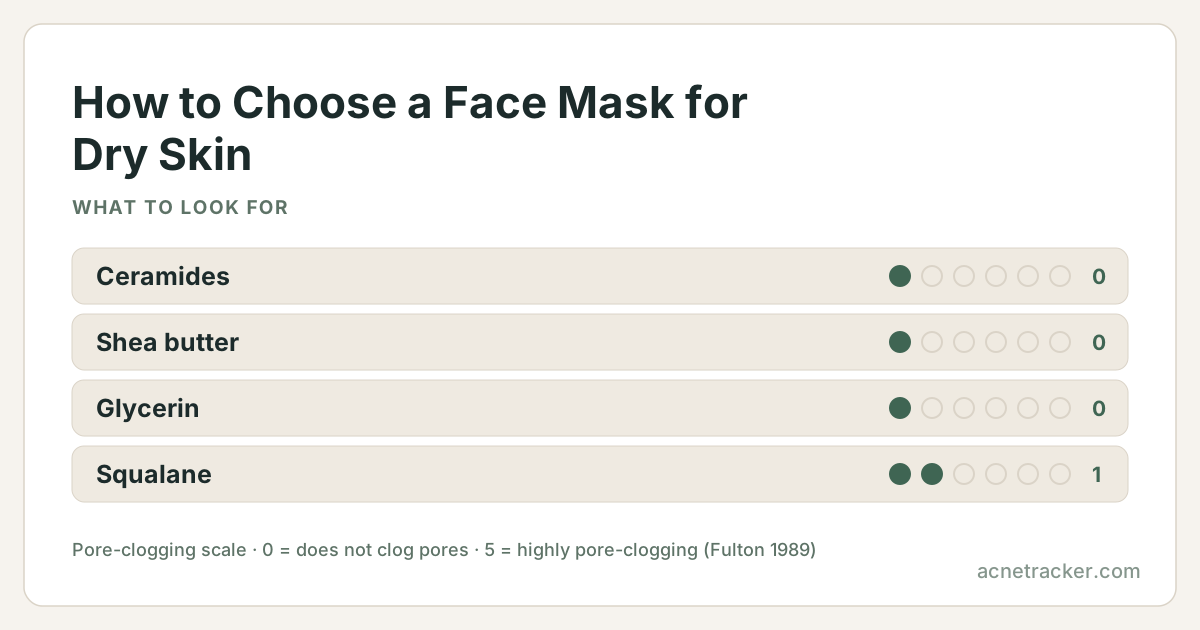
Ingredients to look for
| Ingredient | Why it matters |
|---|---|
| Ceramides | The lipid class dry skin is short of. A cream mask with ceramides high in the list is topping up the actual missing material rather than covering for it. |
| Shea butter | A rich emollient that fills the gaps between surface cells so skin stops feeling rough. Reproduced comedogenicity tables put it at 0, though the number is not from Fulton's own table. |
| Glycerin | Draws water into the stratum corneum and holds it there. Fulton rates it 0. Under a mask it has time to work rather than flashing off. |
| Squalane | A lightweight, stable emollient that mimics a lipid the skin already makes. Fulton rates it 1 — worth knowing if you are dry and also breakout-prone. |
| Panthenol | Humectant and soothing, with reasonable data on barrier recovery. Fulton rates it 0. It is why so many repair masks feel calmer than they look. |
Ingredients to avoid
| Ingredient | Why it matters |
|---|---|
| Clay masks of any colour | Absorbency is the mechanism, and lipid removal is what dry skin least needs. This is the one concern where the flagship mask category is simply the wrong product. |
| Peel-off masks | The film strips loose surface corneocytes — the ones a dry barrier is already shedding untidily. It leaves skin looking smoother for an hour and more fragile afterwards. |
| Strong AHA masks on visibly flaking skin | Flaking is a barrier that has already failed. Acid on top of it is exposure without repair; fix the lipids first, exfoliate later if you still need to. |
| Denatured alcohol and high fragrance loads | Both are commonest in the 'refreshing' masks dry skin gravitates towards, and both accelerate water loss from a barrier that is already leaking. |
How to choose
The useful question is what the mask leaves behind, not what it does while it is on. A cream or balm mask that absorbs and stays put is a rich moisturiser given twenty minutes instead of two, and that is a real if unglamorous benefit — the extra dwell time lets emollients settle into the surface rather than being rubbed in and half-lost. A sleeping mask is the same product with a marketing name; the occlusive film it forms overnight slows transepidermal water loss for hours, which is a genuine mechanism and also exactly what a good night cream does. Sheet masks are a different proposition: they deliver water and humectants under occlusion, so they are excellent for a dehydrated surface and much less relevant to a lipid-poor one. Read the base of the formula rather than the hero ingredient. Butters, ceramides and squalane near the top mean the mask can actually repair; water, alcohol and a botanical name near the top mean it will feel nice for an hour. If your dryness is seasonal, the mask is a supplement to a richer daily cream, not a substitute for it.
How to apply
Apply to damp skin — the mask's job is to trap water, so give it some to trap. A generous layer is appropriate here, unlike with clay, and there is no benefit in rinsing a cream mask off with a cloth: massage the residue in instead. Twenty minutes is plenty. A sleeping mask goes on last, over your normal routine, on the nights you need it rather than every night. In a heated indoor winter, two or three cream masks per week alongside a richer daily moisturiser is a sensible rhythm.
Frequently asked questions
Are clay masks bad for dry skin?
Bad is strong, but they are the wrong tool. Clay's entire function is absorbing oil, and a dry barrier is already short of it. If you love the ritual, use clay only on an oily nose and something richer everywhere else.
What is the difference between a sleeping mask and a night cream?
Mostly the name and the marketing. A sleeping mask is an occlusive moisturiser designed to sit on the skin for hours. That is a legitimate mechanism — it just is not a different one from a good night cream.
Should I rinse off a cream mask?
Usually not. If it is an emollient formula, the leftover product is the point; massage it in. Rinsing washes off the lipids you applied the mask to deliver in the first place.
Is a sheet mask good for dry skin?
It is better for dehydrated skin than dry skin. A sheet delivers water and humectants, which helps briefly, but water evaporates from a lipid-poor barrier quickly. If you use one, seal it with a cream immediately after.
How often can dry skin use a hydrating mask?
As often as you like, within reason — unlike absorbent masks these are not an exposure. Two or three times a week is typical, and nightly use of a sleeping mask during a cold winter is perfectly reasonable.
Sources & further reading
There is no single study of this exact question. The guidance here is reasoned from the ingredient profiles below, each of which carries its own references:
- Ceramides3 refs
- Shea Butter3 refs
- Glycerin3 refs
- Squalane3 refs
- Panthenol3 refs
Show every reference behind this page (10)
- DermNet — Skin barrier functioncited by Ceramides
- PubChem — Ceramide compound summarycited by Ceramides
- European Commission CosIng database — Ceramide NPcited by Ceramides, Shea Butter, Glycerin, Squalane, Panthenol
- PubChem — Stearic acid (major shea fatty acid)cited by Shea Butter
- Safety Assessment of Butyrospermum parkii (Shea)-Derived Ingredients as Used in Cosmetics (PubMed)cited by Shea Butter
- PubChem — Glycerol compound summarycited by Glycerin
- DermNet — Moisturiserscited by Glycerin, Squalane
- PubChem — Squalane compound summarycited by Squalane
- PubChem — Panthenol compound summarycited by Panthenol
- Safety Assessment of Panthenol, Pantothenic Acid, and Derivatives as Used in Cosmetics (PubMed)cited by Panthenol
Medical disclaimer
Ingredients mentioned on this page
Find your personal acne triggers
Our free Acne Tracker lets you log breakouts, sleep, stress and diet, and shows you which factors correlate with your flare-ups.