Can You Mix Mandelic Acid and Kojic Acid?
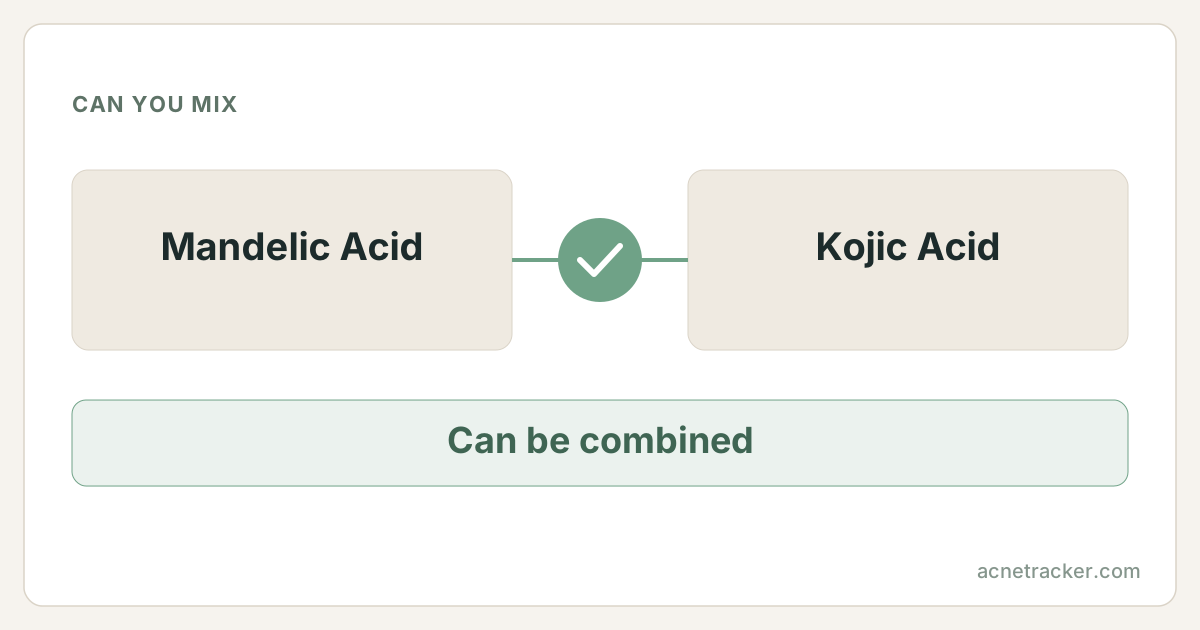
Yes, and it is an effective brightening duo for dark marks and uneven tone. Mandelic acid resurfaces to lift pigment already in the skin, while kojic acid inhibits tyrosinase to slow new melanin. Both are gentle by their category's standards, but kojic acid can sensitise some people, so introduce them one at a time and lean on sunscreen.
How this pairing resolves
The two ingredients, their published numbers, and where they land together.
The numbers beside each ingredient are its published comedogenic rating and effective pH window, taken from its own profile page.
Show the numbers
| Ingredients | Metric | 0–5 |
|---|---|---|
| Mandelic Acid | Comedogenic rating | 0/5 |
| Mandelic Acid | Effective pH | 3.0–4.0 |
| Kojic Acid | Comedogenic rating | 0/5 |
| Kojic Acid | Effective pH | 4.0–5.0 |
Why
Kojic acid is a tyrosinase inhibitor derived from fungi used in fermentation; it binds the copper that the pigment-making enzyme needs, dialling down melanin production at the source. Mandelic acid tackles the pigment that is already deposited, accelerating turnover so those cells are shed and replaced. Because the two target different points of the pigmentation cycle — production versus removal — they compound rather than duplicate, which is why brightening blends often combine several such actives. There is no chemical incompatibility: kojic acid is itself mildly acidic and stable in the low-pH environment mandelic acid creates, so they layer without destabilising. The reason for a slightly more cautious tone than other mandelic pairings is tolerance, not chemistry — kojic acid can be irritating or, rarely, sensitising for some users, and stacking it with any exfoliant raises the total load on the skin. On pigment-prone and deeper skin tones that is worth respecting, because irritation can itself darken marks. Used sensibly, though, this is one of the more powerful gentle routes to a more even complexion.
How to combine them
Introduce them separately so you can spot any reaction: start kojic acid alone for a week or two, then add mandelic acid on two or three evenings. On a shared evening, apply mandelic acid to clean, dry skin, wait five to ten minutes, then apply kojic acid and moisturiser. Many kojic acid products are designed for once- or twice-daily use, so it can also run in the morning with mandelic acid kept to the evening — a split that lowers the combined irritation. Daily broad-spectrum SPF 30+ is essential: it protects fading marks from re-darkening and covers the extra photosensitivity mandelic acid brings. Keep the routine simple while pigment corrects, avoid piling on further acids, and give it eight to twelve weeks. If kojic acid stings on its own, lower its frequency before blaming the combination.
Example routine
| When | Steps |
|---|---|
| Morning | Cleanser → Kojic acid (or arbutin) → Moisturizer → SPF 30+ |
| Evening (2–3× week) | Cleanser → Mandelic acid → wait 5–10 min → Kojic acid → Moisturizer |
| Other evenings | Cleanser → Moisturizer |
Warning signs
Frequently asked questions
Is mandelic acid and kojic acid good for hyperpigmentation?
Yes. Kojic acid slows new melanin at the enzyme level while mandelic acid resurfaces to clear pigment already in the skin, so together they fade dark marks and even out tone faster than either alone.
Which is more irritating, kojic acid or mandelic acid?
Kojic acid is the more likely to sting or sensitise for some people, while mandelic acid is the gentlest AHA. Introduce kojic acid first on its own so you can gauge how your skin handles it.
Should kojic acid go before or after mandelic acid?
After. Mandelic acid needs bare skin at its low pH first; apply kojic acid a few minutes later, then moisturiser. Splitting kojic acid to mornings lowers the combined irritation.
How long does mandelic acid and kojic acid take to brighten skin?
Give it eight to twelve weeks of consistent use with daily sunscreen. Brightening is gradual, and skipping SPF lets UV re-stimulate the pigment you are working to fade.
Sources & further reading
There is no single study of this exact question. The guidance here is reasoned from the ingredient profiles below, each of which carries its own references:
- Mandelic Acid2 refs
- Kojic Acid3 refs
Show every reference behind this page (5)
- Mandelic acid — PubChem compound summarycited by Mandelic Acid
- DermNet — Alpha hydroxy acidscited by Mandelic Acid
- PubChem — Kojic acid compound summarycited by Kojic Acid
- Zilles JC et al. Biological activities and safety data of kojic acid and its derivatives: A review. Exp Dermatol 2022 Oct (PubMed)cited by Kojic Acid
- DermNet — Hyperpigmentationcited by Kojic Acid
Medical disclaimer
Ingredients mentioned on this page
Find your personal acne triggers
Our free Acne Tracker lets you log breakouts, sleep, stress and diet, and shows you which factors correlate with your flare-ups.