How to Choose a Chemical Exfoliant for Combination Skin
Combination skin sets up a small dilemma: the oily T-zone often wants a stronger, oil-soluble acid, while the drier cheeks want something gentle and hydrating. The answer is not a compromise product that serves neither area well, but understanding the acid families so you can choose one balanced formula — or treat zones differently. This guide explains why mandelic acid and PHAs make good all-over choices, where salicylic acid earns a spot on the T-zone, and how to avoid over-treating the cheeks. We review ingredient profiles rather than brands, so you can match an exfoliant to the two skin types you are actually managing.
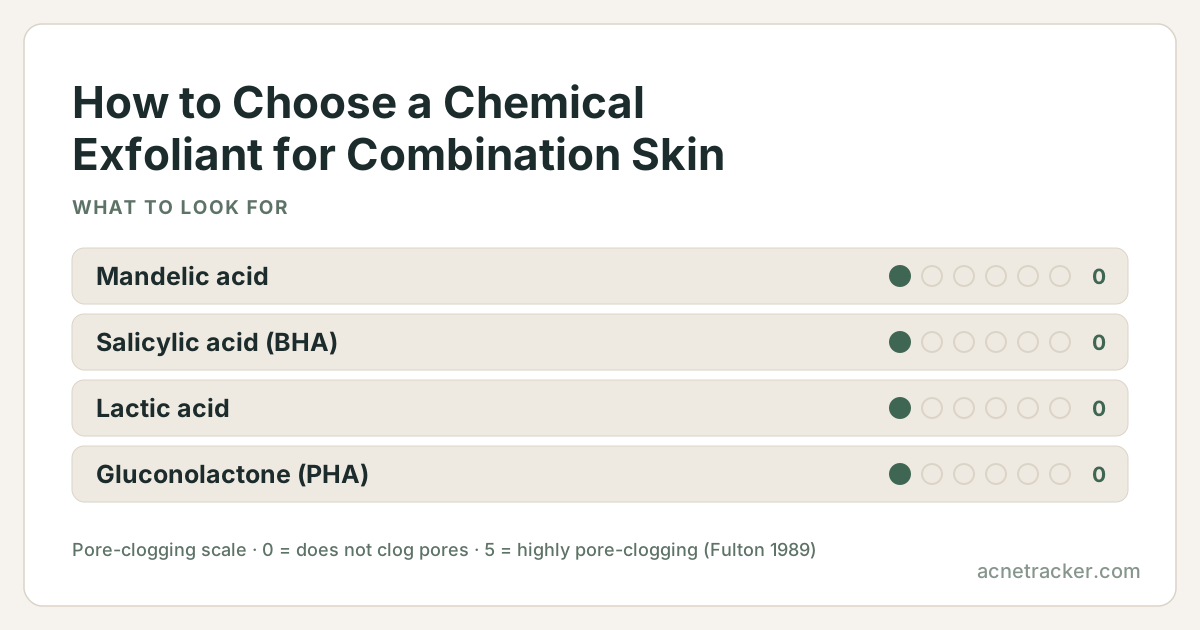
Ingredients to look for
| Ingredient | Why it matters |
|---|---|
| Mandelic acid | A large-molecule AHA gentle enough for drier cheeks yet useful on a congested T-zone, making it a strong single choice for combination skin. |
| Salicylic acid (BHA) | Best used just on the oily T-zone, where its oil solubility clears congestion without over-drying the cheeks. |
| Lactic acid | A humectant AHA that resurfaces the drier areas while keeping them hydrated, a good all-over option if oiliness is mild. |
| Gluconolactone (PHA) | A gentle, hydrating polyhydroxy acid that suits the whole face when you want even, low-irritation exfoliation. |
Ingredients to avoid
| Ingredient | Why it matters |
|---|---|
| Strong acids applied uniformly to the whole face | A percentage that suits the oily T-zone can over-strip the drier cheeks, creating tightness and irritation where you did not need it. |
| Physical scrubs across combination skin | Abrasion irritates the delicate cheeks and cannot clear T-zone congestion, so it fails both areas at once. |
| Over-drying the cheeks in pursuit of a matte T-zone | Chasing an oil-free forehead with harsh products dehydrates the cheeks, which can then flake and feel tight. |
| Two separate strong actives layered daily | Using a strong AHA and BHA together every day over-exfoliates both zones and destabilises the whole barrier. |
How to choose
Decide first whether you want one product or a zoned approach. For simplicity, a large-molecule AHA like mandelic acid or a PHA like gluconolactone works across the whole face, gentle enough for the cheeks yet effective on mild T-zone congestion. If your T-zone is genuinely oily and breakout-prone, a targeted salicylic acid used only there, with a gentler acid or nothing on the cheeks, treats each area on its own terms. Keep percentages moderate and start with low frequency, watching how the drier zones respond. Read past 'balancing' and 'mattifying' claims to the actual acids, and prioritise formulas that include humectants so the cheeks stay comfortable. The best result is a smoother T-zone and calm, hydrated cheeks — not a uniformly stripped face.
How to apply
In the evening on clean skin, apply your chosen exfoliant. If zoning, sweep a gentle acid across the whole face and add salicylic acid only on the T-zone, or simply treat the T-zone more often than the cheeks. Start once or twice a week and build slowly. Follow with a light moisturizer everywhere, and a slightly richer one on the cheeks if they need it. Avoid scrubs. Apply broad-spectrum SPF each morning, since acids increase sun sensitivity. If the cheeks feel tight, cut back on them while keeping the T-zone routine going.
Frequently asked questions
Can I use one exfoliant for combination skin?
Yes. A large-molecule AHA like mandelic acid or a gentle PHA suits the whole face, being mild enough for the cheeks yet effective on the T-zone. Choose a zoned approach only if your T-zone is much oilier than the rest.
Should I use different acids on my T-zone and cheeks?
You can. Applying salicylic acid only on an oily, congested T-zone and a gentler acid, or none, on drier cheeks lets you treat each area appropriately. It takes more effort but avoids over-drying the parts that do not need it.
Why do my cheeks flake when I treat my oily T-zone?
Usually because a product strong enough for the T-zone is too much for the cheeks. Combination skin often needs the cheeks treated more gently or less often. Ease off there and keep hydration up to stop the flaking.
How often should combination skin be exfoliated?
Start once or twice a week overall, and if you zone, you can treat the T-zone a little more often than the cheeks. Let the drier areas set the ceiling: if they feel tight, that is your signal to slow down.
Sources & further reading
There is no single study of this exact question. The guidance here is reasoned from the ingredient profiles below, each of which carries its own references:
- Mandelic Acid2 refs
- Salicylic Acid2 refs
- Lactic Acid3 refs
- Gluconolactone3 refs
Show every reference behind this page (8)
- Mandelic acid — PubChem compound summarycited by Mandelic Acid
- DermNet — Alpha hydroxy acidscited by Mandelic Acid, Lactic Acid
- Salicylic acid as a peeling agent: a comprehensive review (PubMed)cited by Salicylic Acid
- FDA OTC monograph — acne drug products (salicylic acid 0.5–2%)cited by Salicylic Acid
- PubChem — Lactic acid compound summarycited by Lactic Acid
- European Commission CosIng database — Lactic Acidcited by Lactic Acid, Gluconolactone
- Clinical and cosmeceutical uses of hydroxyacids (PubMed)cited by Gluconolactone
- PubChem — Glucono-delta-lactonecited by Gluconolactone
Medical disclaimer
Ingredients mentioned on this page
Find your personal acne triggers
Our free Acne Tracker lets you log breakouts, sleep, stress and diet, and shows you which factors correlate with your flare-ups.