Can You Mix Hyaluronic Acid and Mandelic Acid?
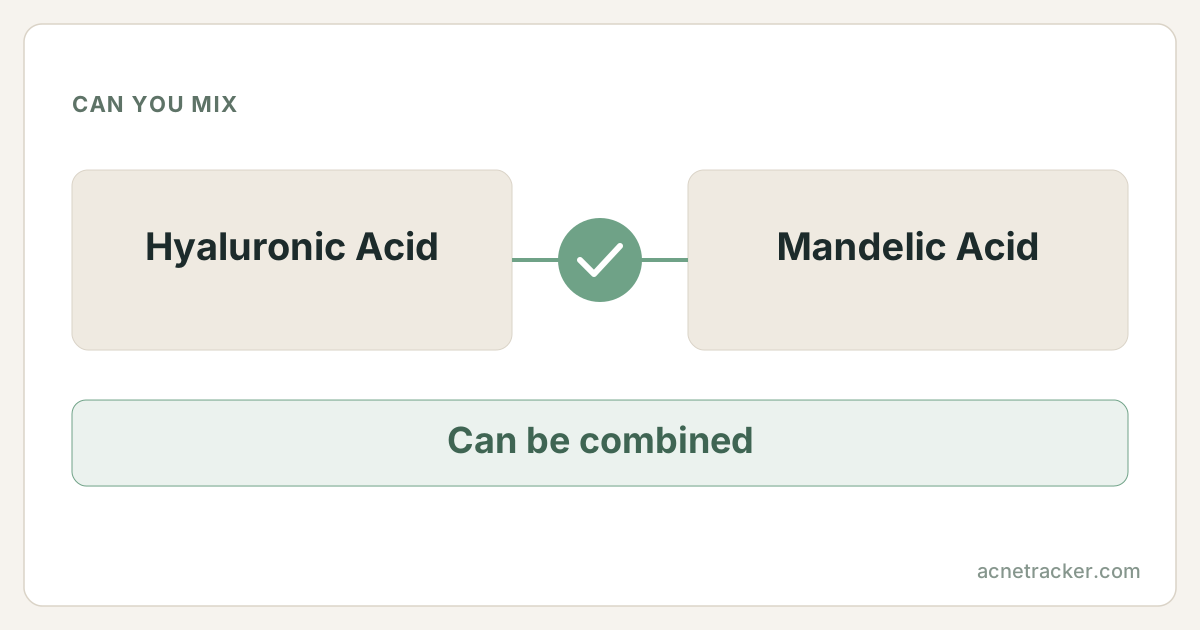
Yes, and it is a combination worth choosing deliberately if your skin is reactive. Mandelic acid is the slowest and mildest of the common alpha hydroxy acids, and hyaluronic acid adds nothing for it to fight with. There is a nice symmetry here: molecular size is the defining fact about both ingredients — it just points in opposite directions for a small acid and a giant polymer.
How this pairing resolves
The two ingredients, their published numbers, and where they land together.
The numbers beside each ingredient are its published comedogenic rating and effective pH window, taken from its own profile page.
Show the numbers
| Ingredients | Metric | 0–5 |
|---|---|---|
| Hyaluronic Acid | Comedogenic rating | 0/5 |
| Hyaluronic Acid | Effective pH | no published pH |
| Mandelic Acid | Comedogenic rating | 0/5 |
| Mandelic Acid | Effective pH | 3.0–4.0 |
Why
Mandelic acid is an AHA derived from bitter almonds, and at roughly 152 daltons it is the heaviest of the group — glycolic acid, for comparison, is about 76. In a small penetrating molecule, extra weight means slower diffusion through the stratum corneum, and slower diffusion means a gentler, more even action with less of the sharp sting that glycolic acid delivers. That is the entire basis of mandelic acid's reputation for sensitive and darker skin, where aggressive exfoliation risks post-inflammatory hyperpigmentation. It is also more lipophilic than its siblings, so it has some affinity for sebum-filled follicles, which is why it appears in acne formulas despite being an AHA rather than a BHA. Now look at hyaluronic acid, where weight does something completely different. A hyaluronate of a few thousand daltons is a fragment that can settle into the upper stratum corneum; one over a million forms a film on the surface. Heavier does not mean gentler here — it means it stays on top. So 'high molecular weight' is a selling point for one of these ingredients and a limitation for the other, and reading the phrase the same way on both labels is a mistake. Between the two molecules themselves there is nothing: no pH conflict, no reaction, no competition.
How to combine them
Mandelic acid on dry skin first, hyaluronic acid after. Because mandelic acid works slowly, give it a full fifteen minutes before layering anything over it — rushing the humectant on top is the main way people blunt it. Then hyaluronic acid, then moisturiser, then sunscreen if it is morning, though most people use it at night. Mandelic acid is mild enough that some tolerate it more often than other AHAs, but start at two nights a week regardless and let your skin set the pace. If you are using it for pigmentation rather than texture, consistency over months is what pays, and sunscreen is doing at least half the work — unprotected sun exposure will out-produce any acid you can buy. The hyaluronic acid layer has no schedule and no ceiling; use it on acid nights and non-acid nights alike.
Example routine
| When | Steps |
|---|---|
| Evening (Tue/Fri) | Cleanser → dry skin → Mandelic acid → wait 15 min → Hyaluronic acid → Moisturiser |
| Evening (other days) | Cleanser → Hyaluronic acid on damp skin → Moisturiser |
| Morning | Cleanser → Hyaluronic acid → Moisturiser → SPF 30+ |
| Reactive skin | Start once weekly; mandelic acid rewards patience more than strength |
Warning signs
Frequently asked questions
Why is mandelic acid gentler than other AHAs?
Size. At about 152 daltons it is the largest of the common AHAs, so it diffuses into the stratum corneum more slowly and acts more evenly. The trade is speed — it is a patient ingredient, not a dramatic one.
Does 'high molecular weight' mean the same thing for both ingredients?
No, and this trips people up. For mandelic acid, higher weight means slower penetration and less irritation. For hyaluronic acid, higher weight means it stays on the surface as a film rather than settling in. Same phrase, opposite implications.
Can hyaluronic acid go on before mandelic acid?
Better not. A humectant layer underneath dilutes the acid and slows an ingredient that is already the slow one in its class. Acid on dry skin first, fifteen minutes, then the hyaluronic acid.
Is mandelic acid a good choice for darker skin tones?
It is commonly preferred, because the risk with deeper skin is that irritation itself triggers post-inflammatory hyperpigmentation. A slower, milder acid lowers that risk — though nothing removes it, and sun protection remains the decisive factor.
Can mandelic acid help acne if it is not a BHA?
It is more lipophilic than glycolic or lactic acid, so it has some affinity for oily follicles, and it appears in acne formulas for that reason. Salicylic acid is still the more direct choice for genuinely clogged pores.
Sources & further reading
There is no single study of this exact question. The guidance here is reasoned from the ingredient profiles below, each of which carries its own references:
- Hyaluronic Acid3 refs
- Mandelic Acid2 refs
Show every reference behind this page (5)
- PubChem — Hyaluronic acid compound summarycited by Hyaluronic Acid
- European Commission CosIng database — Hyaluronic Acidcited by Hyaluronic Acid
- DermNet — Moisturisers and humectantscited by Hyaluronic Acid
- Mandelic acid — PubChem compound summarycited by Mandelic Acid
- DermNet — Alpha hydroxy acidscited by Mandelic Acid
Medical disclaimer
Ingredients mentioned on this page
Find your personal acne triggers
Our free Acne Tracker lets you log breakouts, sleep, stress and diet, and shows you which factors correlate with your flare-ups.