Blackheads on the Chin
Blackheads on the chin are open, oxidised pores rather than dirt, which is why no amount of scrubbing washes them away. The chin, like the rest of the central face, has plenty of active oil glands, and because it is a low, slightly recessed part of the face, oil and dead skin have an easy time pooling and settling into the pores here. When a plug of that mix reaches the surface and meets air, it darkens to the classic black dot. The good news is that blackheads are one of the more treatable forms of congestion: the right leave-on ingredients dissolve the plugs and, used consistently, stop them refilling.
How to recognize it
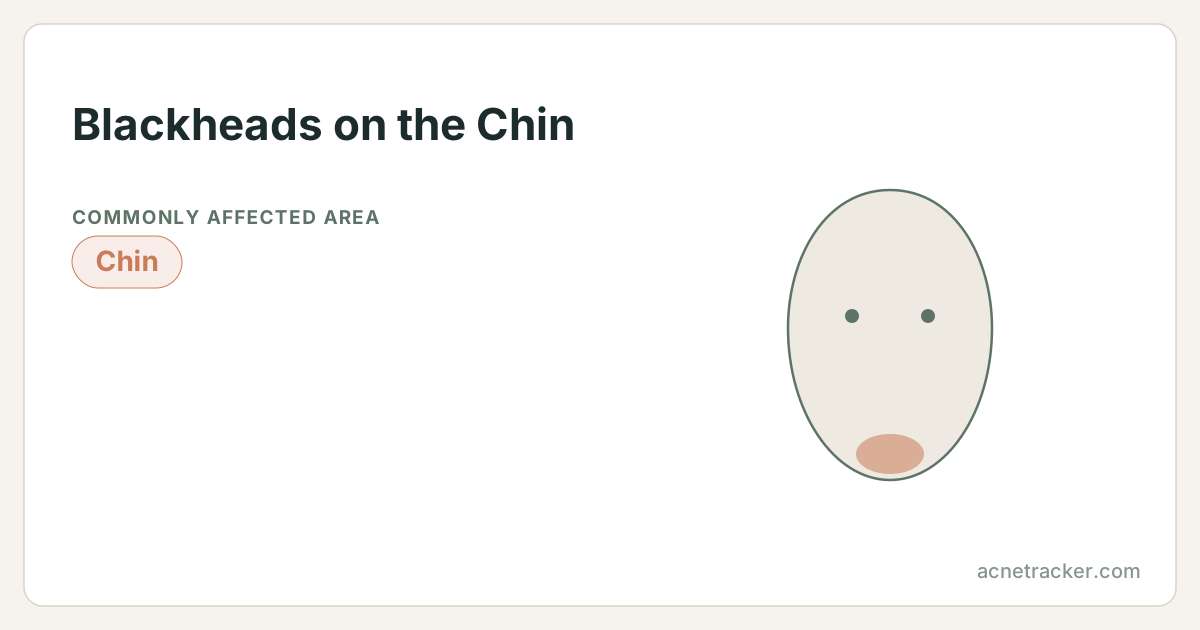
Chin blackheads look like small, flat, dark dots dotted across the surface, most densely just below the lower lip and around the front of the chin. Up close each is an open pore filled with a darkened plug, and the surrounding skin usually feels a little rough or bumpy. They are not sore or raised the way inflamed spots are. If the dots are actually tiny, uniform and skin-coloured rather than dark, they may be sebaceous filaments, a normal feature of oily skin that never fully disappears and does not need aggressive treatment.
What causes it
Oil pooling in the lower face
The chin sits low and central, so sebum and shed skin cells readily collect in its pores. That steady supply of oil is the raw material that fills follicles and oxidises into blackheads over time.
Slow pore shedding
When the lining of the pore sheds cells too slowly, they clump with oil into a plug. Left open at the surface, the plug oxidises and turns dark, which is the blackhead itself rather than trapped dirt.
Heavy or occlusive products
Thick creams, pore-clogging makeup and greasy balms applied around the chin add to the load in the pores, especially where product settles into the crease below the lip and is not fully cleansed off.
Squeezing and strips
Forcing out blackheads or relying on pore strips clears the surface briefly but stretches and irritates the pore, so it refills fast and can become inflamed, making the chin look worse within days.
Ingredients with evidence
| Ingredient | Role |
|---|---|
| Salicylic acid (BHA) | The primary tool: oil-soluble, it slips into the pore and dissolves existing plugs. A 2% leave-on used 2–3 evenings a week across the chin beats any scrub. |
| Adapalene / retinoids | Prevention: normalizes shedding inside the pore so new blackheads stop forming, the long-term answer for a chin that keeps re-clogging. |
| Niacinamide | Lowers oil output over several weeks, shrinking the supply that refills cleared pores on the chin while calming any redness. |
| Mandelic acid (AHA) | A gentle surface exfoliant that smooths rough chin texture and is easier on sensitive skin than stronger acids. |
Building the routine
Build the routine around a leave-on chemical exfoliant rather than mechanical scrubbing. Cleanse morning and night, and a few evenings a week apply salicylic acid across the chin, letting it work inside the pores rather than on top. Introduce a retinoid on alternate nights to keep pores clearing over the long term, moisturize with a light non-clogging cream, and use SPF each morning. Skip pore strips and squeezing; they empty the pore for a day but leave it stretched and quick to refill. Give the plan six to eight weeks, since dissolving existing plugs and slowing new ones both take time, and keep going once the chin clears to stop the blackheads creeping back.
When to see a doctor
Frequently asked questions
Why do I get so many blackheads on my chin?
The chin is a low, central, oily part of the face where sebum and dead skin easily pool in the pores. When those plugs reach the surface and oxidise they darken into blackheads, so the chin is a common gathering spot even with good hygiene.
Are the dots on my chin blackheads or sebaceous filaments?
Blackheads are darker, raised plugs in open pores that feel rough. Sebaceous filaments are tiny, uniform, skin-coloured dots that are a normal feature of oily skin. Filaments never fully clear and do not need aggressive treatment, unlike true blackheads.
Do pore strips get rid of chin blackheads?
Only briefly. Strips pull out the top of the plug but leave the pore stretched and quick to refill, and repeated use can irritate the skin. A leave-on salicylic acid that dissolves plugs and slows new ones works far better over time.
How long until blackheads on my chin clear?
With consistent leave-on exfoliation expect real improvement over six to eight weeks, because both dissolving old plugs and slowing new ones take time. Keeping the routine going afterwards is what stops the blackheads gradually returning.
Sources & further reading
What this page cites about the condition itself:
There is no single study of this exact question. The guidance here is reasoned from the ingredient profiles below, each of which carries its own references:
- Salicylic Acid2 refs
- Adapalene3 refs
- Niacinamide2 refs
- Mandelic Acid2 refs
Show every reference behind this page (8)
- Salicylic acid as a peeling agent: a comprehensive review (PubMed)cited by Salicylic Acid
- FDA OTC monograph — acne drug products (salicylic acid 0.5–2%)cited by Salicylic Acid, Adapalene
- PubChem — Adapalene compound summarycited by Adapalene
- DermNet — Adapalenecited by Adapalene
- Niacinamide: mechanisms of action and its topical use in dermatology (PubMed)cited by Niacinamide
- European Commission CosIng database — Niacinamidecited by Niacinamide
- Mandelic acid — PubChem compound summarycited by Mandelic Acid
- DermNet — Alpha hydroxy acidscited by Mandelic Acid
Medical disclaimer
Ingredients mentioned on this page
Find your personal acne triggers
Our free Acne Tracker lets you log breakouts, sleep, stress and diet, and shows you which factors correlate with your flare-ups.