How to Choose a Chemical Exfoliant for Blackheads
Blackheads are open comedones — a plug of sebum and dead cells whose surface has oxidised and darkened, which is why squeezing and scrubbing never truly clear them. The plug sits inside the pore, so the exfoliant that reaches it must be oil-soluble. That single fact makes the acid family the most important thing on any blackhead label. This guide explains why salicylic acid and its relatives are the logical choice, where gentler options fit, and why aggressive removal methods backfire. We describe ingredient profiles rather than ranking products, because the criteria that make an exfoliant work on blackheads outlast any specific formula.
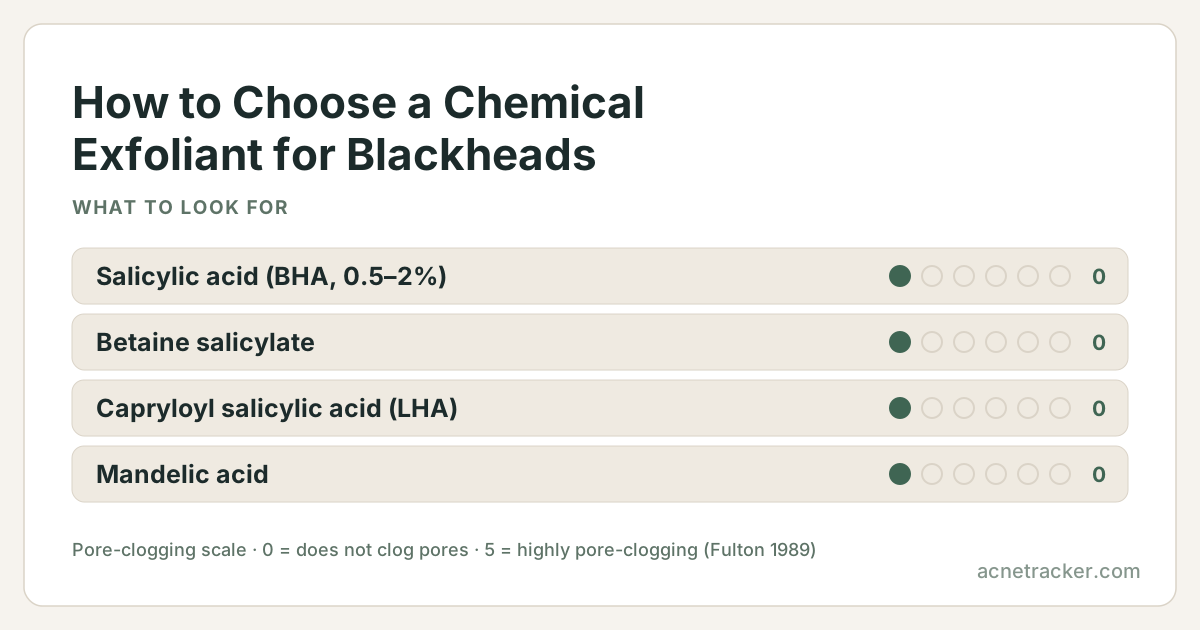
Ingredients to look for
| Ingredient | Why it matters |
|---|---|
| Salicylic acid (BHA, 0.5–2%) | The standout for blackheads: oil-soluble, so it dissolves into the sebum plug and clears the pore from within rather than skimming the surface. |
| Betaine salicylate | A gentler salicylic-acid derivative that offers similar oil-soluble pore action, useful when standard BHA feels too strong for regular use. |
| Capryloyl salicylic acid (LHA) | A lipophilic salicylic derivative that exfoliates at the pore surface and suits congestion-prone skin needing a milder, targeted option. |
| Mandelic acid | A large-molecule AHA that refines the surface and keeps new plugs from forming, complementing a BHA on blackhead-prone skin. |
Ingredients to avoid
| Ingredient | Why it matters |
|---|---|
| Pore strips as a routine fix | They pull the dark tip off the surface but leave the deeper plug intact, so blackheads reappear quickly while the skin gets irritated. |
| Stiff-bristle brushes and gritty scrubs | Physical force cannot reach the plug and instead inflames the pore, which can make blackheads look more prominent. |
| Heavy occlusive oils high in the formula | Rich, comedogenic oils can add to the very congestion an exfoliant is trying to clear on blackhead-prone skin. |
| Squeezing and metal extractor overuse | DIY extraction damages the pore wall, spreads bacteria and can turn a harmless blackhead into an inflamed, potentially scarring spot. |
How to choose
Prioritise oil solubility. Blackheads sit in sebum, and only lipophilic actives — salicylic acid, its derivative betaine salicylate, or capryloyl salicylic acid (LHA) — reach the plug where it lives. Water-soluble AHAs like glycolic acid refine the surface and help prevent new blackheads, but they do not clear an established plug as effectively. Choose a leave-on rather than a wash-off, since contact time matters, and look for a stated percentage: salicylic acid does its job at 0.5–2%. Match strength to your skin's tolerance — start milder if you are sensitive. Ignore 'pore-refining' and 'detox' language and read the actives. Finally, be realistic about timelines: blackheads clear gradually over weeks of consistent use, and the goal is steady maintenance, not a single dramatic clear-out that leaves the barrier stripped.
How to apply
Use a leave-on BHA in the evening on clean, dry skin, focusing on the areas where blackheads cluster, usually the nose, chin and forehead. Start two or three evenings a week and increase only if the skin stays comfortable. Let it absorb, then apply a light moisturizer. Skip physical scrubbing and squeezing entirely. Because acids increase photosensitivity, apply broad-spectrum SPF each morning. Expect gradual improvement over several weeks; if the skin becomes tight or flaky, reduce frequency and let the barrier recover.
Frequently asked questions
Why is salicylic acid recommended for blackheads?
Because it is oil-soluble, salicylic acid can dissolve into the sebum plug inside the pore and clear it from within. Water-soluble acids and physical scrubs work only on the surface, which is why they never fully clear an established blackhead.
Are pore strips a substitute for a chemical exfoliant?
No, they work only temporarily. They remove the oxidised tip at the surface but leave the deeper plug, so blackheads return quickly. Used often they can irritate skin and stretch pores, making the problem look worse over time.
How long until a chemical exfoliant clears blackheads?
Give it several weeks of consistent use. Blackheads form over time and clear gradually, not overnight. Chasing a fast result with stronger, more frequent acids usually irritates the skin rather than speeding things up.
Can I use a scrub as well as a chemical exfoliant?
It is best not to. Physical scrubbing on top of acids over-exfoliates the barrier and cannot reach the plug anyway. A well-chosen oil-soluble acid does the job that scrubbing tries and fails to do.
Sources & further reading
There is no single study of this exact question. The guidance here is reasoned from the ingredient profiles below, each of which carries its own references:
- Salicylic Acid2 refs
- Betaine Salicylate3 refs
- Capryloyl Salicylic Acid3 refs
- Mandelic Acid2 refs
Show every reference behind this page (8)
- Salicylic acid as a peeling agent: a comprehensive review (PubMed)cited by Salicylic Acid, Betaine Salicylate
- FDA OTC monograph — acne drug products (salicylic acid 0.5–2%)cited by Salicylic Acid
- European Commission CosIng database — Betaine Salicylatecited by Betaine Salicylate, Capryloyl Salicylic Acid
- PubChem — Betainecited by Betaine Salicylate
- Clinical tolerance and efficacy of capryloyl salicylic acid peel compared to a glycolic acid peel in subjects with fine lines/wrinkles and hyperpigmented skin (PubMed)cited by Capryloyl Salicylic Acid
- PubChem — Capryloyl salicylic acidcited by Capryloyl Salicylic Acid
- Mandelic acid — PubChem compound summarycited by Mandelic Acid
- DermNet — Alpha hydroxy acidscited by Mandelic Acid
Medical disclaimer
Ingredients mentioned on this page
Find your personal acne triggers
Our free Acne Tracker lets you log breakouts, sleep, stress and diet, and shows you which factors correlate with your flare-ups.