Centella Asiatica: Comedogenic Rating & Ingredient Analysis
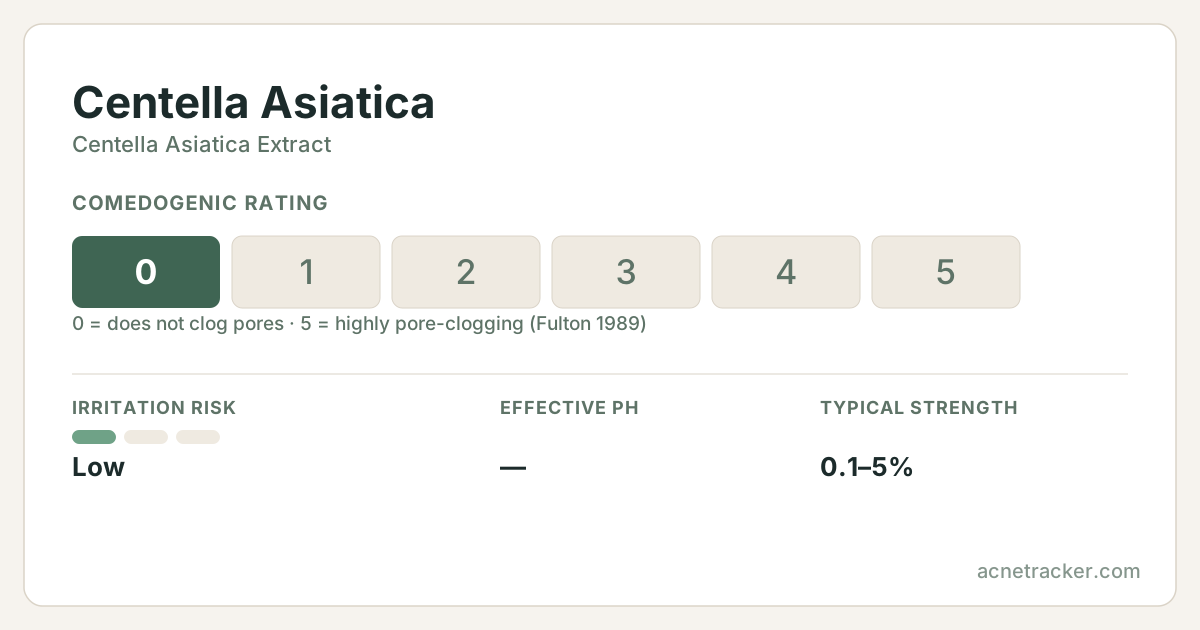
Centella asiatica — better known by its skincare nicknames cica, gotu kola and tiger grass — is a medicinal herb that anchored the Korean 'cica' skincare trend and has since become a global staple for calming stressed skin. Extracts of the plant are rich in a group of active compounds that give it a genuinely useful soothing and barrier-supporting profile, backed by a reasonable body of research rather than folklore alone. For acne-prone skin, centella occupies a valuable niche: it is a plant extract that manages to be calming and antioxidant without being heavy or pore-clogging, so it suits the oily, reactive skin that most benefits from soothing but cannot tolerate rich creams.
Quick facts
- Comedogenic rating
- our estimate — not measured
- Irritation risk
- Low
- Effective pH
- —
- Typical strength
- 0.1–5%
- Pregnancy
- Considered safe
- Suits skin types
- oilysensitiveacne-pronecombinationnormaldry
Where this number comes from
No one has published a comedogenic rating for this ingredient. Fulton's 1989 table tested about 250 raw materials and this was not among them, and we found no later study measuring it. The figure shown is our own reasoning from the ingredient's chemistry and how it is used — treat it as an estimate, not a measurement.
Fulton read his own scale as 0-1 not significant, 2-3 borderline, 4-5 positive. The assay is the rabbit ear at 10% dilution, which the paper itself calls extremely sensitive and not fully predictive of human skin. Ratings describe the raw ingredient; concentration and formulation change real-world behaviour.
Caution profile
The four published fields on this page, on one 0–5 scale. Further from the centre means more care is needed — never that the ingredient is worse.
Derived, not measured: pore-clogging is the published comedogenic rating; irritation maps low/moderate/high to 1/3/5; pregnancy maps safe/caution/avoid to 0/3/5; skin-type limits is how many of the seven skin types this entry does NOT list. Every input is printed in words in the quick-facts card above.
Show the numbers
| Metric | 0–5 | Published field |
|---|---|---|
| Pore-clogging | 0 | 0/5 |
| Irritation | 1 | Low |
| Skin-type limits | 0.7 | 6/7 |
| Pregnancy | 0 | Considered safe |
Working pH and typical strength
Where this ingredient is formulated to sit, and at what concentration.
Both bars come from the fields above: the pH window and the typical strength range published for this ingredient. The tinted column is healthy skin's surface pH (about 4.7–5.75).
Show the numbers
| Metric | 0–5 |
|---|---|
| Typical strength | 0.1–5% |
What is it?
The activity of centella asiatica comes largely from four triterpenoid compounds — madecassoside, asiaticoside, madecassic acid and asiatic acid, often collectively marketed as 'centella asiatica extract' or refined into 'madecassoside' on ingredient lists. These compounds have documented antioxidant and anti-inflammatory activity and have been studied for their ability to support the skin's repair process and reinforce the barrier. In cosmetic use, centella is valued for reducing the look of redness, calming the sensation of irritation and helping fortify skin that has been stressed by environmental damage or aggressive treatment. It is water-based and lightweight, non-acidic and generally used across a broad concentration range depending on whether the product is a light essence or a concentrated repair serum. Its antioxidant side also means it helps defend against the free-radical damage that ages and inflames skin.
Benefits
Calms redness and visible irritation
Centella's triterpenoids have documented anti-inflammatory activity, so it noticeably reduces the look of redness and the feeling of irritation, which is why 'cica' products are marketed for stressed, reactive skin.
Supports the skin barrier
Research shows centella compounds help reinforce the skin's barrier and support its repair process, making it a strong ally when acne treatments have left the barrier weakened and flaky.
Provides antioxidant protection
The extract scavenges free radicals generated by UV and pollution, adding a layer of everyday defence that helps limit the oxidative stress that inflames and prematurely ages skin.
Soothes without heaviness
Unlike many soothing botanicals delivered in rich balms, centella works in lightweight, water-based formulas, so oily and acne-prone skin gets the calming benefit without a greasy, pore-clogging feel.
How to use
Centella appears in essences, ampoules, serums, moisturisers and sheet masks, and how you use it depends on the format. A light centella essence or serum works well right after cleansing, before heavier steps, morning or night. Because it is soothing and non-irritating, it is an excellent buffer around strong actives: apply your retinoid or acid, then layer a centella product to calm the skin. It has no adjustment period, layers under sunscreen and makeup, and can be used daily long-term. If you have very reactive skin, a simple centella essence is one of the gentler ways to add antioxidant and soothing benefits without introducing a stinging active.
Side effects
Centella asiatica is well tolerated and non-comedogenic, with a rating of 0, so it will not clog pores. Reactions are uncommon, though as a botanical extract it carries a marginally higher theoretical chance of plant-based allergy than a single synthetic molecule. Patch test if you are prone to reacting to plant extracts. It does not increase sun sensitivity, and its antioxidant activity actually complements daytime sun protection.
Who should avoid it
Most people can use centella freely. The main group to be cautious are those with known allergies to plants in related botanical families, who could react to the extract. Anyone with highly reactive skin should introduce a centella product on its own and patch test first, so any reaction can be traced to the right ingredient rather than blamed on the whole routine.
Pairs well with
Frequently asked questions
What is cica in skincare?
'Cica' is shorthand for centella asiatica, a soothing herb also called gotu kola or tiger grass. Cica products use its extract to calm redness, reduce irritation and support the skin barrier, especially in stressed or acne-prone skin.
Is centella asiatica good for acne?
It does not clear acne on its own, but it is very useful in an acne routine. Its anti-inflammatory action calms the redness of breakouts and soothes the irritation caused by actives, and at a comedogenic rating of 0 it will not clog pores.
Can I use centella asiatica with retinol?
Yes, and it is a popular pairing. Centella's soothing, barrier-supporting properties help offset the dryness and irritation retinol causes, making the retinoid easier to tolerate while you build up use.
What are madecassoside and asiaticoside?
They are two of the key active triterpenoid compounds in centella asiatica, responsible for much of its soothing and antioxidant activity. Some products isolate madecassoside specifically for a more concentrated calming effect.
Is centella asiatica safe during pregnancy?
Topical centella asiatica is generally considered low risk during pregnancy, though research is limited and it should not be taken orally in this period. Confirm any product with your doctor for your specific situation.
Where this ingredient shows up here
Counted across this database, not the web — these are the pages on this site that reason about this ingredient.
Combination guides 2
Sources & further reading
Medical disclaimer
Find your personal acne triggers
Our free Acne Tracker lets you log breakouts, sleep, stress and diet, and shows you which factors correlate with your flare-ups.