How to Choose a Cleanser for Sensitive Skin
Sensitive skin reacts to what most people never notice — a fragrance note, a strong surfactant, water that is a touch too hot. A cleanser is where much of that trouble starts, because it is the step that most directly disturbs the barrier. The safest choice keeps the ingredient list short, the pH close to skin's own, and leaves out the usual suspects that provoke stinging and flushing. This guide sets out the ingredient profile that tends to calm reactive skin, the triggers worth screening for, and how to patch test before committing. As always we assess formulas rather than brands, so the reasoning survives a reformulation.
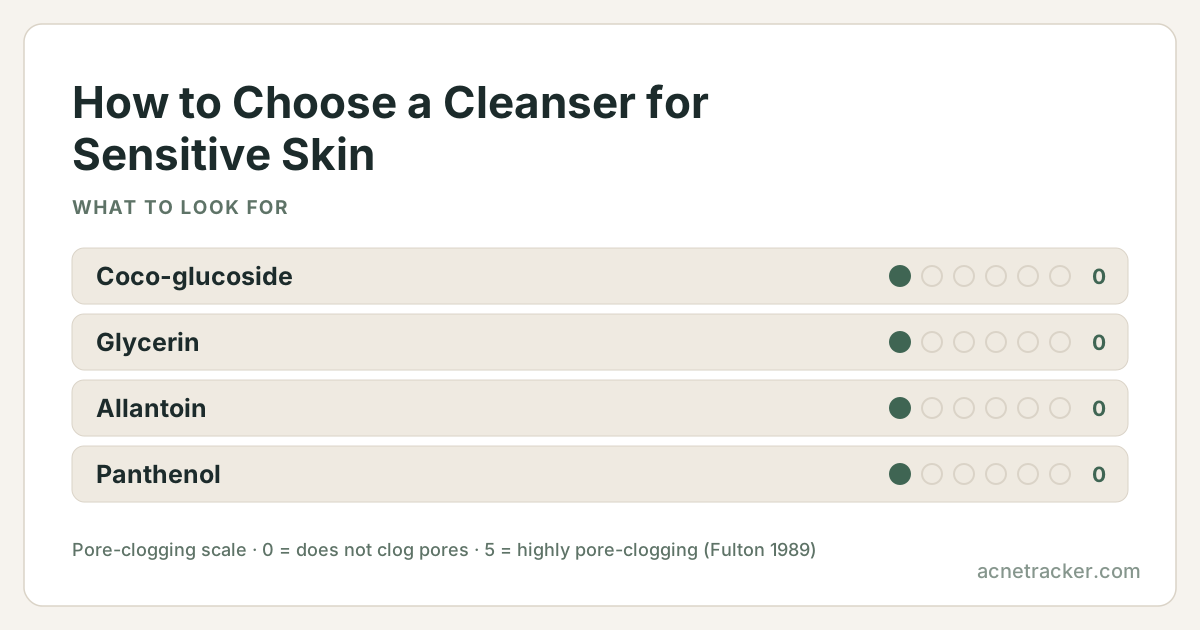
Ingredients to look for
| Ingredient | Why it matters |
|---|---|
| Coco-glucoside | A very mild sugar-derived surfactant that cleans at low strength, a good match for skin that flushes easily. |
| Glycerin | A simple, well-tolerated humectant that offsets the drying effect of washing and rarely causes reactions. |
| Allantoin | A gentle soothing agent that calms the surface and supports comfort in reactive skin. |
| Panthenol | Helps reduce the sensation of tightness and roughness that reactive skin feels after cleansing. |
| Centella asiatica | A plant extract with a long track record of calming redness-prone, easily irritated skin. |
Ingredients to avoid
| Ingredient | Why it matters |
|---|---|
| Fragrance and essential oils | The single most common trigger of stinging, itching and contact reactions in sensitive skin. |
| Sodium lauryl sulfate (SLS) | A harsh surfactant that thins the barrier and lowers the threshold at which skin reacts to everything else. |
| Denatured alcohol high on the list | Provokes stinging and dryness that a reactive barrier struggles to recover from. |
| Physical scrubs and rough particles | Mechanical friction inflames sensitive skin without offering any cleansing benefit it needs. |
How to choose
Favour a short ingredient list — fewer components mean fewer things to react to. Look for one or two mild surfactants from the sugar-derived or amino-acid families, glycerin, and a calming agent such as allantoin, panthenol or centella. Gel-cream and milk textures tend to be gentler than high-foam gels. Screen the list for fragrance (listed as 'parfum' or 'fragrance'), essential oils, denatured alcohol and SLS, and put the product back if any of those appear early. 'Fragrance-free' is more reliable than 'unscented', which can still contain masking fragrance. Terms like 'hypoallergenic' and 'dermatologist-tested' are unregulated and reassuring at best. The decisive test is your own skin: a calm, comfortable feel with no residual sting a few minutes after rinsing means the formula suits you, whatever the front label claims.
How to apply
Cleanse gently once daily in the evening, with a plain lukewarm rinse in the morning if a full wash feels like too much. Use only fingertips — no cloths, brushes or muslins that add friction. Keep water lukewarm, since heat itself can trigger flushing. Do not rub dry; press a soft towel against the skin instead. If you are trying a new cleanser, patch test it on the inner forearm or beside the jaw for a few days first, and introduce nothing else at the same time so you can tell what any reaction is coming from.
Frequently asked questions
What is the safest cleanser type for sensitive skin?
A low-foam gel-cream or milk with a short ingredient list, one mild surfactant, glycerin and a soothing agent, and no fragrance. Simplicity is the most reliable safeguard, because every extra ingredient is another thing reactive skin might respond to.
Is fragrance-free really necessary?
For most sensitive skin, yes. Fragrance is the most common cause of cleanser-related stinging and contact reactions, so choosing 'fragrance-free' rather than merely 'unscented' removes the single biggest avoidable trigger.
How do I patch test a new cleanser?
Apply a small amount to the inner forearm or the skin beside your jaw once daily for several days, and change nothing else in your routine. If no redness, itching or stinging appears, it is reasonable to move it onto the full face.
Could my cleanser be causing my redness?
It can be. A too-strong surfactant or added fragrance keeps the barrier irritated and the skin looking flushed. Persistent redness that does not settle with a gentler routine is worth showing to a doctor, as it can signal a treatable condition.
Sources & further reading
There is no single study of this exact question. The guidance here is reasoned from the ingredient profiles below, each of which carries its own references:
- Coco-Glucoside2 refs
- Glycerin3 refs
- Allantoin3 refs
- Panthenol3 refs
- Centella Asiatica2 refs
Show every reference behind this page (9)
- European Commission CosIng — Coco-Glucosidecited by Coco-Glucoside, Glycerin, Allantoin, Panthenol, Centella Asiatica
- Cosmetic Ingredient Review — safety of alkyl glucosidescited by Coco-Glucoside
- PubChem — Glycerol compound summarycited by Glycerin
- DermNet — Moisturiserscited by Glycerin
- PubChem — Allantoin compound summarycited by Allantoin
- Final report of the safety assessment of allantoin and its related complexes (PubMed)cited by Allantoin
- PubChem — Panthenol compound summarycited by Panthenol
- Safety Assessment of Panthenol, Pantothenic Acid, and Derivatives as Used in Cosmetics (PubMed)cited by Panthenol
- Bylka W et al. Centella asiatica in dermatology: an overview. Phytother Res 2014 Aug (PubMed)cited by Centella Asiatica
Medical disclaimer
Ingredients mentioned on this page
Find your personal acne triggers
Our free Acne Tracker lets you log breakouts, sleep, stress and diet, and shows you which factors correlate with your flare-ups.