Chamomile Extract: Comedogenic Rating & Ingredient Analysis
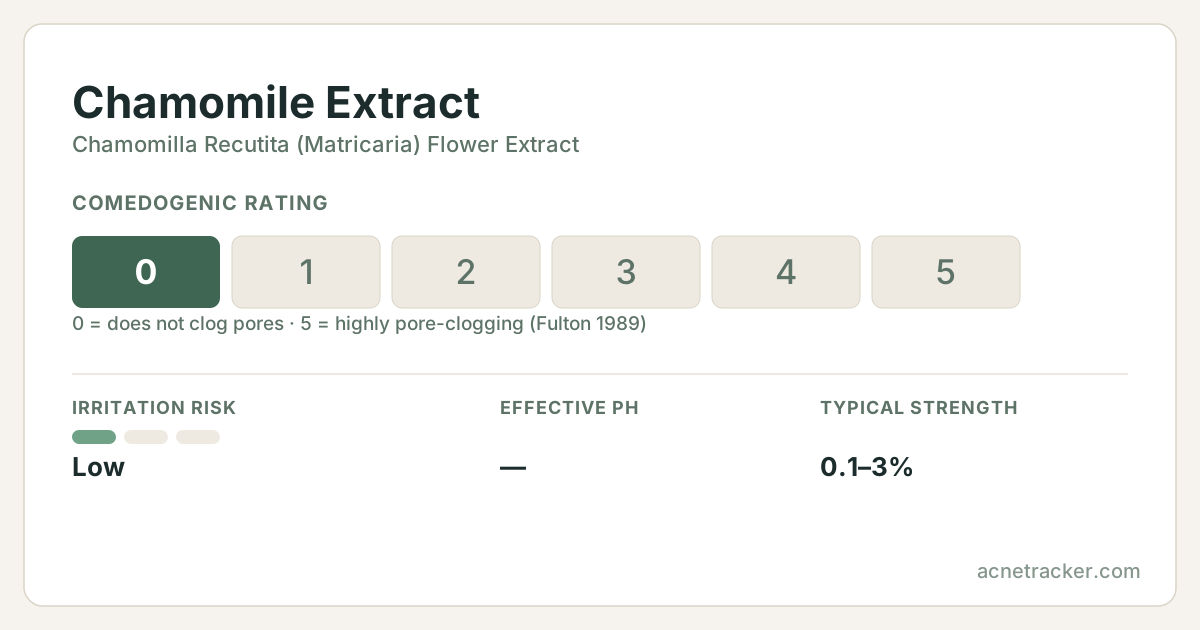
Chamomile extract is one of the oldest soothing botanicals in skincare, made from the small white-and-yellow flowers of German chamomile. It has a long place in home remedies — think of chamomile tea compresses on tired eyes — and modern formulators use it in the same spirit, to make sensitive and easily-irritated skin feel calmer. You will find it in toners, gels, masks and moisturisers, often alongside other gentle ingredients aimed at reactive or acne-prone skin. Chamomile does not fight acne directly, but its comforting, redness-reducing character makes it a natural partner to harsher actives and a mainstay of formulas marketed as calming or barrier-friendly.
Quick facts
- Comedogenic rating
- measured (Fulton 1989)
- Irritation risk
- Low
- Effective pH
- —
- Typical strength
- 0.1–3%
- Pregnancy
- Considered safe
- Suits skin types
- sensitivedrynormalcombinationacne-prone
Where this number comes from
Read directly from Table I of Fulton's 1989 paper — the primary source, not one of the copied tables that circulate online.
Fulton read his own scale as 0-1 not significant, 2-3 borderline, 4-5 positive. The assay is the rabbit ear at 10% dilution, which the paper itself calls extremely sensitive and not fully predictive of human skin. Ratings describe the raw ingredient; concentration and formulation change real-world behaviour.
Caution profile
The four published fields on this page, on one 0–5 scale. Further from the centre means more care is needed — never that the ingredient is worse.
Derived, not measured: pore-clogging is the published comedogenic rating; irritation maps low/moderate/high to 1/3/5; pregnancy maps safe/caution/avoid to 0/3/5; skin-type limits is how many of the seven skin types this entry does NOT list. Every input is printed in words in the quick-facts card above.
Show the numbers
| Metric | 0–5 | Published field |
|---|---|---|
| Pore-clogging | 0 | 0/5 |
| Irritation | 1 | Low |
| Skin-type limits | 1.4 | 5/7 |
| Pregnancy | 0 | Considered safe |
Working pH and typical strength
Where this ingredient is formulated to sit, and at what concentration.
Both bars come from the fields above: the pH window and the typical strength range published for this ingredient. The tinted column is healthy skin's surface pH (about 4.7–5.75).
Show the numbers
| Metric | 0–5 |
|---|---|
| Typical strength | 0.1–3% |
What is it?
German chamomile (Chamomilla recutita, also called Matricaria) contains a distinctive mix of active compounds: alpha-bisabolol, the deep-blue oil chamazulene, and flavonoids such as apigenin. Bisabolol in particular is a well-known cosmetic soother, isolated and sold on its own precisely because of chamomile's reputation. The extract is produced by steeping the flowers in water, glycerin or glycol to capture these water-friendly antioxidants and anti-inflammatory molecules. Laboratory studies support anti-inflammatory and antioxidant activity, though large clinical trials specific to cosmetic skin use remain limited, so it is fair to describe chamomile as a well-evidenced traditional soother rather than a proven medicine. As a water-based flower extract it carries a comedogenic rating of 0 and a low irritation risk for most people.
Benefits
Soothes reactive, red skin
Bisabolol and chamazulene help quiet the appearance of irritation, making chamomile a favourite for skin that flushes easily or is recovering from strong treatments.
Comforts acne-treatment side effects
The dryness and stinging that come with retinoids and exfoliating acids feel less harsh when chamomile-rich soothing products are layered in alongside them.
Provides antioxidant support
Flavonoids such as apigenin add antioxidant defence against everyday environmental stress, complementing dedicated antioxidants like vitamin-e and green-tea-extract.
Gentle enough for daily use
With a rating of 0 and low irritation potential, chamomile suits twice-daily use on sensitive, combination and acne-prone skin without any adjustment period.
How to use
Use chamomile extract as part of your soothing layer: a toner, essence, serum or moisturiser applied after cleansing, morning and evening. It sits comfortably under sunscreen and works well over calming actives such as centella-asiatica, panthenol and allantoin. There is no need to build up tolerance, and it does not increase sun sensitivity. If you rely on strong exfoliants, a chamomile moisturiser at night can offset tightness. Because chamomile is a daisy-family plant, sensitive users should patch test on the inner arm for a few days before applying to the whole face.
Side effects
Chamomile is well tolerated but, like other daisy-family botanicals, can cause allergic contact dermatitis in susceptible people. Those allergic to ragweed, chrysanthemums or arnica-extract are more likely to react, sometimes with itching, redness or small bumps. This is uncommon with dilute cosmetic extracts, and unrelated to the mild, tea-like scent. Any persistent irritation should prompt you to stop and reassess the full ingredient list.
Who should avoid it
People with known allergies to plants in the daisy (Asteraceae) family should avoid chamomile or patch test carefully. Everyone else, including most sensitive and acne-prone users, can generally use it without concern. Topical chamomile is considered safe during pregnancy, though concentrated chamomile essential oil is best avoided; check with your doctor if in doubt.
Pairs well with
Frequently asked questions
Does chamomile extract clog pores?
No. Water-based chamomile flower extract has a comedogenic rating of 0 and does not clog pores. Chamomile essential oil is a different, more concentrated material and should be treated more cautiously.
Is chamomile good for acne?
It does not clear acne on its own, but it soothes the redness and irritation that accompany breakouts and their treatment, making it a helpful supporting ingredient alongside actives like niacinamide.
Can chamomile cause allergies?
Occasionally. As a daisy-family plant, chamomile can trigger allergic reactions in people sensitive to ragweed, chrysanthemums or related plants. A short patch test is wise if your skin is reactive.
What is the difference between chamomile extract and bisabolol?
Bisabolol is one of the main soothing compounds naturally found in chamomile, but sold in purified form. Chamomile extract delivers bisabolol together with the flower's other antioxidants and flavonoids.
Sources & further reading
Medical disclaimer
Find your personal acne triggers
Our free Acne Tracker lets you log breakouts, sleep, stress and diet, and shows you which factors correlate with your flare-ups.