How to Choose a Cleanser for Rosacea-Prone Skin
Rosacea is a medical condition, not just sensitive skin, and a cleanser cannot treat it — but a badly chosen one can trigger the flushing, stinging and visible vessels that define a flare. The aim at this step is the gentlest possible clean: minimal surfactant, no fragrance, no heat and no friction, so the compromised barrier is disturbed as little as possible. This guide describes the ingredient profile that reactive, redness-prone skin tolerates best, the common triggers to screen out, and why medical care matters alongside any routine. We review ingredient profiles rather than brands, and none of this replaces a doctor's diagnosis and treatment.
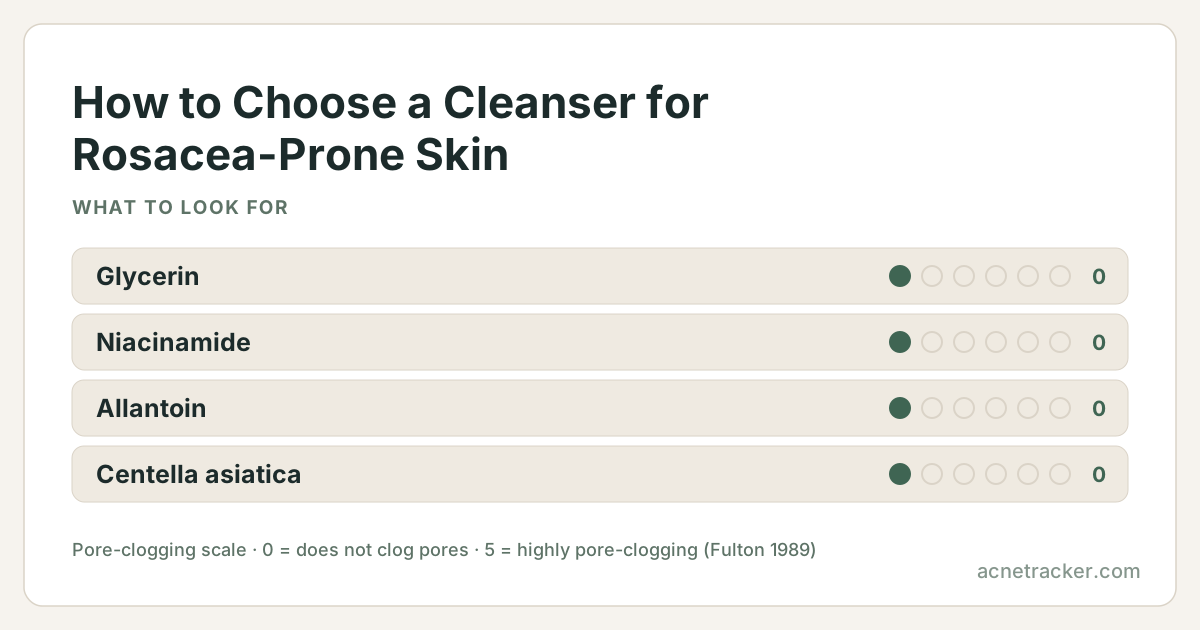
Ingredients to look for
| Ingredient | Why it matters |
|---|---|
| Glycerin | A gentle humectant that keeps washing from drying a barrier that is already reactive and easily provoked. |
| Niacinamide | Associated with improved barrier function and calmer, less reactive skin over time. |
| Allantoin | A mild soothing agent that supports comfort in flush-prone, easily irritated skin. |
| Centella asiatica | Long used to calm redness and support the barrier in reactive, rosacea-prone skin. |
| Coco-glucoside | One of the mildest surfactants, cleaning at low strength so the barrier is barely disturbed. |
Ingredients to avoid
| Ingredient | Why it matters |
|---|---|
| Fragrance and essential oils | Frequent flush and sting triggers that reactive rosacea-prone skin tolerates poorly. |
| Denatured alcohol and menthol/'cooling' agents | Provoke stinging and visible flushing rather than the calm rosacea skin needs. |
| Harsh sulfates and high-pH soap | Strip the barrier and lower the threshold at which the skin flushes and reacts. |
| Scrubs, brushes and hot water | Friction and heat are classic rosacea flare triggers, so avoid all three at the cleansing step. |
How to choose
Keep it minimal. A short ingredient list, one very mild surfactant, glycerin and a calming agent such as allantoin, niacinamide or centella is the safest profile. A low-foam gel-cream or a milk cleanser usually beats a foaming gel. Screen carefully for fragrance, essential oils, menthol, camphor and denatured alcohol — all common flush triggers — and choose 'fragrance-free' over 'unscented'. Because rosacea is a medical condition, pair a gentle routine with a doctor's advice; prescription treatments address the inflammation a cleanser cannot. Ignore 'anti-redness' and 'calming' as marketing language and judge by your own reaction: a wash that leaves no residual sting, warmth or flush a few minutes after rinsing is one your skin can tolerate. Introduce it alone, so you can tell what any flare is responding to.
How to apply
Cleanse gently once or twice a day with lukewarm — never hot — water, using fingertips only and no cloths or brushes. Massage briefly; long rubbing is friction the skin does not need. Press, do not rub, a soft towel to dry. Follow immediately with a barrier moisturiser and, in daytime, a mineral sunscreen, since sun is a leading rosacea trigger. If your skin stings even with a gentle wash, cut back to a plain water rinse in the morning. Persistent redness, bumps or visible vessels should be assessed by a doctor.
Frequently asked questions
Can a cleanser treat rosacea?
No. Rosacea is a medical condition, and no cleanser can treat the underlying inflammation. A gentle wash simply avoids making it worse; the treatment itself comes from a doctor, who can prescribe therapies that target rosacea directly.
Should people with rosacea avoid foaming cleansers?
Often, yes. Most foaming gels use a stronger surfactant load that reactive skin tolerates poorly. A low-foam gel-cream or milk with a single mild surfactant is usually gentler and less likely to provoke a flush.
Why does my face flush when I wash it?
Heat, friction and certain ingredients such as fragrance, menthol or alcohol are common rosacea triggers, and all can appear at the cleansing step. Using lukewarm water, fingertips only and a fragrance-free formula removes the usual culprits.
When should I see a doctor about my redness?
If redness is persistent, comes with bumps or visible vessels, or does not settle with a gentle routine, see a doctor. Rosacea is treatable, and a professional can confirm the diagnosis and offer therapies skincare alone cannot provide.
Sources & further reading
There is no single study of this exact question. The guidance here is reasoned from the ingredient profiles below, each of which carries its own references:
- Glycerin3 refs
- Niacinamide2 refs
- Allantoin3 refs
- Centella Asiatica2 refs
- Coco-Glucoside2 refs
Show every reference behind this page (8)
- PubChem — Glycerol compound summarycited by Glycerin
- DermNet — Moisturiserscited by Glycerin
- European Commission CosIng database — Glycerincited by Glycerin, Niacinamide, Allantoin, Centella Asiatica, Coco-Glucoside
- Niacinamide: mechanisms of action and its topical use in dermatology (PubMed)cited by Niacinamide
- PubChem — Allantoin compound summarycited by Allantoin
- Final report of the safety assessment of allantoin and its related complexes (PubMed)cited by Allantoin
- Bylka W et al. Centella asiatica in dermatology: an overview. Phytother Res 2014 Aug (PubMed)cited by Centella Asiatica
- Cosmetic Ingredient Review — safety of alkyl glucosidescited by Coco-Glucoside
Medical disclaimer
Ingredients mentioned on this page
Find your personal acne triggers
Our free Acne Tracker lets you log breakouts, sleep, stress and diet, and shows you which factors correlate with your flare-ups.