How to Choose a Cleanser for Hyperpigmentation
Hyperpigmentation — dark spots, post-acne marks and melasma — is driven by excess melanin, and no cleanser can meaningfully fade it in seconds of contact. What a cleanser can do is avoid making it worse. Harsh washing and scrubbing cause irritation, and in pigmentation-prone or deeper skin tones, irritation itself can trigger more pigment, known as post-inflammatory hyperpigmentation. So the smartest cleanser for hyperpigmentation is a gentle one that keeps the skin calm while your leave-on brightening actives and, above all, daily sunscreen do the fading. This guide describes the ingredient profile to look for, the irritants to avoid, and how to keep the whole routine from backfiring.
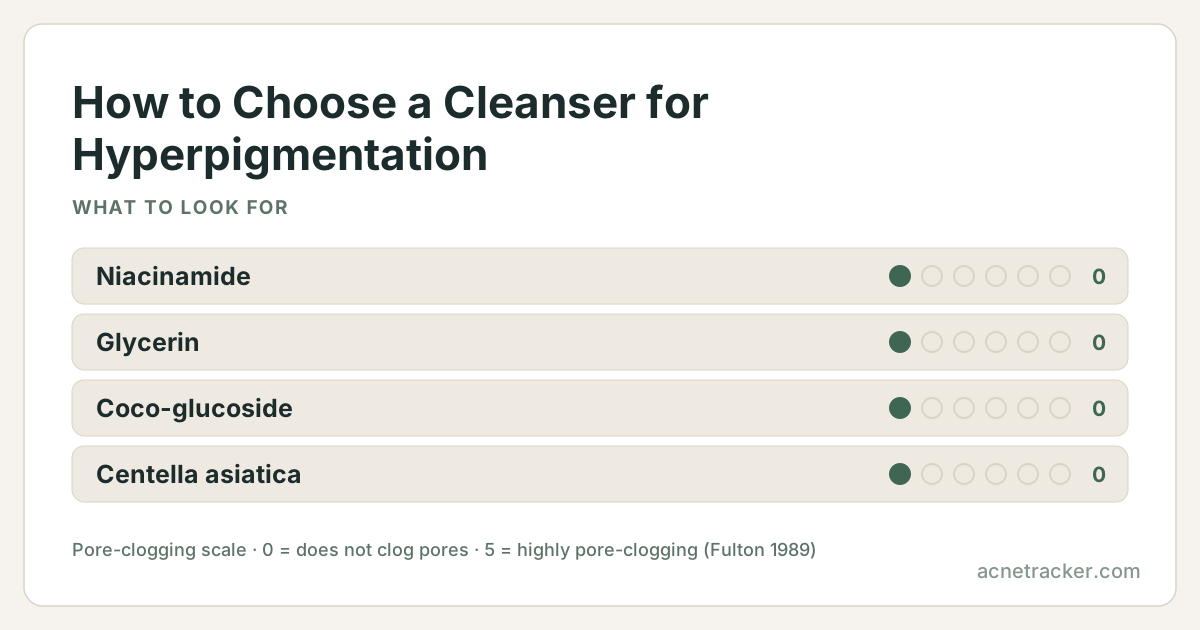
Ingredients to look for
| Ingredient | Why it matters |
|---|---|
| Niacinamide | Associated with more even tone and a calmer barrier; a helpful signal ingredient even if a wash's contact is brief. |
| Glycerin | Keeps cleansing from drying and irritating the skin, which helps avoid triggering more pigment. |
| Coco-glucoside | A gentle surfactant that cleans without the irritation that can worsen pigmentation-prone skin. |
| Centella asiatica | Calms the skin and supports the barrier, reducing the inflammation that can drive dark marks. |
| Allantoin | A mild soothing agent that keeps the surface comfortable and less reactive. |
Ingredients to avoid
| Ingredient | Why it matters |
|---|---|
| Abrasive scrubs and cleansing brushes | Friction inflames the skin and, in pigment-prone tones, can trigger post-inflammatory hyperpigmentation. |
| Harsh sulfates and high-pH soap | Strip and irritate the barrier, and irritation itself can darken marks. |
| Denatured alcohol high on the list | Dries and irritates, working against a calm surface and even tone. |
| Strong fragrance | A common irritant that can provoke the inflammation that leaves pigment behind. |
How to choose
Prioritise gentleness over any 'brightening' claim on a cleanser, because a wash rinses off before pigment-active ingredients can work. Choose a mild gel or gel-cream with glycerin and, ideally, calming additions like niacinamide, centella or allantoin, and avoid scrubs, sulfates and early denatured alcohol. The real fading happens in two places: leave-on actives such as vitamin C, niacinamide, azelaic acid or a retinoid, and — most importantly — broad-spectrum sunscreen every day, since UV both creates and darkens pigmentation. A gentle cleanser's job is to support that routine, not replace it. Judge the wash by how calm and comfortable your skin feels afterwards, and remember that any product that irritates pigment-prone skin can set your progress back rather than forward.
How to apply
Cleanse twice daily with lukewarm water and fingertips only, never scrubbing. Massage briefly and rinse well. The step that matters most for hyperpigmentation follows in the morning: apply broad-spectrum SPF 30–50 every single day, and reapply if you are outdoors, because unprotected sun undoes months of fading. In the evening, cleanse before your brightening actives so they reach clean skin. Be patient — pigment fades over weeks to months, and gentle consistency, not aggressive washing, is what protects the result. Sudden new or changing dark patches are worth showing to a doctor.
Frequently asked questions
Can a cleanser fade dark spots?
Not meaningfully. A wash-off product has too little contact time to fade pigment, so 'brightening' claims on a cleanser are marketing. Fading comes from leave-on actives like vitamin C or a retinoid, and above all from daily sunscreen that stops spots from darkening.
Why does scrubbing make hyperpigmentation worse?
Scrubbing irritates the skin, and in pigment-prone or deeper tones, inflammation triggers extra melanin — post-inflammatory hyperpigmentation. So aggressive washing can create new dark marks even as you try to fade old ones. Gentle cleansing avoids that trap.
Is sunscreen really more important than my cleanser here?
For hyperpigmentation, yes. UV both creates and deepens dark marks, so daily broad-spectrum sunscreen is the single most effective step. A gentle cleanser simply keeps the skin calm; without sun protection, other efforts to fade pigment are quickly undone.
When should I see a doctor about pigmentation?
See a doctor if a dark patch is new, changing, irregular or growing, or if widespread pigmentation like melasma is not responding to a careful routine. A professional can confirm the cause and offer treatments that skincare alone cannot match.
Sources & further reading
There is no single study of this exact question. The guidance here is reasoned from the ingredient profiles below, each of which carries its own references:
- Niacinamide2 refs
- Glycerin3 refs
- Coco-Glucoside2 refs
- Centella Asiatica2 refs
- Allantoin3 refs
Show every reference behind this page (8)
- Niacinamide: mechanisms of action and its topical use in dermatology (PubMed)cited by Niacinamide
- European Commission CosIng database — Niacinamidecited by Niacinamide, Glycerin, Coco-Glucoside, Centella Asiatica, Allantoin
- PubChem — Glycerol compound summarycited by Glycerin
- DermNet — Moisturiserscited by Glycerin
- Cosmetic Ingredient Review — safety of alkyl glucosidescited by Coco-Glucoside
- Bylka W et al. Centella asiatica in dermatology: an overview. Phytother Res 2014 Aug (PubMed)cited by Centella Asiatica
- PubChem — Allantoin compound summarycited by Allantoin
- Final report of the safety assessment of allantoin and its related complexes (PubMed)cited by Allantoin
Medical disclaimer
Ingredients mentioned on this page
Find your personal acne triggers
Our free Acne Tracker lets you log breakouts, sleep, stress and diet, and shows you which factors correlate with your flare-ups.