Zinc PCA: Comedogenic Rating & Ingredient Analysis
Zinc PCA is a quietly popular ingredient in products aimed at oily and acne-prone skin, where it plays the role of a gentle sebum manager. It is the zinc salt of PCA (pyrrolidone carboxylic acid), a molecule that is itself part of the skin's own natural moisturising factor, so it pairs the well-studied benefits of topical zinc with a skin-friendly carrier. The appeal is straightforward: it helps skin feel less oily and look less shiny without the tight, stripped feeling of an aggressive mattifying product, and it does so gently enough for sensitive skin. It is most often found in low concentrations inside serums, moisturisers and toners built for combination to oily complexions.
Quick facts
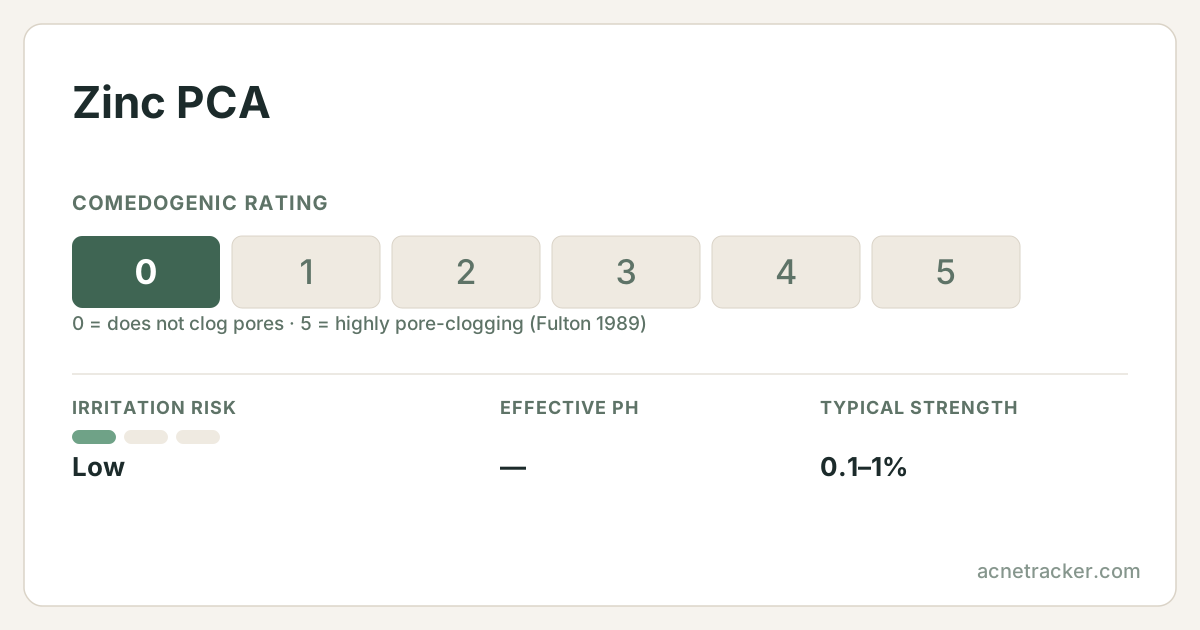
- Comedogenic rating
- our estimate — not measured
- Irritation risk
- Low
- Effective pH
- —
- Typical strength
- 0.1–1%
- Pregnancy
- Considered safe
- Suits skin types
- oilycombinationacne-pronesensitivenormal
Where this number comes from
No one has published a comedogenic rating for this ingredient. Fulton's 1989 table tested about 250 raw materials and this was not among them, and we found no later study measuring it. The figure shown is our own reasoning from the ingredient's chemistry and how it is used — treat it as an estimate, not a measurement.
Fulton read his own scale as 0-1 not significant, 2-3 borderline, 4-5 positive. The assay is the rabbit ear at 10% dilution, which the paper itself calls extremely sensitive and not fully predictive of human skin. Ratings describe the raw ingredient; concentration and formulation change real-world behaviour.
Caution profile
The four published fields on this page, on one 0–5 scale. Further from the centre means more care is needed — never that the ingredient is worse.
Derived, not measured: pore-clogging is the published comedogenic rating; irritation maps low/moderate/high to 1/3/5; pregnancy maps safe/caution/avoid to 0/3/5; skin-type limits is how many of the seven skin types this entry does NOT list. Every input is printed in words in the quick-facts card above.
Show the numbers
| Metric | 0–5 | Published field |
|---|---|---|
| Pore-clogging | 0 | 0/5 |
| Irritation | 1 | Low |
| Skin-type limits | 1.4 | 5/7 |
| Pregnancy | 0 | Considered safe |
Working pH and typical strength
Where this ingredient is formulated to sit, and at what concentration.
Both bars come from the fields above: the pH window and the typical strength range published for this ingredient. The tinted column is healthy skin's surface pH (about 4.7–5.75).
Show the numbers
| Metric | 0–5 |
|---|---|
| Typical strength | 0.1–1% |
What is it?
Zinc PCA combines two useful parts. The PCA portion is a humectant that belongs to the skin's natural moisturising factor, helping bind water in the surface layers, while the zinc portion delivers the benefits associated with topical zinc — chiefly a role in helping to regulate sebum and a mild soothing, astringent effect. In cosmetic formulas it is classed as a skin-conditioning and astringent agent, and it is generally used at low concentrations, typically under 1%. Its main appeal for oily skin is that it appears to help moderate excess oil and refine the look of enlarged pores while remaining gentle and non-drying, unlike alcohol-heavy toners that achieve a mattifying effect by stripping the skin. It is water-soluble, non-acidic and compatible with the other ingredients commonly used for oily skin, which is why it is frequently paired with niacinamide.
Benefits
Helps regulate excess oil
Zinc PCA is valued for helping moderate sebum production, leaving oily and combination skin looking less shiny through the day without the stripped, tight feeling of harsher mattifying products.
Refines the look of pores
By helping to keep oil in check and providing a mild astringent effect, zinc PCA can make enlarged pores look tighter and the skin surface more even and matte.
Soothes without drying
It carries a gentle soothing, conditioning quality, so it calms rather than irritates — a useful trait for oily skin that is also sensitive or reactive to stronger oil-control ingredients.
Supports surface hydration
The PCA half is a humectant from the skin's own natural moisturising factor, so zinc PCA helps bind water at the surface, balancing oil control with a comfortable, non-parched finish.
How to use
Zinc PCA is almost always formulated into a finished product — a serum, toner or lightweight moisturiser — rather than used alone, so follow the directions for that product. As a gentle, non-irritating ingredient it can generally be used once or twice daily, morning and night, with no adjustment period. It pairs particularly well with niacinamide for oily skin, since both help manage oil and refine pores, and it sits comfortably alongside salicylic acid in an anti-shine routine. Apply it after cleansing and before heavier creams. It layers under sunscreen and makeup without issue and does not increase sun sensitivity.
Side effects
Zinc PCA is well tolerated, non-comedogenic with a rating of 0, and low-irritation for most people. Adverse reactions are uncommon at the low concentrations used in skincare. Very rarely, someone may find a specific product mildly drying if it is combined with other oil-control actives, but zinc PCA itself is gentle. As always, an isolated allergy is possible, so patch test a new product if your skin is highly reactive.
Who should avoid it
There is no group that specifically needs to avoid zinc PCA. People with very dry skin may simply find they do not need an oil-regulating ingredient, and those with a rare zinc-salt sensitivity should avoid it. If your skin is reactive, introduce any zinc PCA product on its own and patch test first so you can judge how your skin responds.
Pairs well with
Frequently asked questions
What does zinc PCA do for the skin?
Zinc PCA helps regulate excess oil, refines the look of pores and gently soothes the skin, all while binding a little water at the surface. It is mainly used in products for oily and acne-prone complexions to reduce shine without over-drying.
Is zinc PCA good for oily skin?
Yes. Zinc PCA is one of the gentler oil-regulating ingredients, helping moderate sebum and reduce shine without stripping the skin, which makes it a good fit for oily and combination skin, including sensitive types.
Can I use zinc PCA with niacinamide?
Yes, and it is a common and effective pairing. Both ingredients help control oil and refine the appearance of pores, and they are frequently combined in the same serum for oily and acne-prone skin.
Does zinc PCA clog pores?
No. Zinc PCA has a comedogenic rating of 0 and does not clog pores. It is used specifically in products for acne-prone and oily skin, where its oil-regulating action is a benefit rather than a risk.
Is zinc PCA safe during pregnancy?
Topical zinc PCA is generally considered safe during pregnancy and breastfeeding, and is a gentle option for managing oily skin in this period. As always, confirm your full routine with your doctor.
Where this ingredient shows up here
Counted across this database, not the web — these are the pages on this site that reason about this ingredient.
Combination guides 7
Condition pages 4
Sources & further reading
Medical disclaimer
Find your personal acne triggers
Our free Acne Tracker lets you log breakouts, sleep, stress and diet, and shows you which factors correlate with your flare-ups.