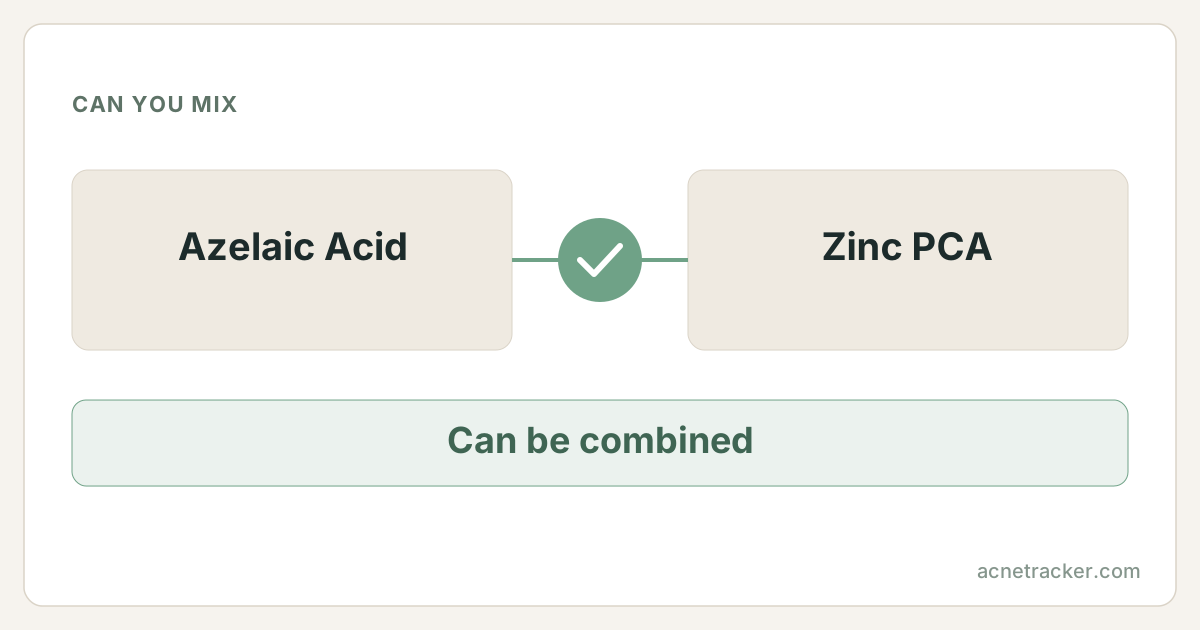
Can You Mix Azelaic Acid and Zinc PCA?
Yes, without complication. Zinc PCA is a mild, well-tolerated sebum-focused ingredient and azelaic acid works on the follicle, inflammation and pigment. Nothing here reacts. The honest note is about expectations rather than safety: zinc PCA's evidence base is considerably thinner than its marketing, so treat it as a pleasant addition to azelaic acid rather than a second engine.
How this pairing resolves
The two ingredients, their published numbers, and where they land together.
The numbers beside each ingredient are its published comedogenic rating and effective pH window, taken from its own profile page.
Show the numbers
| Ingredients | Metric | 0–5 |
|---|---|---|
| Azelaic Acid | Comedogenic rating | 0/5 |
| Azelaic Acid | Effective pH | 4.0–5.0 |
| Zinc PCA | Comedogenic rating | 0/5 |
| Zinc PCA | Effective pH | no published pH |
Why
Zinc PCA is the zinc salt of pyrrolidone carboxylic acid — and PCA is worth knowing on its own, since sodium PCA is one of the skin's natural moisturising factors, a humectant produced as filaggrin breaks down. Pairing zinc with it gives a water-soluble, well-tolerated way to deliver zinc into a formula without the chalky feel of zinc oxide. The claims made for it usually centre on sebum: laboratory work has reported that zinc can inhibit 5-alpha-reductase, the enzyme converting testosterone to the more androgenic dihydrotestosterone that drives sebaceous output. That is a plausible mechanism, and it is also where honesty is required — the leap from an enzyme assay to 'controls oily skin' in a leave-on cosmetic at low percentage is a large one, and the clinical evidence for topical zinc PCA specifically is limited. Azelaic acid's position is different: it has been through proper trials in acne and rosacea and has a regulatory footprint at 15–20% prescription strength. So this is a well-documented active plus a low-risk adjunct. They do not overlap much, which is the case for combining them: azelaic acid does not reduce sebum production, and zinc PCA does nothing for pigment.
How to combine them
Zinc PCA usually turns up inside something else — a lightweight serum, a mattifying moisturiser, an oil-control toner — rather than as a standalone, so in practice you are slotting azelaic acid into a routine that already contains it. Thin to thick: cleanse, the zinc PCA product, then azelaic acid, then moisturiser and SPF 30+ in the morning. No waiting time, no pH considerations, no adjustment period for the zinc. If your zinc PCA product is a moisturiser rather than a serum, put azelaic acid on first and the moisturiser over it. Since neither is photosensitising, morning or evening both work. Judge the oil control within a few weeks — it either suits you or it does not — but judge azelaic acid on months, since the pigment and redness work is slow. If oiliness is your main complaint and zinc PCA has not touched it, the honest next step is a salicylic acid or retinoid conversation, not more zinc.
Example routine
| When | Steps |
|---|---|
| Morning | Cleanser → Zinc PCA serum → Azelaic acid 10% → Moisturiser → SPF 30+ |
| Evening | Cleanser → Zinc PCA serum → Moisturiser |
| If zinc PCA is in your moisturiser | Azelaic acid first, zinc PCA moisturiser over it |
| Expectations | Oil control: judge in weeks. Pigment and redness: judge in months |
Warning signs
Frequently asked questions
Does zinc PCA actually reduce oil?
The proposed mechanism — zinc inhibiting 5-alpha-reductase — comes largely from laboratory work, and clinical evidence for topical zinc PCA specifically is limited. Some people notice less shine; treat it as plausible and modest, not established.
Does zinc PCA interfere with azelaic acid?
No. There is no reported interaction, no pH conflict and no chelation issue at cosmetic use levels. They are simply two independent ingredients that happen to share a routine.
What order do these two go on in?
Thin to thick. Zinc PCA is usually a light serum, so it goes first, with azelaic acid over it. If your zinc PCA is inside a moisturiser, reverse it — azelaic acid first, moisturiser last.
Is this pair enough for oily, acne-prone skin?
Azelaic acid is doing most of the work, and for mild acne with post-inflammatory marks that may be sufficient. Moderate or persistent acne is worth a doctor's assessment rather than a longer shelf.
Is zinc PCA the same as zinc oxide?
No. Zinc oxide is a mineral UV filter that sits on the surface. Zinc PCA is a water-soluble zinc salt used as a skin-conditioning ingredient. Same element, entirely different role in a formula.
Sources & further reading
There is no single study of this exact question. The guidance here is reasoned from the ingredient profiles below, each of which carries its own references:
- Azelaic Acid3 refs
- Zinc PCA3 refs
Show every reference behind this page (5)
- PubChem — Azelaic acid compound summarycited by Azelaic Acid
- DermNet — Azelaic acidcited by Azelaic Acid
- European Commission CosIng database — Azelaic Acidcited by Azelaic Acid, Zinc PCA
- PubChem — Zinc PCA (zinc pyrrolidone carboxylate)cited by Zinc PCA
- Zinc l-pyrrolidone carboxylate inhibits the UVA-induced production of matrix metalloproteinase-1 by in vitro cultured skin fibroblasts, whereas it enhances their collagen synthesis (PubMed)cited by Zinc PCA
Medical disclaimer
Ingredients mentioned on this page
Find your personal acne triggers
Our free Acne Tracker lets you log breakouts, sleep, stress and diet, and shows you which factors correlate with your flare-ups.