How to Choose a Cleanser for Blackheads
Blackheads are open, oxidised plugs of oil and dead cells sitting in the pore, so a cleanser that could really shift them would need to reach inside — something a wash-off product does only partly. Salicylic acid, being oil-soluble, is the ingredient best suited to loosening that congestion even in short contact. The rest of the job belongs to leave-on treatments and patience; harsh scrubbing and squeezing tend to inflame and scar rather than clear. This guide sets out what genuinely helps at the cleansing step, what only feels productive, and how to read the label rather than the pore-strip marketing. We review formulas, not brands.
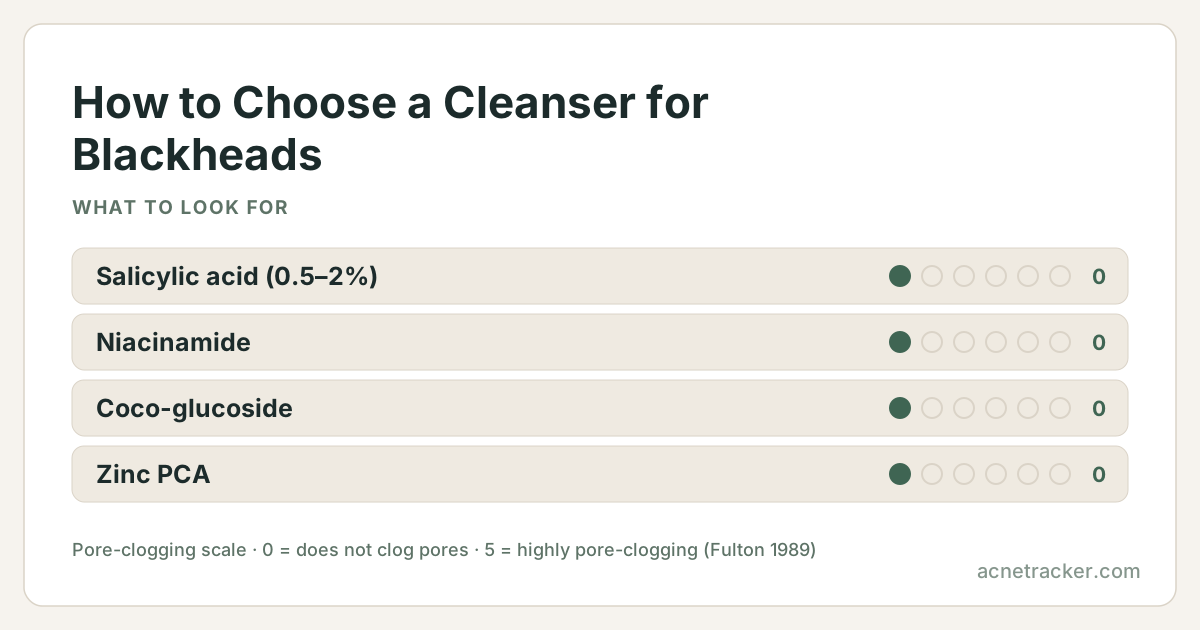
Ingredients to look for
| Ingredient | Why it matters |
|---|---|
| Salicylic acid (0.5–2%) | Oil-soluble, so it penetrates the pore lining and helps loosen the plug even during a short wash. |
| Niacinamide | Supports a balanced sebum output over time, which is where blackheads originate; a bonus in a cleanser. |
| Coco-glucoside | Cleans away surface oil gently so it does not oxidise into fresh congestion, without stripping the skin. |
| Zinc PCA | Helps moderate oil in the congestion-prone T-zone where blackheads cluster. |
| Glycerin | Prevents the dehydration that would otherwise push the skin to make more of the oil that clogs pores. |
Ingredients to avoid
| Ingredient | Why it matters |
|---|---|
| Gritty scrubs and cleansing brushes | They buff the surface but cannot empty a pore, and the friction inflames skin and spreads oil. |
| High-pH soaps | Strip and dry the surface, prompting rebound oil that feeds new blackheads. |
| Denatured alcohol high on the list | Dries the skin and triggers more oil, the opposite of what congested skin needs. |
| Heavy oils and waxes in a daily wash | Can leave residue that adds to the very congestion you are trying to reduce. |
How to choose
Choose a gel cleanser with 0.5–2% salicylic acid if you want a single active working at this step, but keep expectations realistic: a wash rinses off in under a minute, so it maintains rather than clears blackheads. The heavy lifting comes from a leave-on salicylic acid product used a few evenings a week. Look for a mild surfactant base and glycerin, and avoid anything abrasive, alcohol-heavy or sulfate-based. Ignore 'pore-refining', 'blackhead-dissolving' and 'deep-cleansing' as unregulated claims, and be sceptical of pore strips, which pull surface plugs but leave the pore to refill. The most useful signal is still simple: skin that feels clean and comfortable after rinsing, never tight, is a cleanser working with your skin rather than against it.
How to apply
Cleanse twice daily with lukewarm water, massaging a salicylic acid wash for a genuine 30–60 seconds over the nose, chin and forehead so it gets working time. Rinse thoroughly. Do not scrub, and resist squeezing blackheads, which pushes contents deeper and risks scarring. For real progress, follow with a leave-on salicylic acid product a few nights a week, and always moisturise afterwards so the skin does not overcompensate with more oil. Consistency over weeks, not force in one session, is what gradually reduces congestion.
Frequently asked questions
Can a cleanser get rid of blackheads?
Only partly. A wash-off salicylic acid cleanser helps keep pores clearer but has too little contact time to empty them. Lasting improvement comes from leave-on salicylic acid and, for stubborn cases, a professional extraction rather than any single cleanser.
Are scrubs good for blackheads?
No. Physical scrubs buff the surface but cannot reach inside the pore, and the friction inflames the skin and can spread oil. A chemical exfoliant like salicylic acid works inside the pore where blackheads actually form.
Do pore strips remove blackheads for good?
They pull out the top of surface plugs, but the pore refills within days because the underlying oil production continues. Regular salicylic acid use addresses the cause more effectively than strips, which offer only a brief cosmetic result.
How long until a salicylic acid routine shows results?
Expect gradual change over a month or two, not overnight. Cell turnover and pore clearing happen slowly, so blackheads soften and reduce week by week. Rushing with stronger products or scrubbing usually sets progress back.
Sources & further reading
There is no single study of this exact question. The guidance here is reasoned from the ingredient profiles below, each of which carries its own references:
- Salicylic Acid2 refs
- Niacinamide2 refs
- Coco-Glucoside2 refs
- Zinc PCA3 refs
- Glycerin3 refs
Show every reference behind this page (9)
- Salicylic acid as a peeling agent: a comprehensive review (PubMed)cited by Salicylic Acid
- FDA OTC monograph — acne drug products (salicylic acid 0.5–2%)cited by Salicylic Acid
- Niacinamide: mechanisms of action and its topical use in dermatology (PubMed)cited by Niacinamide
- European Commission CosIng database — Niacinamidecited by Niacinamide, Coco-Glucoside, Zinc PCA, Glycerin
- Cosmetic Ingredient Review — safety of alkyl glucosidescited by Coco-Glucoside
- PubChem — Zinc PCA (zinc pyrrolidone carboxylate)cited by Zinc PCA
- Zinc l-pyrrolidone carboxylate inhibits the UVA-induced production of matrix metalloproteinase-1 by in vitro cultured skin fibroblasts, whereas it enhances their collagen synthesis (PubMed)cited by Zinc PCA
- PubChem — Glycerol compound summarycited by Glycerin
- DermNet — Moisturiserscited by Glycerin
Medical disclaimer
Ingredients mentioned on this page
Find your personal acne triggers
Our free Acne Tracker lets you log breakouts, sleep, stress and diet, and shows you which factors correlate with your flare-ups.