How to Choose a Cleanser for Acne-Prone Skin
A cleanser cannot cure acne, but the wrong one can keep skin inflamed and prone to fresh breakouts. Because a wash-off product has only seconds of contact time, its main job is to clean gently without stripping — over-cleansing damages the barrier, and a damaged barrier breaks out more, not less. A little salicylic acid can help maintain clearer pores between treatment steps. This guide describes the ingredient profile to look for, the harsh additions that undo your other actives, and how to fit a cleanser into an acne routine sensibly. We review formulas rather than brands, so you can judge any product on its label.
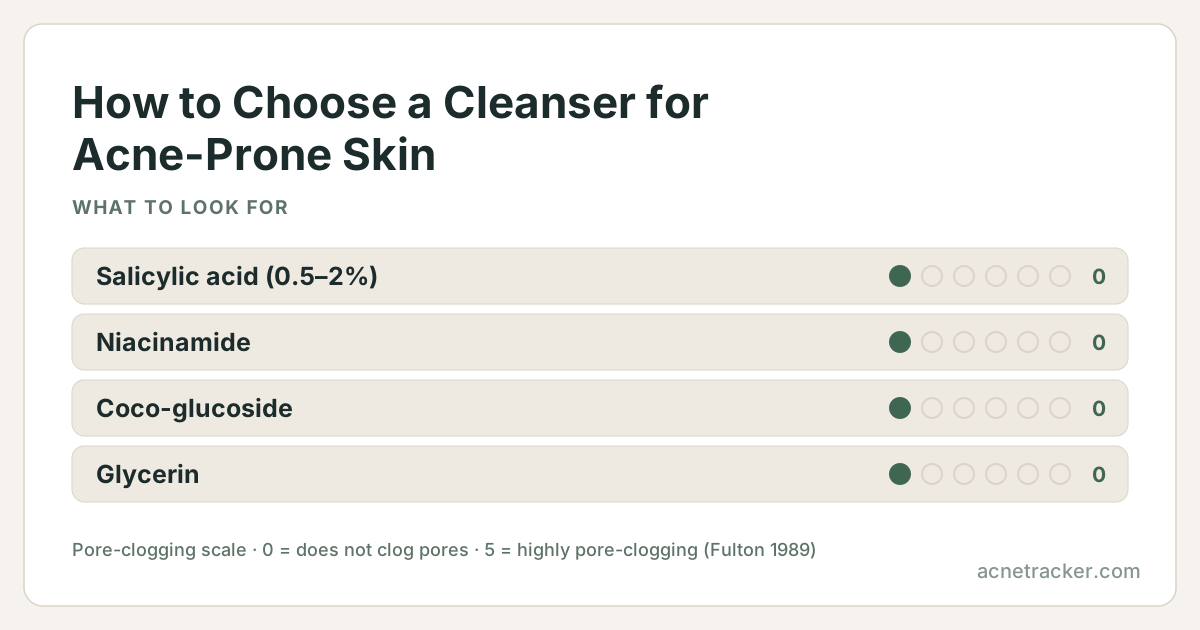
Ingredients to look for
| Ingredient | Why it matters |
|---|---|
| Salicylic acid (0.5–2%) | Oil-soluble, so even in short contact it helps keep pore linings clear between leave-on treatment steps. |
| Niacinamide | A barrier-friendly signal ingredient; short contact time limits its effect, but it points to a calmer formula. |
| Coco-glucoside | A gentle surfactant that cleans acne-prone skin without the barrier damage that drives more breakouts. |
| Glycerin | Keeps the wash from dehydrating skin, so it does not overproduce oil to compensate. |
| Zinc PCA | A mild sebum-regulating and soothing addition suited to congestion-prone, inflamed skin. |
Ingredients to avoid
| Ingredient | Why it matters |
|---|---|
| Harsh sulfates and high-pH soaps | Strip the barrier and raise reactivity, which tends to increase, not reduce, inflammatory breakouts. |
| Abrasive scrubs and cleansing brushes | Physical friction spreads bacteria and inflames existing spots without clearing the pore. |
| Heavy oils and rich emollients in a daily wash | Can leave a film that adds to congestion in already blockage-prone skin. |
| Denatured alcohol high on the list | Gives a false 'clean' feel while drying and irritating skin, worsening the barrier long term. |
How to choose
Choose a gel or gentle foaming texture with a mild surfactant system; save balms and oils for makeup removal as a first step. A cleanser with 0.5–2% salicylic acid is a reasonable maintenance choice, but treat it as a supporting player, not the treatment — leave-on actives do the real work. Check that glycerin sits in the top half of the list and that no harsh sulfate or early denatured alcohol appears. Be wary of stacking multiple acids: if your leave-on routine already includes an exfoliant or a retinoid, a plain gentle cleanser often serves you better than another active. 'Anti-acne' and 'blemish-clearing' are marketing terms; the ingredient list and the after-rinse feel tell you far more. Skin should feel clean and comfortable, never tight or stinging.
How to apply
Cleanse twice daily and after heavy sweating, using lukewarm water and fingertips only. Massage for 30–60 seconds so a salicylic acid cleanser gets a little working time, then rinse well. Resist the urge to wash more often or scrub harder when skin breaks out — that damages the barrier and prolongs the flare. If you use benzoyl peroxide or a retinoid at night, keep the cleanser plain to avoid layering too many actives, and always follow with a light, non-comedogenic moisturiser so the skin stays balanced.
Frequently asked questions
Will a salicylic acid cleanser clear my acne?
On its own, rarely. Contact time is too short for a wash to treat acne, so it works as maintenance alongside leave-on actives. Persistent or painful acne is best assessed by a doctor, who can offer treatments a cleanser cannot match.
Should I wash more often when I break out?
No. Washing more than twice a day strips the barrier, and a weakened barrier tends to break out more. Stick to morning and evening, plus a rinse after heavy sweat, and let your leave-on treatments do the work.
Can a cleanser make acne worse?
Yes, if it is too harsh. Sulfates, high-pH soap and scrubbing inflame the skin and damage the barrier, which can increase breakouts. A gentle, barrier-friendly wash supports clearer skin better than an aggressive one.
Do I need a separate cleanser if I use benzoyl peroxide?
Not necessarily, but keep the cleanser simple so you are not layering several actives at once. A plain gentle wash followed by your benzoyl peroxide treatment is usually less irritating than a medicated cleanser plus a strong leave-on.
Sources & further reading
There is no single study of this exact question. The guidance here is reasoned from the ingredient profiles below, each of which carries its own references:
- Salicylic Acid2 refs
- Niacinamide2 refs
- Coco-Glucoside2 refs
- Glycerin3 refs
- Zinc PCA3 refs
Show every reference behind this page (9)
- Salicylic acid as a peeling agent: a comprehensive review (PubMed)cited by Salicylic Acid
- FDA OTC monograph — acne drug products (salicylic acid 0.5–2%)cited by Salicylic Acid
- Niacinamide: mechanisms of action and its topical use in dermatology (PubMed)cited by Niacinamide
- European Commission CosIng database — Niacinamidecited by Niacinamide, Coco-Glucoside, Glycerin, Zinc PCA
- Cosmetic Ingredient Review — safety of alkyl glucosidescited by Coco-Glucoside
- PubChem — Glycerol compound summarycited by Glycerin
- DermNet — Moisturiserscited by Glycerin
- PubChem — Zinc PCA (zinc pyrrolidone carboxylate)cited by Zinc PCA
- Zinc l-pyrrolidone carboxylate inhibits the UVA-induced production of matrix metalloproteinase-1 by in vitro cultured skin fibroblasts, whereas it enhances their collagen synthesis (PubMed)cited by Zinc PCA
Medical disclaimer
Ingredients mentioned on this page
Find your personal acne triggers
Our free Acne Tracker lets you log breakouts, sleep, stress and diet, and shows you which factors correlate with your flare-ups.