How to Choose a Face Oil for Mature Skin
Sebum production declines steadily from around the fourth decade, and more sharply after menopause — which is the honest reason face oils suit mature skin better than they suit almost anyone else. The skin is genuinely making less of the lipid it used to, so replacing some of it addresses a real deficit rather than a marketed one. Where this page gets careful is on what happens next. Oils improve comfort, flexibility and how light reflects off the surface, and there is decent evidence for some antioxidant components. Rebuilding collagen is a different claim with a different evidence bar, and most oils do not meet it.
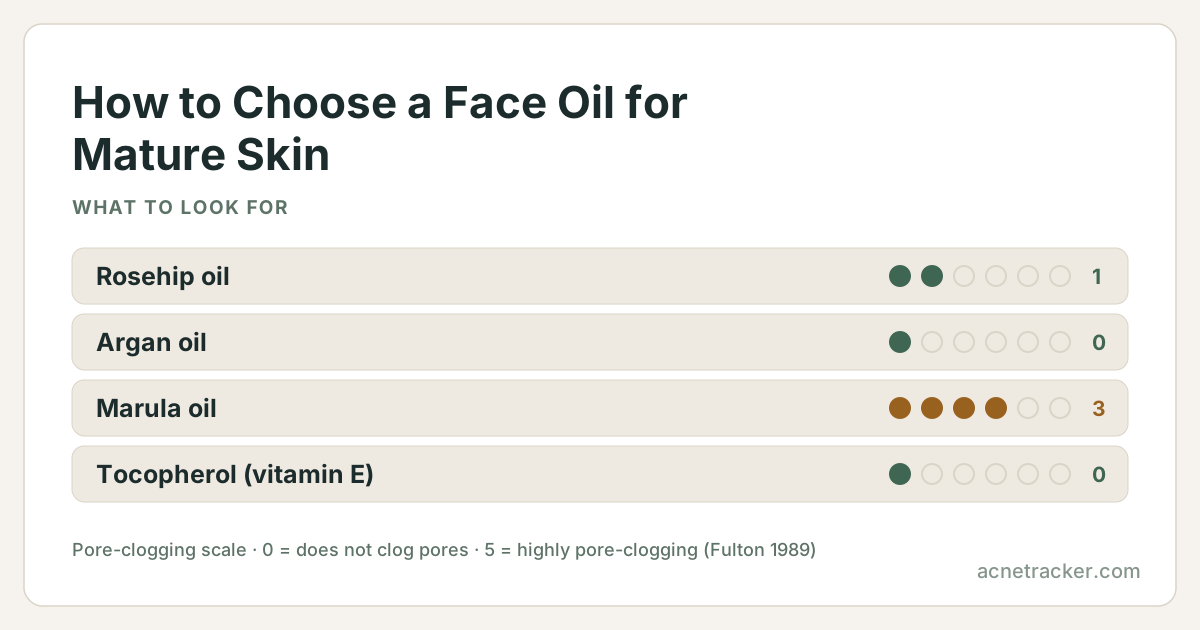
Ingredients to look for
| Ingredient | Why it matters |
|---|---|
| Rosehip oil | The most studied oil in this space, with small trials on scars and skin texture. Its linolenic and linoleic content also keeps it light. Reproduced rating 1. |
| Argan oil | A small controlled trial in postmenopausal women found daily argan oil application improved skin elasticity measurements over 60 days. |
| Marula oil | Oleic-rich and cushioning, which suits skin that has lost oil rather than gained it. Note that Fulton has no rating for marula — treat it as unrated. |
| Tocopherol (vitamin E) | In an oil it does two jobs: an antioxidant on skin, and the thing that stops the oil itself going rancid before you finish the bottle. |
| Sea buckthorn oil | Unusually high in palmitoleic acid, a fatty acid found in human sebum and one that declines with age. Its carotenoids will tint pale skin orange, so use it sparingly. |
Ingredients to avoid
| Ingredient | Why it matters |
|---|---|
| Oils sold on collagen claims | No plant oil has good evidence of rebuilding dermal collagen. Retinoids and sun protection have that evidence; an oil that promises it is overselling. |
| Oil as a substitute for sunscreen | Photoageing does more visible damage than lipid loss. No oil offers meaningful UV protection, and 'natural SPF' figures for oils are not credible. |
| Fragranced oils on thinning skin | The barrier is less robust with age, so fragrance sensitisation becomes more likely, not less. The reaction is also slower to settle. |
| Oil layered under a retinoid | It slows delivery of the one ingredient with the strongest evidence for ageing skin. Retinoid first, on dry skin; the oil goes on top. |
How to choose
Separate what an oil does well from what it is sold as doing. It does surface lipid replacement, occlusion, comfort and light-scattering, all of which visibly improve mature skin within days and none of which are structural. So choose for tolerance and texture: a richer oleic oil if the dryness is significant, a lighter one if your skin still runs oily in the T-zone. Then look for two supporting features. Tocopherol, both for its own antioxidant activity and for shelf stability, and dark glass packaging, because ageing skin is often on the same bottle for months. Third, place the oil correctly in a routine that already contains the things with real evidence — a retinoid, sunscreen, perhaps vitamin C. The oil supports those; it does not replace them, and swapping an evidence-backed active for a botanical oil is a downgrade. Finally, treat 'anti-ageing' and 'firming' on an oil bottle as marketing language with no regulatory definition behind them.
How to apply
Evening is where oils earn most on mature skin, since there is nothing to layer over them. Apply your treatment step first onto clean dry skin, wait, then moisturiser, then four to six drops of oil warmed and pressed over the face, neck and the front of the chest — all three age together and only one usually gets treated. A drop worked into the backs of the hands afterwards costs nothing. In the morning, keep the oil minimal or skip it: sunscreen is the priority and oil underneath can disturb the film. If you use a retinoid, keep it and the oil in the right order, never mixed in the palm.
Frequently asked questions
Do face oils reduce wrinkles?
They soften their appearance temporarily by hydrating and smoothing the surface, which changes how light hits fine lines. That is a real cosmetic effect, but it is not the same as the structural change retinoids and sun protection produce.
Which oil has actual research behind it for ageing skin?
Argan has the most direct evidence: a small controlled trial in postmenopausal women reported improved elasticity after daily application. Rosehip has small trials on texture and scars. Both are modest studies, not proof of rejuvenation.
Why does my skin get drier after menopause?
Sebum output falls as oestrogen declines, and the barrier's lipid content drops with it. That is a genuine lipid deficit, which is exactly the gap a face oil is well suited to fill.
Can I use face oil with retinol?
Yes, and it often makes retinol more tolerable. Apply the retinoid first onto dry skin, let it absorb, then the oil on top. Do not mix them in your hand — that dilutes the retinoid and changes how it is delivered.
Sources & further reading
There is no single study of this exact question. The guidance here is reasoned from the ingredient profiles below, each of which carries its own references:
- Rosehip Oil3 refs
- Argan Oil3 refs
- Marula Oil3 refslimited evidence
- Vitamin E3 refs
- Sea Buckthorn Oil2 refs
The ingredients below are described here on the basis of laboratory, systemic or traditional-use sources rather than trials of topical use. Advice on this page that depends on them is correspondingly less certain.
- Marula Oil — Marula oil's fatty-acid profile is well characterised, and its emollient behaviour follows directly from that composition. The antioxidant and barrier-support descriptions come from analyses of the oil's constituents and from research on marula as a food and traditional medicine — not from trials of the oil applied to human skin, of which we found none.
Show every reference behind this page (9)
- European Commission CosIng database — Rosa Canina Fruit Oilcited by Rosehip Oil, Argan Oil, Marula Oil, Vitamin E, Sea Buckthorn Oil
- PubChem — Linoleic acid (major rosehip fatty acid)cited by Rosehip Oil
- Safety Assessment of Rosa canina-derived Ingredients as Used in Cosmetics (PubMed)cited by Rosehip Oil
- PubChem — Oleic acid (major argan fatty acid)cited by Argan Oil, Marula Oil
- Insights on Phytochemistry and Pharmacological Properties of Argania spinosa L. Skeels: A Comprehensive Review (PubMed)cited by Argan Oil
- Marula [Sclerocarya birrea (A. Rich.) Hochst.] products as a food and medicine (PubMed)cited by Marula Oil
- PubChem — Tocopherol compound summarycited by Vitamin E
- DermNet — Vitamin Ecited by Vitamin E
- Abundance of active ingredients in sea-buckthorn oil (Lipids in Health and Disease, 2017)cited by Sea Buckthorn Oil
Medical disclaimer
Ingredients mentioned on this page
Find your personal acne triggers
Our free Acne Tracker lets you log breakouts, sleep, stress and diet, and shows you which factors correlate with your flare-ups.