Argan Oil: Comedogenic Rating & Ingredient Analysis
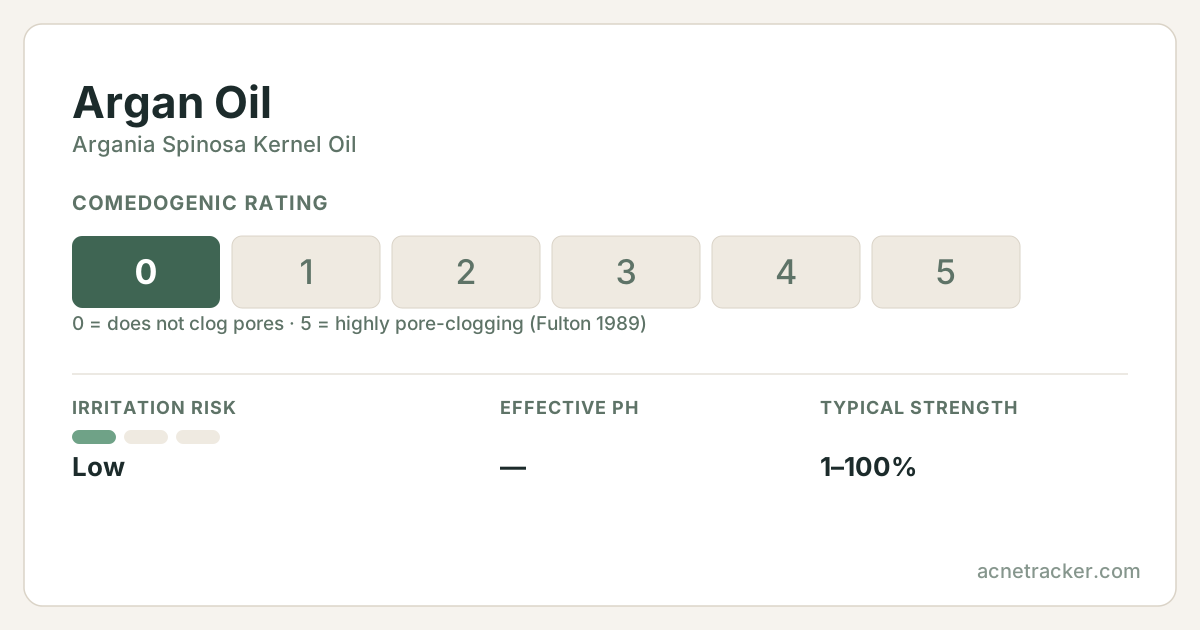
Argan oil, extracted from the kernels of the Moroccan argan tree, is a nourishing facial and body oil famous for its high vitamin E content and rich, conditioning feel. It has a balanced fatty-acid profile and a notable dose of tocopherols and polyphenols, which give it both emollient and antioxidant value. It shines on dry, mature and normal skin that benefits from extra softening and cushioning, leaving skin supple without a heavy residue. Despite being a facial oil, it carries a low comedogenic rating, so it is generally friendlier to a wider range of skin than its rich reputation might suggest.
Quick facts
- Comedogenic rating
- our estimate — not measured
- Irritation risk
- Low
- Effective pH
- —
- Typical strength
- 1–100%
- Pregnancy
- Considered safe
- Suits skin types
- drynormalmaturesensitivecombination
Where this number comes from
No one has published a comedogenic rating for this ingredient. Fulton's 1989 table tested about 250 raw materials and this was not among them, and we found no later study measuring it. The figure shown is our own reasoning from the ingredient's chemistry and how it is used — treat it as an estimate, not a measurement.
Fulton read his own scale as 0-1 not significant, 2-3 borderline, 4-5 positive. The assay is the rabbit ear at 10% dilution, which the paper itself calls extremely sensitive and not fully predictive of human skin. Ratings describe the raw ingredient; concentration and formulation change real-world behaviour.
Caution profile
The four published fields on this page, on one 0–5 scale. Further from the centre means more care is needed — never that the ingredient is worse.
Derived, not measured: pore-clogging is the published comedogenic rating; irritation maps low/moderate/high to 1/3/5; pregnancy maps safe/caution/avoid to 0/3/5; skin-type limits is how many of the seven skin types this entry does NOT list. Every input is printed in words in the quick-facts card above.
Show the numbers
| Metric | 0–5 | Published field |
|---|---|---|
| Pore-clogging | 0 | 0/5 |
| Irritation | 1 | Low |
| Skin-type limits | 1.4 | 5/7 |
| Pregnancy | 0 | Considered safe |
Working pH and typical strength
Where this ingredient is formulated to sit, and at what concentration.
Both bars come from the fields above: the pH window and the typical strength range published for this ingredient. The tinted column is healthy skin's surface pH (about 4.7–5.75).
Show the numbers
| Metric | 0–5 |
|---|---|
| Typical strength | 1–100% |
What is it?
The oil is roughly split between oleic and linoleic fatty acids, with a generous supply of vitamin E and antioxidant polyphenols. This composition makes it a genuine two-in-one: the fatty acids condition and reinforce the skin's lipid barrier, reducing water loss, while the vitamin E and polyphenols provide antioxidant defence against environmental stress. Unrefined argan has a naturally nutty scent and a golden colour. Because it is more stable than highly polyunsaturated oils but still benefits from careful storage, keeping it cool and sealed preserves its antioxidant richness for longer.
Benefits
Rich in vitamin E
Its naturally high tocopherol content gives argan oil antioxidant power, helping defend skin from free-radical stress while conditioning the surface.
Softens and cushions dry skin
The blend of fatty acids provides deep emollience, easing tightness and rough patches and leaving dry or mature skin feeling supple and comfortable.
Supports the moisture barrier
By reinforcing the skin's lipid layer it helps limit water loss, which is especially valuable for skin that feels dehydrated or stressed by weather and actives.
Low pore-clogging risk
Despite its richness, argan sits low on the comedogenic scale, so it is more broadly tolerated than many facial oils, including by some combination skin types.
How to use
Apply argan oil at night as a final step, warming a few drops and pressing them into slightly damp skin to lock in moisture, or add a drop to your night cream for extra nourishment. It layers well after water-based serums and works nicely on dry areas, cuticles and hair ends too. Because it is fairly rich, drier skin will benefit most, while oilier skin should use it sparingly. Choose unrefined, cold-pressed argan for the fullest antioxidant content, and store it away from heat and light.
Side effects
Argan is well tolerated and irritation is rare. As a tree-nut-adjacent oil, it can in theory concern people with severe nut allergies, though reactions to cosmetic argan are uncommon; a patch test is sensible if you have such allergies. Otherwise, its low comedogenic rating and gentle profile make problems unusual. As with any oil, using too much can leave skin feeling greasy rather than nourished.
Who should avoid it
People with significant tree-nut allergies should patch test or seek advice before use. Very oily, highly congestion-prone skin may prefer a lighter option, though argan's low comedogenic rating means many tolerate it. Pregnancy does not change the picture for argan: it is regarded as safe to use on the skin, and the nut-allergy question above remains the only real thing to screen for.
Pairs well with
Frequently asked questions
Is argan oil good for the face?
Yes — dry, normal and mature skin get the most out of it. Its vitamin E and fatty acids condition and support the barrier, and its low comedogenic rating means it is tolerated more widely than many richer oils.
Does argan oil clog pores?
It has a low comedogenic rating, so for most people it does not clog pores. Very congestion-prone skin should still use it sparingly and monitor how the skin responds over a couple of weeks.
Can argan oil help ageing skin?
Its antioxidant vitamin E and polyphenols help defend against free-radical stress, while its emollient fatty acids soften and cushion, making it a comforting supportive oil for mature skin, though not a replacement for retinoids.
Is argan oil safe for nut allergies?
Argan comes from a fruit kernel rather than a true tree nut, and cosmetic reactions are uncommon, but anyone with significant nut allergies should patch test first or check with a clinician before regular use.
Where this ingredient shows up here
Counted across this database, not the web — these are the pages on this site that reason about this ingredient.
Sources & further reading
Medical disclaimer
Find your personal acne triggers
Our free Acne Tracker lets you log breakouts, sleep, stress and diet, and shows you which factors correlate with your flare-ups.