Can You Mix Hyaluronic Acid and Vitamin E?
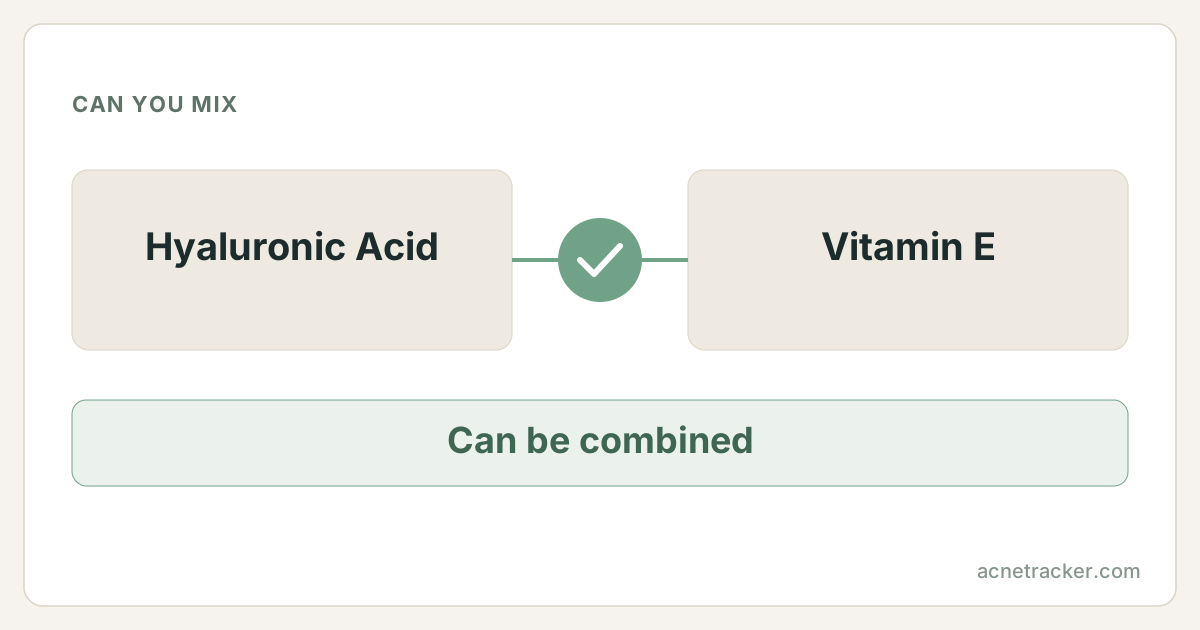
Yes, and they are natural partners because they work in different phases and on different problems. Hyaluronic acid binds water; vitamin E dissolves in oil, sits in the skin's lipid membranes and defends them from oxidation. It also seals a little, which a humectant needs. The detail worth checking is which vitamin E you have — tocopherol and tocopheryl acetate are not interchangeable.
How this pairing resolves
The two ingredients, their published numbers, and where they land together.
The numbers beside each ingredient are its published comedogenic rating and effective pH window, taken from its own profile page.
Show the numbers
| Ingredients | Metric | 0–5 |
|---|---|---|
| Hyaluronic Acid | Comedogenic rating | 0/5 |
| Hyaluronic Acid | Effective pH | no published pH |
| Vitamin E | Comedogenic rating | 0/5 |
| Vitamin E | Effective pH | no published pH |
Why
Vitamin E in cosmetics means the tocopherols, and alpha-tocopherol is the important one. It is lipophilic, so it partitions into the lipid membranes and the stratum corneum's lipid matrix rather than the watery spaces — which is precisely where it is useful. Its job is to interrupt lipid peroxidation: when UV or pollution generates free radicals, those radicals attack the unsaturated fats in cell membranes and set off a chain reaction, and alpha-tocopherol donates a hydrogen atom to break the chain, becoming a relatively stable tocopheroxyl radical itself. Vitamin C regenerates it back to the active form, which is the real reason those two are formulated together so often, and why the classic vitamin C plus E plus ferulic acid combination exists. Vitamin E also functions as an emollient and slightly reduces water loss, which is a modest but genuine contribution alongside a humectant. Hyaluronic acid does none of this — it is a water-phase polymer with no antioxidant activity and no place in the lipid matrix. There is nothing between them to manage: no pH sensitivity, no reactivity, no competition for the same job. The label question is the practical one. Tocopheryl acetate is the stable ester most products use because plain tocopherol oxidises; the acetate must be cleaved by skin enzymes to become active, and how efficiently that happens topically is not well established. Tocopherol is the active form and the less stable one. Neither fact makes a product bad — it just means the antioxidant claim is stronger with tocopherol than with its ester.
How to combine them
Water before oil, always. Hyaluronic acid on damp skin, then whatever carries the vitamin E — usually a facial oil or a moisturiser — over the top. Reverse it and the oil phase blocks the serum from reaching your skin at all, which is the one way to waste this. That ordering makes vitamin E do double duty: antioxidant, and the light seal that stops the humectant's water from evaporating. Morning is where the antioxidant logic sits, since that is when UV and pollution generate the radicals it exists to intercept, but it is not photosensitising and evening use is fine too. If your vitamin C serum contains vitamin E and ferulic acid, that is the well-supported arrangement and you do not need a separate vitamin E step. Neither ingredient needs building up, and both can be used indefinitely.
Example routine
| When | Steps |
|---|---|
| Morning | Cleanser → Hyaluronic acid on damp skin → Vitamin C + E serum → Moisturiser → SPF 30+ |
| Evening | Cleanser → Hyaluronic acid → Vitamin E oil or moisturiser over it |
| Wrong order | Vitamin E oil under a hyaluronic acid serum — the oil blocks it entirely |
| Label check | Tocopherol = active form; tocopheryl acetate = stable ester, needs conversion |
Warning signs
Frequently asked questions
What is the difference between tocopherol and tocopheryl acetate?
Tocopherol is the active antioxidant and it oxidises readily. Tocopheryl acetate is an ester chosen for shelf stability, and it must be cleaved by skin enzymes before it does anything — how well that works topically is not firmly established. The antioxidant claim is stronger with tocopherol.
Should vitamin E go before or after hyaluronic acid?
After, without exception. Vitamin E travels in an oil or a cream, and an oil phase applied first will stop a water-based hyaluronic acid serum from reaching skin. Humectant on damp skin, oil-soluble antioxidant over it.
Why is vitamin E always paired with vitamin C?
Because vitamin C regenerates oxidised vitamin E back to its active form, so the pair lasts longer than either alone. That synergy, usually with ferulic acid added for stability, is the basis of the classic antioxidant serum.
Will vitamin E oil clog my pores?
It can on acne-prone skin — it is a heavy oil with a comedogenic reputation, and closed comedones after adding it point at the oil rather than at your humectant. A serum containing modest tocopherol is a different proposition from neat vitamin E oil.
Does vitamin E fade scars?
The evidence for that specific claim is weak. Studies on topical vitamin E for scars have been underwhelming, and some report contact dermatitis that leaves the scar looking worse. It is a good membrane antioxidant; it is not a scar treatment.
Sources & further reading
There is no single study of this exact question. The guidance here is reasoned from the ingredient profiles below, each of which carries its own references:
- Hyaluronic Acid3 refs
- Vitamin E3 refs
Show every reference behind this page (5)
- PubChem — Hyaluronic acid compound summarycited by Hyaluronic Acid
- European Commission CosIng database — Hyaluronic Acidcited by Hyaluronic Acid, Vitamin E
- DermNet — Moisturisers and humectantscited by Hyaluronic Acid
- PubChem — Tocopherol compound summarycited by Vitamin E
- DermNet — Vitamin Ecited by Vitamin E
Medical disclaimer
Ingredients mentioned on this page
Find your personal acne triggers
Our free Acne Tracker lets you log breakouts, sleep, stress and diet, and shows you which factors correlate with your flare-ups.