How to Choose a Night Cream for Dull Skin
Dullness is not one problem but several wearing the same face: dead-cell buildup that scatters light, dehydration that flattens the surface, uneven tone, and the tired greyness of poor sleep and sun damage. Night is the natural time to work on it, because cell turnover and repair peak overnight, and gentle renewal actives are best used away from the sun. A night cream cannot deliver instant glow, but the right one restores radiance gradually by smoothing, hydrating and evening tone. This guide describes that radiance-building profile and separates real overnight renewal from the shimmer and 'glow' gimmicks that only reflect light.
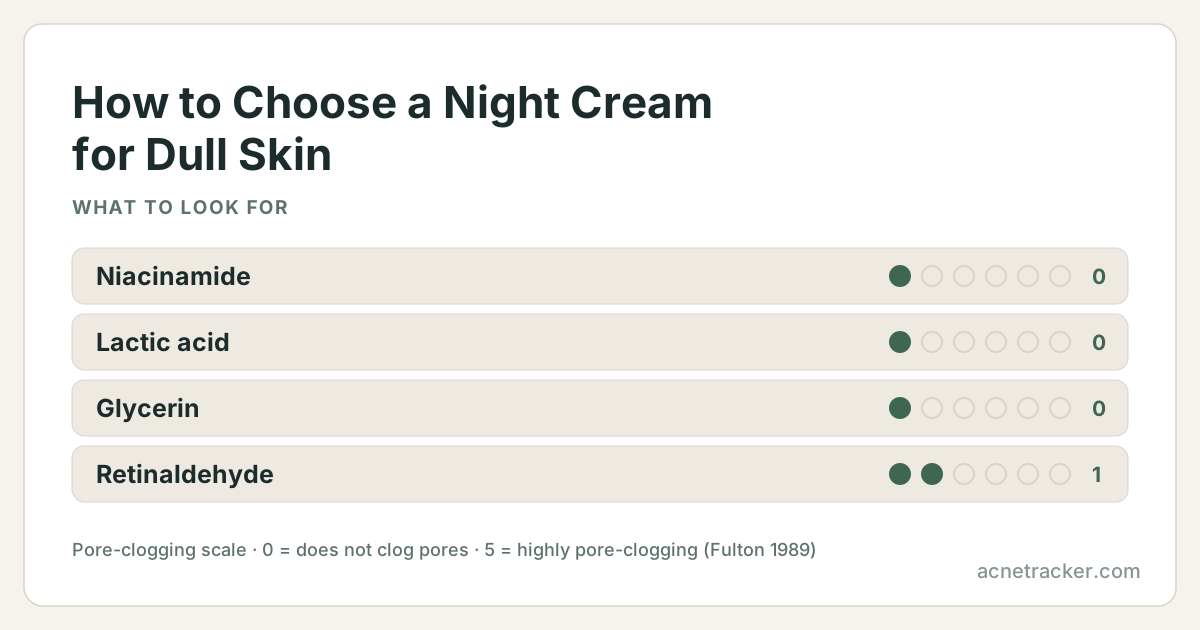
Ingredients to look for
| Ingredient | Why it matters |
|---|---|
| Niacinamide | Evens tone and supports the barrier, tackling both the uneven colour and rough surface that read as dullness. |
| Lactic acid | A gentle AHA that dissolves the dead-cell buildup dulling the surface, best used at night away from the sun. |
| Glycerin | Hydrates the surface so it reflects light more evenly — dehydrated skin looks flat and grey. |
| Retinaldehyde | Speeds turnover so fresher, smoother skin surfaces over weeks, one of the strongest anti-dullness actives. |
| Vitamin E | An antioxidant that helps defend against the environmental stress that contributes to a tired, sallow look. |
Ingredients to avoid
| Ingredient | Why it matters |
|---|---|
| Shimmer, mica and light-reflecting particles | They fake glow by sitting on top and reflecting light; they do nothing for the skin and wash off, masking rather than treating dullness. |
| Over-exfoliating in pursuit of 'glow' | Stacking acids and scrubs to chase radiance damages the barrier, which itself makes skin look duller and inflamed. |
| Denatured alcohol high on the list | A brief tightened glow gives way to dehydration, which flattens and greys the surface over time. |
| Heavy fragrance masquerading as 'radiance boosting' | Fragrance adds irritation risk without any effect on radiance; the actual renewal comes from actives, not scent. |
How to choose
Target the causes of dullness rather than buying reflectivity. For surface buildup, a gentle exfoliating active like lactic acid or a retinoid at night is the most effective route; for uneven tone, niacinamide; for the flat, grey look of dehydration, humectants like glycerin. An antioxidant such as vitamin E supports the defence against environmental dulling. Choose one or two of these rather than a long, irritating stack. Read the claims critically: 'glow', 'radiance' and 'luminous' are unregulated, and any product owing its effect to shimmer is cosmetic, not corrective. A dedicated night cream suits this concern because renewal actives belong in the evening. Manage expectations on timing — real radiance builds over weeks — and remember that sleep, hydration and daily sunscreen do more for a tired complexion than any single cream.
How to apply
After cleansing, use your renewal active — a gentle AHA or a retinoid, not both the same night — then apply the night cream to seal and hydrate. Alternate exfoliating nights with plain repair nights so you smooth without over-doing it. Applying to slightly damp skin helps humectants restore that light-reflecting plumpness. Consistency reveals radiance over two to four weeks; chasing it with daily acids backfires. Support the routine with the unglamorous basics — sleep and water genuinely change how skin looks. And apply sunscreen every morning, since UV both dulls the skin and undoes the renewal your night cream is working toward.
Frequently asked questions
What causes dull skin, and can a night cream fix it?
Dullness comes from dead-cell buildup, dehydration, uneven tone and sun damage. A night cream helps by smoothing, hydrating and evening tone over weeks, especially with gentle exfoliation or a retinoid. It restores radiance gradually rather than delivering instant glow.
Which is better for dull skin at night, an acid or a retinoid?
Both help by renewing the surface; use only one per night to avoid irritation. Lactic acid gives quicker smoothing, while a retinoid does more over time and also helps tone. Alternate nights if you want both in your routine.
Why does my skin look dull even though I use a night cream?
Common reasons are dehydration, dead-cell buildup you are not exfoliating, a damaged barrier from over-doing actives, or missing sleep and sunscreen. Simplify, hydrate, add gentle renewal, and protect by day before adding more products.
Do 'glow' or 'radiance' night creams with shimmer actually work?
Shimmer and light-reflecting particles only fake glow by sitting on the surface and wash off with no lasting benefit. Genuine radiance comes from renewal, hydration and even tone, so judge a night cream by its actives, not its sparkle.
Sources & further reading
There is no single study of this exact question. The guidance here is reasoned from the ingredient profiles below, each of which carries its own references:
- Niacinamide2 refs
- Lactic Acid3 refs
- Glycerin3 refs
- Retinal3 refs
- Vitamin E3 refs
Show every reference behind this page (10)
- Niacinamide: mechanisms of action and its topical use in dermatology (PubMed)cited by Niacinamide
- European Commission CosIng database — Niacinamidecited by Niacinamide, Lactic Acid, Glycerin, Retinal, Vitamin E
- PubChem — Lactic acid compound summarycited by Lactic Acid
- DermNet — Alpha hydroxy acidscited by Lactic Acid
- PubChem — Glycerol compound summarycited by Glycerin
- DermNet — Moisturiserscited by Glycerin
- PubChem — Retinaldehydecited by Retinal
- Kwon HS et al. Efficacy and safety of retinaldehyde 0.1% and 0.05% creams used to treat photoaged skin: A randomized double-blind controlled trial. J Cosmet Dermatol 2018 Jun (PubMed)cited by Retinal
- PubChem — Tocopherol compound summarycited by Vitamin E
- DermNet — Vitamin Ecited by Vitamin E
Medical disclaimer
Ingredients mentioned on this page
Find your personal acne triggers
Our free Acne Tracker lets you log breakouts, sleep, stress and diet, and shows you which factors correlate with your flare-ups.