How to Choose a Face Oil for Hyperpigmentation
This page has to start by lowering expectations. Hyperpigmentation is driven by melanocyte activity, and the ingredients with strong evidence against it — hydroquinone, azelaic acid, tranexamic acid, retinoids, vitamin C, and above all daily sunscreen — are not oils. A face oil's contribution is real but supporting: it improves barrier tolerance so you can keep using the actives that work, and a few oil components have modest pigment-relevant research of their own. The other half of this page matters more. Some popular facial oils are photosensitising, and a citrus oil on a pigmenting face can undo months of careful work in one sunny weekend.
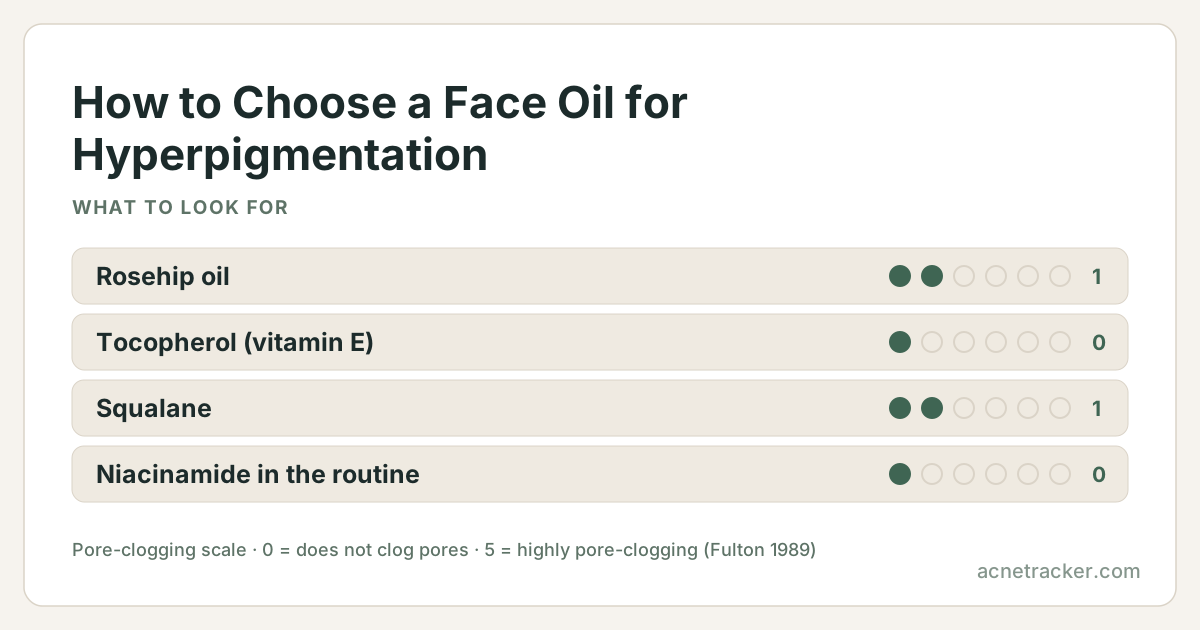
Ingredients to look for
| Ingredient | Why it matters |
|---|---|
| Rosehip oil | Contains trace vitamin A compounds and has small studies on skin texture and post-surgical scarring. Modest, but it is the best-studied oil in this area. |
| Tocopherol (vitamin E) | Research pairs vitamin E with vitamin C for photoprotective antioxidant support — relevant because UV exposure is what drives most pigment back. |
| Squalane | The carrier of choice: rated 1 by Fulton, inert, and it will not irritate. Irritation causes post-inflammatory pigment, so a bland base is itself a strategy. |
| Niacinamide in the routine | Studies on 4–5% niacinamide report reduced hyperpigmentation by interrupting melanosome transfer to keratinocytes — a mechanism no oil offers. |
| Azelaic acid in the routine | The oil is the comfort layer; azelaic acid is where the evidence for fading pigment actually lives, particularly for post-inflammatory marks. |
Ingredients to avoid
| Ingredient | Why it matters |
|---|---|
| Bergamot and expressed citrus oils | Furocoumarins in cold-pressed citrus oils are phototoxic. On pigment-prone skin this is the fastest documented route to new dark patches. |
| Any oil sold as a sunscreen substitute | There is no credible SPF in a plant oil. Since UV is the main driver of pigment recurrence, this is the most consequential mistake on this page. |
| Irritating essential oil blends | Inflammation causes post-inflammatory hyperpigmentation, especially in deeper skin tones. Anything that stings is actively working against your goal. |
| Comedogenic oils on acne-prone pigmented skin | Every new spot risks a new mark. Oils rated 3 and above — avocado, sesame, evening primrose — are a poor trade if breakouts are what caused the pigment. |
How to choose
Set the oil's job correctly and the choice becomes simple. Its job is to keep your skin comfortable while the actives do the work, and to add nothing that provokes pigment. So screen for phototoxicity first: no cold-pressed bergamot, lemon, lime or bitter orange, particularly in anything you wear in daylight. Screen for irritation second, because inflammation is a pigment trigger in its own right and disproportionately so in medium and deep skin tones. Then pick for tolerance — squalane or rosehip are the two defensible defaults — and put your money into the steps that have evidence: a daily broad-spectrum sunscreen without exception, plus one pigment-active such as azelaic acid, vitamin C, niacinamide or tranexamic acid. Give any pigment routine three to four months before judging it; the epidermis turns over slowly and dermal pigment slower still. If patches are symmetrical across the cheeks and worsen in summer, that may be melasma, which is notoriously stubborn and worth a doctor's input rather than a longer ingredient list.
How to apply
Keep the oil in the evening, where photosensitivity risk is lowest and it cannot interfere with sunscreen. Apply after your pigment active has absorbed — vitamin C or azelaic acid first onto dry skin, then the oil once it has had a few minutes. Two to four drops is enough. In the morning, the sequence that matters is active, moisturiser, sunscreen, and the oil is optional at best. Reapply sunscreen rather than adding oil if your face feels dry at midday. Do not use an oil to 'massage' pigmented areas: friction is inflammation, and inflammation deposits more pigment.
Frequently asked questions
Can face oil fade dark spots?
Barely, on its own. No oil has strong evidence for reducing hyperpigmentation. Rosehip has small studies on texture and scarring, but the fading work belongs to azelaic acid, vitamin C, niacinamide, retinoids and sunscreen.
Is rosehip oil good for hyperpigmentation?
It is the most reasonable oil to pick, thanks to trace vitamin A compounds and small trials on scars and texture. Expect a supporting role rather than a result — it is not comparable to a dedicated pigment active.
Why are citrus oils a problem for pigmentation?
Cold-pressed citrus oils contain furocoumarins, which are phototoxic. Combined with sunlight they can produce burns and lasting dark patches — a well-documented reaction, and the worst possible outcome on pigment-prone skin.
Does face oil offer any sun protection?
No. Claims of 'natural SPF' in raspberry seed or carrot seed oil are not supported by proper testing and have been repeatedly debunked. Since UV drives pigment, relying on them is the costliest mistake here.
Sources & further reading
There is no single study of this exact question. The guidance here is reasoned from the ingredient profiles below, each of which carries its own references:
- Rosehip Oil3 refs
- Vitamin E3 refs
- Squalane3 refs
- Niacinamide2 refs
- Azelaic Acid3 refs
Show every reference behind this page (10)
- European Commission CosIng database — Rosa Canina Fruit Oilcited by Rosehip Oil, Vitamin E, Squalane, Niacinamide, Azelaic Acid
- PubChem — Linoleic acid (major rosehip fatty acid)cited by Rosehip Oil
- Safety Assessment of Rosa canina-derived Ingredients as Used in Cosmetics (PubMed)cited by Rosehip Oil
- PubChem — Tocopherol compound summarycited by Vitamin E
- DermNet — Vitamin Ecited by Vitamin E
- PubChem — Squalane compound summarycited by Squalane
- DermNet — Emollients and moisturiserscited by Squalane
- Niacinamide: mechanisms of action and its topical use in dermatology (PubMed)cited by Niacinamide
- PubChem — Azelaic acid compound summarycited by Azelaic Acid
- DermNet — Azelaic acidcited by Azelaic Acid
Medical disclaimer
Ingredients mentioned on this page
Find your personal acne triggers
Our free Acne Tracker lets you log breakouts, sleep, stress and diet, and shows you which factors correlate with your flare-ups.