Rosehip Oil: Comedogenic Rating & Ingredient Analysis
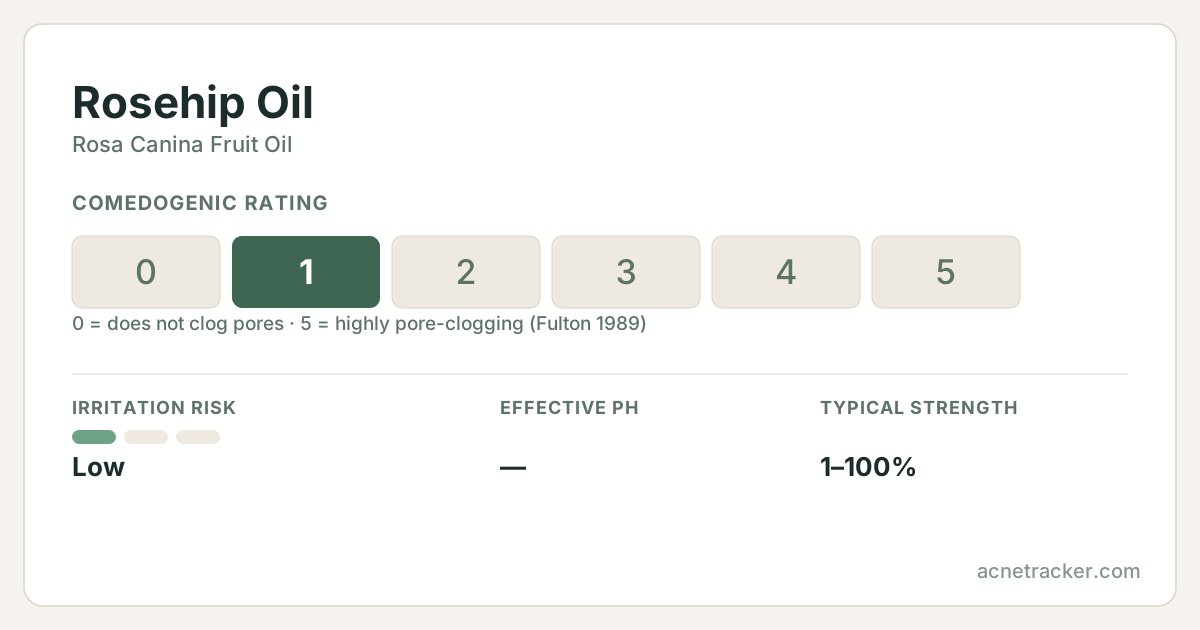
Rosehip oil, pressed from the fruit and seeds of the wild rose, is a lightweight facial oil valued for improving tone, texture and the look of scars. Unlike many richer oils, it is high in linoleic acid, an essential fatty acid that acne-prone skin is often deficient in, which is part of why this oil tends to feel dry-touch and non-heavy rather than greasy. It also carries natural antioxidants and a small amount of provitamin A compounds, giving it a gentle brightening, tone-evening reputation. It suits dry, mature and combination skin especially, and its low comedogenic rating makes it friendlier to blemish-prone skin than most plant oils.
Quick facts
- Comedogenic rating
- our estimate — not measured
- Irritation risk
- Low
- Effective pH
- —
- Typical strength
- 1–100%
- Pregnancy
- Considered safe
- Suits skin types
- drycombinationnormalmaturesensitive
Where this number comes from
No one has published a comedogenic rating for this ingredient. Fulton's 1989 table tested about 250 raw materials and this was not among them, and we found no later study measuring it. The figure shown is our own reasoning from the ingredient's chemistry and how it is used — treat it as an estimate, not a measurement.
Fulton read his own scale as 0-1 not significant, 2-3 borderline, 4-5 positive. The assay is the rabbit ear at 10% dilution, which the paper itself calls extremely sensitive and not fully predictive of human skin. Ratings describe the raw ingredient; concentration and formulation change real-world behaviour.
Caution profile
The four published fields on this page, on one 0–5 scale. Further from the centre means more care is needed — never that the ingredient is worse.
Derived, not measured: pore-clogging is the published comedogenic rating; irritation maps low/moderate/high to 1/3/5; pregnancy maps safe/caution/avoid to 0/3/5; skin-type limits is how many of the seven skin types this entry does NOT list. Every input is printed in words in the quick-facts card above.
Show the numbers
| Metric | 0–5 | Published field |
|---|---|---|
| Pore-clogging | 1 | 1/5 |
| Irritation | 1 | Low |
| Skin-type limits | 1.4 | 5/7 |
| Pregnancy | 0 | Considered safe |
Working pH and typical strength
Where this ingredient is formulated to sit, and at what concentration.
Both bars come from the fields above: the pH window and the typical strength range published for this ingredient. The tinted column is healthy skin's surface pH (about 4.7–5.75).
Show the numbers
| Metric | 0–5 |
|---|---|
| Typical strength | 1–100% |
What is it?
The oil is rich in polyunsaturated fatty acids, principally linoleic and linolenic acid, along with natural tocopherols and trace carotenoids that the body can use as a mild vitamin A precursor. This composition explains its two headline effects: the linoleic acid reinforces the skin barrier and suits a lipid profile that congested skin often lacks, while the antioxidant and provitamin A content underpins its use for uneven tone and superficial scarring. Because polyunsaturated oils oxidise more readily than saturated ones, rosehip is best bought fresh, kept cool and dark, and replaced once it smells sharp or looks darkened.
Benefits
High in linoleic acid
Its linoleic-acid-rich profile suits skin that is prone to congestion, since acne-prone skin is often low in this fatty acid, and it feels light rather than heavy on the face.
Helps even skin tone
Natural antioxidants and provitamin A compounds give rosehip a gentle brightening reputation, supporting a more even tone and softer look of dark marks over time.
Supports scarred and rough texture
Its fatty acids and vitamins help condition areas of uneven or scarred texture, which is why rosehip is a traditional choice for smoothing and softening the skin surface.
Barrier-supporting emollience
As an emollient it cushions dry, tight skin and helps reduce water loss, making it a comforting final step for dehydrated or mature complexions.
How to use
Use rosehip oil at night as the last step, pressing a few drops into skin after your moisturiser, or blend a drop into a night cream. It pairs nicely with a morning vitamin C routine for a tone-focused approach, though the oil itself is best kept for evening. Because it oxidises easily, store it away from light and heat and use it within a few months of opening. Its low comedogenic rating means most acne-prone users tolerate it, but as always, watch how your skin responds over the first couple of weeks.
Side effects
Rosehip is gentle and rarely irritating. Its main practical drawback is oxidation: a rosehip oil that has gone off can smell rancid and is best discarded, as oxidised oils are less beneficial and can be mildly irritating. True allergy is uncommon but possible, so patch test a new bottle. It is not a strong active, so expect gradual, supportive results rather than dramatic change.
Who should avoid it
Most skin types tolerate rosehip well, including sensitive and mildly acne-prone skin. Those who react to a specific batch, likely an oxidised one, should switch to a fresher, well-stored product. Topical rosehip is regarded as safe to use in pregnancy; the only thing really worth checking is that the bottle in your hand is fresh rather than past its best.
Pairs well with
Frequently asked questions
Is rosehip oil good for acne-prone skin?
It is one of the better oils for blemish-prone skin because it is high in linoleic acid and low on the comedogenic scale, so it tends to feel light and is less likely to clog than richer, oleic-heavy oils.
Does rosehip oil fade scars?
Its fatty acids, antioxidants and provitamin A content can help soften the look of superficial scars and uneven texture over time, though it works gradually and is not a replacement for medical scar treatment.
Can I use rosehip oil with vitamin C?
Yes. Many people use vitamin C in the morning and rosehip oil at night, combining two tone-focused approaches so the skin gets antioxidant brightening by day and conditioning emollience by night.
Why does my rosehip oil smell off?
Rosehip is high in polyunsaturated fats that oxidise easily, so it can turn rancid if stored warm or kept too long. A sharp smell or darkened colour means it has gone off and should be replaced.
Where this ingredient shows up here
Counted across this database, not the web — these are the pages on this site that reason about this ingredient.
Sources & further reading
Medical disclaimer
Find your personal acne triggers
Our free Acne Tracker lets you log breakouts, sleep, stress and diet, and shows you which factors correlate with your flare-ups.