How to Choose a Micellar Water for Dehydrated Skin
Dehydrated skin is short on water, not necessarily oil, which is why it can look dull and feel tight even when the T-zone still shines. Cleansing is where a lot of that water is lost, so a micellar water for dehydrated skin has to clean without accelerating the leak. The good news is that micellar water skips hot water and foaming detergents; the risk is an alcohol-forward formula that flashes off moisture faster than it removes makeup. This page sets out the humectant-rich profile worth seeking, the additives that dry the surface, and how to trap water in straight after wiping. We describe ingredient profiles instead of ranking brands, because hydration depends on the formula, not the label.
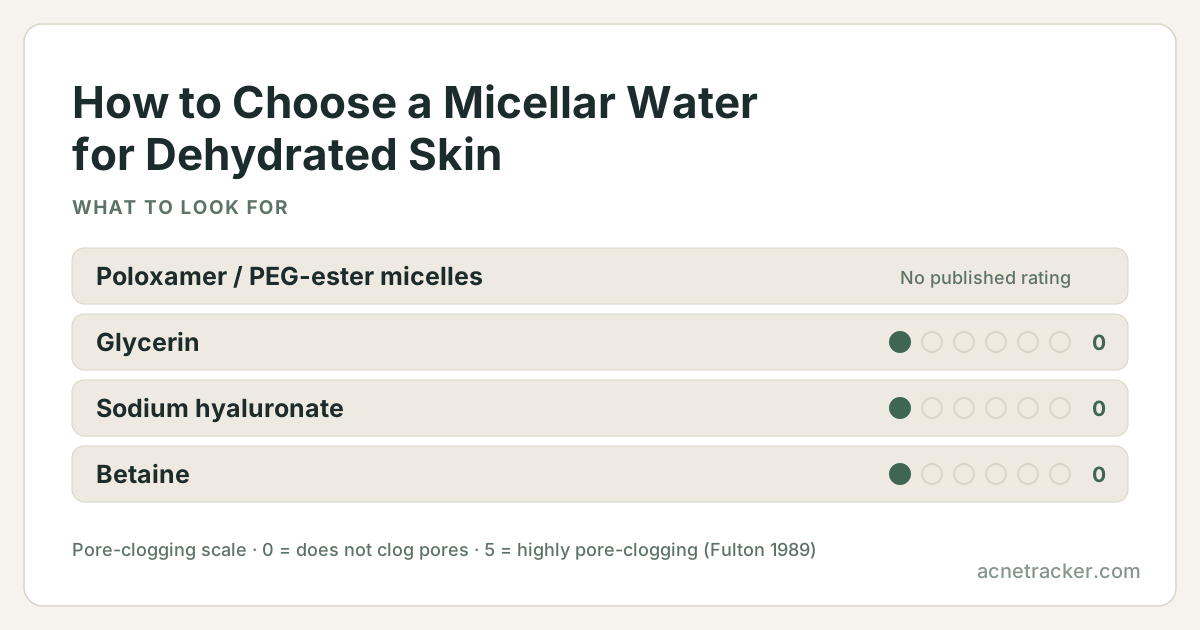
Ingredients to look for
| Ingredient | Why it matters |
|---|---|
| Poloxamer / PEG-ester micelles | The gentle non-ionic surfactants that clean at low strength, so they remove makeup without dragging water out of an already thirsty surface. |
| Glycerin | The workhorse humectant; high on the list it leaves a water-attracting trace that keeps dehydrated skin from tightening after a wipe. |
| Sodium hyaluronate | A low-weight form of hyaluronic acid that binds water in the outer layers, a useful humectant to see in a leave-on cleanser. |
| Betaine | A gentle humectant and osmoprotectant that cushions the surface against moisture loss during cleansing. |
| Panthenol | Provitamin B5 that both soothes and helps the skin hold water, well suited to a no-rinse format. |
| Sodium PCA | A component of the skin's own natural moisturising factor that helps the surface retain water. |
Ingredients to avoid
| Ingredient | Why it matters |
|---|---|
| Denatured alcohol high on the list | It evaporates quickly and takes surface water with it — the single most dehydrating thing a micellar water can contain. |
| Added fragrance and essential oils | They add irritation risk without adding hydration, and irritated skin loses water faster. |
| Astringent 'mattifying' or 'purifying' formulas | These are tuned to remove oil aggressively, which does nothing for a water deficit and often leaves the surface tighter. |
| Over-wiping with repeated passes | Each extra swipe removes more of the humectant film and surface lipids, worsening the dehydration you are trying to fix. |
How to choose
Choose a dehydrated-skin micellar water by its humectant content and what it lacks. You want glycerin high on the list, ideally alongside a second humectant such as sodium hyaluronate, betaine, panthenol or sodium PCA, and you want no denatured alcohol near the top. Read past the marketing: 'hydrating' is unregulated, so verify it against the ingredient order rather than the front of the bottle, and treat 'mattifying', 'purifying' and 'oil-control' as warnings for skin that needs water rather than oil removal. A faintly milky, slightly slippery texture usually signals a humectant-rich base, whereas a thin, fast-evaporating watery one often relies more on alcohol. Remember what a micellar water cannot do: it is a cleansing step, not a moisturiser, so even the most humectant-rich version needs a proper hydrating routine layered on top. Judge it over a week by whether skin feels supple rather than tight ten minutes after use.
How to apply
Saturate the pad so it glides rather than drags, and press it flat for a few seconds to loosen makeup before a single gentle wipe. Resist the urge to keep swiping — extra passes strip the humectant film dehydrated skin needs. On no-makeup mornings you can often skip cleansing altogether and just splash water, preserving the overnight moisture. Crucially, follow within a minute or two, while the skin is still damp, with a humectant serum and then a moisturiser or light occlusive to seal the water in. That sealing step, not the micellar water itself, is where the hydration is retained.
Frequently asked questions
Can micellar water hydrate dehydrated skin?
Not in any meaningful way — it is a cleanser, and any humectants in it are rinsed or wiped off with the makeup. A humectant-rich micellar water simply avoids drying the skin further; real hydration comes from the serum and moisturiser you apply afterwards.
Does micellar water dry out dehydrated skin?
It can, if the formula is alcohol-forward or you over-wipe. A glycerin-led, alcohol-light micellar water used with a single gentle pass is unlikely to worsen dehydration, especially when you moisturise straight after.
Should I rinse micellar water off dehydrated skin?
Either works, but if you leave it on, choose a humectant-rich formula so the residue attracts water rather than sitting as bare surfactant. Whatever you decide, apply your hydrating products while the skin is still damp.
Which ingredients make a micellar water good for dehydrated skin?
Glycerin high on the list, plus humectants like sodium hyaluronate, betaine, panthenol or sodium PCA, and no denatured alcohol near the top. That combination cleans without pulling water out of the surface.
Is micellar water enough for dehydrated skin at night?
Only as the cleansing step. Because dehydrated skin loses water overnight, it needs a humectant and a moisturiser layered on afterwards; relying on micellar water alone leaves the surface exposed and tight by morning.
Sources & further reading
There is no single study of this exact question. The guidance here is reasoned from the ingredient profiles below, each of which carries its own references:
- Glycerin3 refs
- Sodium Hyaluronate2 refs
- Betaine3 refslimited evidence
- Panthenol3 refs
- Sodium PCA2 refs
The ingredients below are described here on the basis of laboratory, systemic or traditional-use sources rather than trials of topical use. Advice on this page that depends on them is correspondingly less certain.
- Betaine — Betaine's humectant and osmoprotectant behaviour is a physical-chemical property and is well established. The soothing description, though, rests on research into betaine in systemic inflammation rather than on topical skin trials. Note also that cocamidopropyl betaine, common in cleansers, is a different substance entirely.
Show every reference behind this page (9)
- PubChem — Glycerol compound summarycited by Glycerin
- DermNet — Moisturiserscited by Glycerin
- European Commission CosIng database — Glycerincited by Glycerin, Sodium Hyaluronate, Betaine, Panthenol, Sodium PCA
- PubMed — Effectiveness of topical hyaluronic acid of different molecular weights in xerosis cutis treatment in elderly: a double-blind, randomized controlled trial (Arch Dermatol Res, 2024)cited by Sodium Hyaluronate
- PubChem — Betaine (CID 247)cited by Betaine
- Betaine in Inflammation: Mechanistic Aspects and Applications (PubMed)cited by Betaine
- PubChem — Panthenol compound summarycited by Panthenol
- Safety Assessment of Panthenol, Pantothenic Acid, and Derivatives as Used in Cosmetics (PubMed)cited by Panthenol
- PubChem — Sodium PCA (Sodium Pyrrolidone Carboxylate, CID 23666346)cited by Sodium PCA
Medical disclaimer
Ingredients mentioned on this page
Find your personal acne triggers
Our free Acne Tracker lets you log breakouts, sleep, stress and diet, and shows you which factors correlate with your flare-ups.