How to Choose a Moisturizer for Dehydrated Skin
Dehydrated skin is a condition, not a skin type: it lacks water rather than oil, which means even oily skin can be dehydrated. The signs are tightness, dullness, fine 'crepey' lines that appear when you smile, and skin that drinks up product yet still feels parched. The fix is not necessarily a rich cream but a formula that delivers water-binding humectants and then a light seal to stop that water escaping. This page explains how to rehydrate skin of any type — including oily and combination — with the right humectant-led profile rather than simply piling on heavy oils meant for genuinely dry skin.
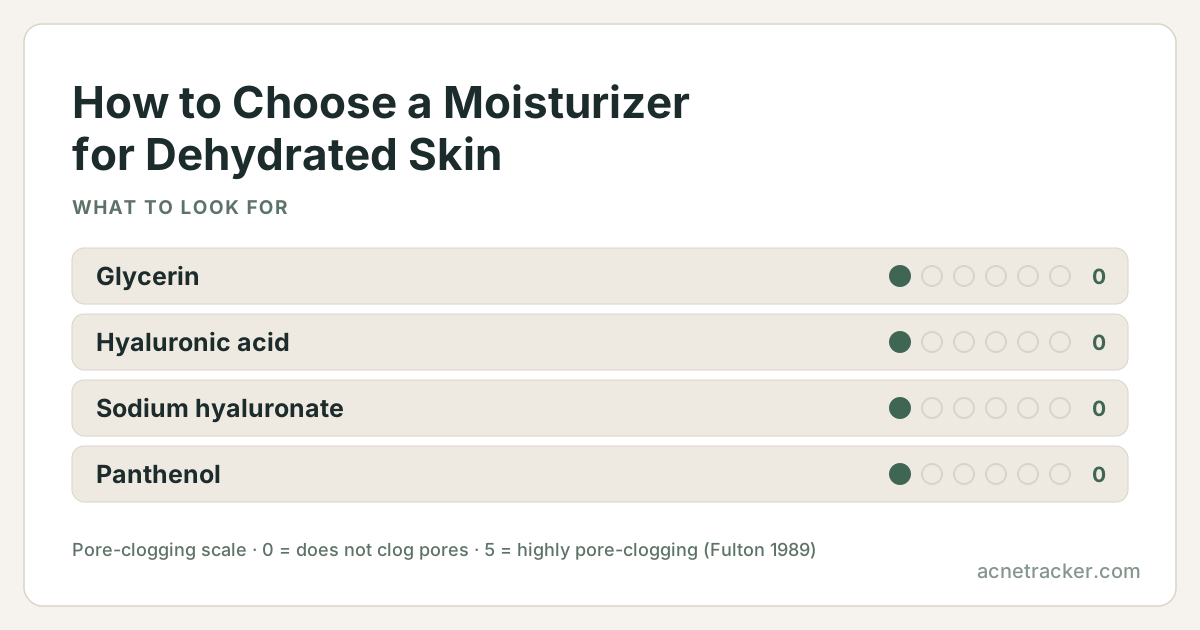
Ingredients to look for
| Ingredient | Why it matters |
|---|---|
| Glycerin | The most dependable humectant there is, pulling water into the skin at low cost and low irritation risk, ideal for dehydration. |
| Hyaluronic acid | Binds many times its weight in water, plumping the upper skin and softening the fine lines dehydration creates. |
| Sodium hyaluronate | A smaller-molecule form of hyaluronic acid that penetrates a little deeper, complementing the surface hydration. |
| Panthenol | Adds humectant hydration while soothing, helping tight, dehydrated skin feel comfortable again. |
| Beta-glucan | A soothing humectant that holds water and calms skin, a gentle complement to hyaluronic acid. |
Ingredients to avoid
| Ingredient | Why it matters |
|---|---|
| Pure humectant products with no seal, used alone | Hyaluronic acid or glycerin serums with nothing over them can, in dry air, draw water out of the skin instead of into it. |
| Denatured alcohol high on the list | It evaporates fast and accelerates the water loss you are trying to reverse, worsening dehydration. |
| Over-cleansing and stripping foams upstream | No moisturizer keeps up with a cleanser that strips the barrier twice a day; dehydration often starts there. |
| Very heavy occlusives on oily-but-dehydrated skin | If dehydration is your issue but oil is not, thick butters add greasiness and congestion without addressing the water deficit. |
How to choose
Think humectant first, seal second. A good moisturizer for dehydrated skin leads with glycerin and hyaluronic acid or sodium hyaluronate, then holds that water in with a light emollient or a little dimethicone — you do not need heavy butters unless your skin is also genuinely dry. Match the seal to your skin type: oily-but-dehydrated skin wants a light gel-cream, while dry-and-dehydrated skin wants something richer. The layering trick that works for everyone is to apply a hydrating serum to damp skin and follow immediately with a moisturizer to trap it, rather than relying on either alone. Ignore '24-hour hydration' claims, which mean little without a seal, and instead check that the formula pairs water-binders with something to keep the water in. Also look upstream: a gentler cleanser often does more for dehydration than any single cream.
How to apply
Apply to skin that is still damp from cleansing, because humectants work by grabbing available water — on bone-dry skin in dry air they have less to hold. Layer a hydrating serum underneath if your skin is very thirsty, then seal with the moisturizer within a minute. Reapply during the day if skin feels tight, especially in air-conditioned or heated indoor air, which is strongly dehydrating. Drinking water helps overall health but does not directly hydrate the outer skin; topical humectants and a seal do that job.
Frequently asked questions
My skin is oily but feels tight — should I still buy a rich moisturizer?
Probably not the richest one on the shelf. Dry skin lacks oil and is a skin type; dehydrated skin lacks water and is a temporary condition any skin type can have, oily included. That tight feeling on oily skin is usually water loss, not missing oil, so the moisturizer you want is humectant-led with a light occlusive to hold the water in — piling on heavy butters treats a shortage you do not actually have.
Should I skip moisturizer if my skin is oily but tight?
Skipping it usually backfires. Oily skin can produce plenty of sebum while still lacking water. In fact dehydration can prompt more oil, so a light humectant-rich moisturizer often helps oily-but-dehydrated skin.
Is hyaluronic acid enough for dehydrated skin?
Not on its own in dry conditions. Hyaluronic acid binds water but needs a moisturizer over it to seal that water in; without a seal it can even pull moisture from deeper skin in dry air.
Does drinking water fix dehydrated skin?
It supports general health but does not directly rehydrate the outer skin layer. Topical humectants plus a seal, and a gentler cleanser, do far more for the surface dehydration you can see and feel.
Why does my skin still feel tight after moisturizing?
Usually the formula is humectant-only with no seal, or your cleanser is stripping the barrier faster than the cream repairs it. Add a light occlusive step and switch to a gentler cleanser.
Sources & further reading
There is no single study of this exact question. The guidance here is reasoned from the ingredient profiles below, each of which carries its own references:
- Glycerin3 refs
- Hyaluronic Acid3 refs
- Sodium Hyaluronate2 refs
- Panthenol3 refs
- Beta-Glucan2 refs
Show every reference behind this page (8)
- PubChem — Glycerol compound summarycited by Glycerin
- DermNet — Moisturiserscited by Glycerin, Hyaluronic Acid
- European Commission CosIng database — Glycerincited by Glycerin, Hyaluronic Acid, Sodium Hyaluronate, Panthenol, Beta-Glucan
- PubChem — Hyaluronic acid compound summarycited by Hyaluronic Acid
- PubMed — Effectiveness of topical hyaluronic acid of different molecular weights in xerosis cutis treatment in elderly: a double-blind, randomized controlled trial (Arch Dermatol Res, 2024)cited by Sodium Hyaluronate
- PubChem — Panthenol compound summarycited by Panthenol
- Safety Assessment of Panthenol, Pantothenic Acid, and Derivatives as Used in Cosmetics (PubMed)cited by Panthenol
- PubMed — Improving skin function with CM-glucan, a biological response modifier from yeast (Int J Cosmet Sci, 1998)cited by Beta-Glucan
Medical disclaimer
Ingredients mentioned on this page
Find your personal acne triggers
Our free Acne Tracker lets you log breakouts, sleep, stress and diet, and shows you which factors correlate with your flare-ups.