How to Choose a Micellar Water for Mature Skin
Mature skin tends to be thinner, drier and slower to repair than it once was, with a barrier that recovers less quickly from a harsh cleanse. Micellar water suits that reality on paper: no hot water, no foaming detergents, no vigorous rubbing required. The catch is that skin loses oil and elasticity with age, so an alcohol-heavy or stripping formula bites harder than it would on younger skin, and dragging a pad across crepey areas is friction it does not need. This page describes the hydrating, barrier-supportive profile worth seeking for mature skin, the additives that dry or irritate, and a low-friction technique. We describe ingredient profiles rather than ranking brands, because ageing skin responds to the formula, not the name.
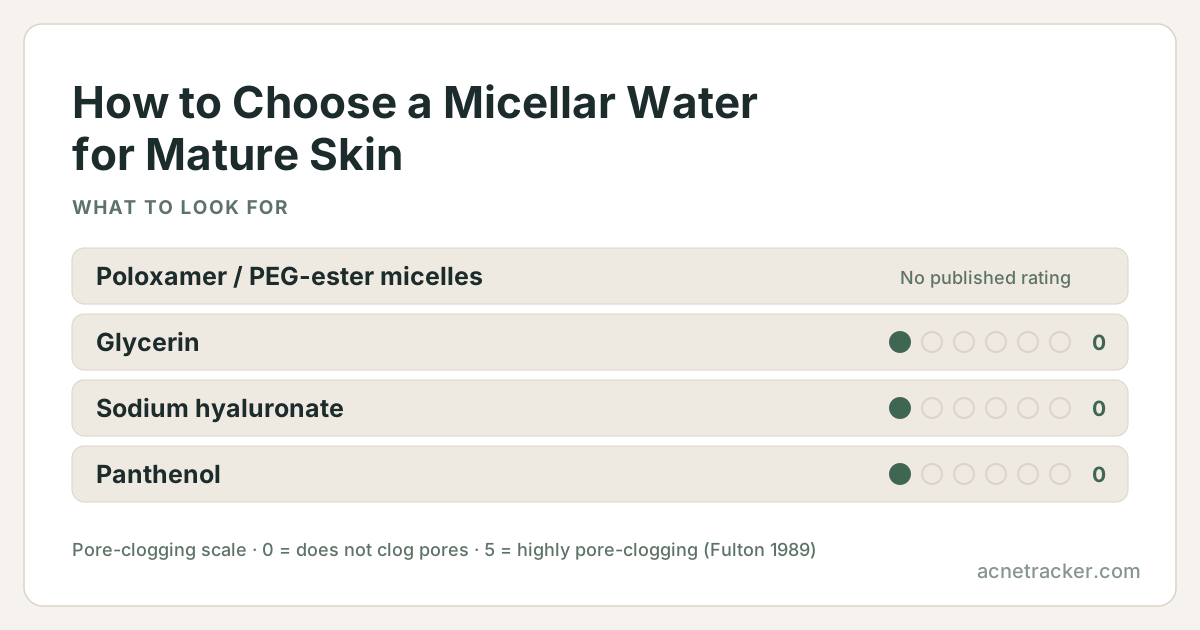
Ingredients to look for
| Ingredient | Why it matters |
|---|---|
| Poloxamer / PEG-ester micelles | The mild non-ionic surfactants that clean at low strength, removing the day without the lipid loss thinner, drier mature skin struggles to replace. |
| Glycerin | A humectant that counters the natural dryness of mature skin and stops the surface tightening after a wipe. |
| Sodium hyaluronate | A water-binding form of hyaluronic acid that plumps the outer layers, a welcome humectant as skin holds less water with age. |
| Panthenol | Provitamin B5 that soothes and supports a barrier that repairs more slowly over time. |
| Niacinamide | A bonus rather than a treatment in a wiped-off product, but it signals a formula built to respect a mature barrier. |
| Ceramides | Barrier lipids that decline with age; even a trace points to a formula designed to support rather than strip. |
Ingredients to avoid
| Ingredient | Why it matters |
|---|---|
| Denatured alcohol high on the list | Mature skin is already drier, so the fast evaporation and moisture loss from alcohol are felt more sharply than on oily younger skin. |
| Added fragrance and essential oils | Skin can grow more reactive with age, and fragrance is a common sensitiser with no cleansing benefit. |
| Vigorous back-and-forth wiping | Thin, less elastic skin tugs and creases under friction; repeated dragging stresses delicate areas around the eyes. |
| Relying on it alone for SPF and heavy makeup | Plain micellar water does not fully remove long-wear foundation or sunscreen, and residue is more visible on mature skin's texture. |
How to choose
Pick a mature-skin micellar water for its hydrating base and its restraint. Glycerin high on the list, ideally with sodium hyaluronate, panthenol or a trace of ceramides, does the real work of keeping drier skin comfortable, while a mild poloxamer/PEG surfactant system cleans without stripping. Give no denatured alcohol near the top a hard pass, and read 'anti-ageing' or 'firming' claims on a rinse-off product with scepticism — a cleanser has too little contact time to do either, so those words are marketing, not function. A slightly milky, cushioned texture usually suits mature skin better than a thin watery one, because the residue is a humectant rather than bare surfactant. Bear in mind the honest limit: micellar water is a gentle first step, not a full cleanse for a face wearing sunscreen and long-wear makeup, so it works best paired with a low-foam cleanser in the evening. Judge it by comfort over a week, not by front-of-bottle promises.
How to apply
Wet the pad fully so it slides without pulling on skin that creases easily. Press it flat for a few seconds to dissolve makeup, then wipe once in a single upward or outward direction rather than scrubbing across fine lines. Be especially gentle around the eyes, where the skin is thinnest. For eye makeup or sunscreen, let the pad rest a moment longer rather than rubbing harder. Because drier mature skin dislikes residue, a quick lukewarm rinse before your night cream is a reasonable habit, and always apply moisturiser while the skin is still damp to lock in water.
Frequently asked questions
Is micellar water good for mature skin?
It can be, because it cleans gently without hot water or scrubbing that stresses thinner, drier skin. Choose a hydrating, alcohol-light formula and wipe softly in one direction, since mature skin creases and loses moisture more readily than younger skin.
Can micellar water reduce wrinkles or firm mature skin?
No. It is a cleanser with brief contact time, so it cannot firm skin or smooth wrinkles whatever the label says. Its role for mature skin is to clean gently; anti-ageing work belongs to leave-on treatments and moisturisers.
Does micellar water remove sunscreen and makeup from mature skin?
Only partly. Plain micellar water lifts light makeup but leaves long-wear foundation and sunscreen behind, and residue shows more on mature texture. Use it as a first step, then follow with a gentle cleanser in the evening.
Should mature skin rinse micellar water off?
A short lukewarm rinse is a sensible default, because drier mature skin tolerates leftover surfactant poorly. Rinse, then moisturise while damp so the humectants trap water in the outer layers.
Which micellar water ingredients suit mature skin best?
Glycerin, sodium hyaluronate, panthenol and a trace of ceramides address the dryness and slower barrier repair of mature skin, while niacinamide is a small bonus. Avoid denatured alcohol high on the list, which dries ageing skin quickly.
Sources & further reading
There is no single study of this exact question. The guidance here is reasoned from the ingredient profiles below, each of which carries its own references:
- Glycerin3 refs
- Sodium Hyaluronate2 refs
- Panthenol3 refs
- Niacinamide2 refs
- Ceramides3 refs
Show every reference behind this page (9)
- PubChem — Glycerol compound summarycited by Glycerin
- DermNet — Moisturiserscited by Glycerin
- European Commission CosIng database — Glycerincited by Glycerin, Sodium Hyaluronate, Panthenol, Niacinamide, Ceramides
- PubMed — Effectiveness of topical hyaluronic acid of different molecular weights in xerosis cutis treatment in elderly: a double-blind, randomized controlled trial (Arch Dermatol Res, 2024)cited by Sodium Hyaluronate
- PubChem — Panthenol compound summarycited by Panthenol
- Safety Assessment of Panthenol, Pantothenic Acid, and Derivatives as Used in Cosmetics (PubMed)cited by Panthenol
- Niacinamide: mechanisms of action and its topical use in dermatology (PubMed)cited by Niacinamide
- DermNet — Skin barrier functioncited by Ceramides
- PubChem — Ceramide compound summarycited by Ceramides
Medical disclaimer
Ingredients mentioned on this page
Find your personal acne triggers
Our free Acne Tracker lets you log breakouts, sleep, stress and diet, and shows you which factors correlate with your flare-ups.