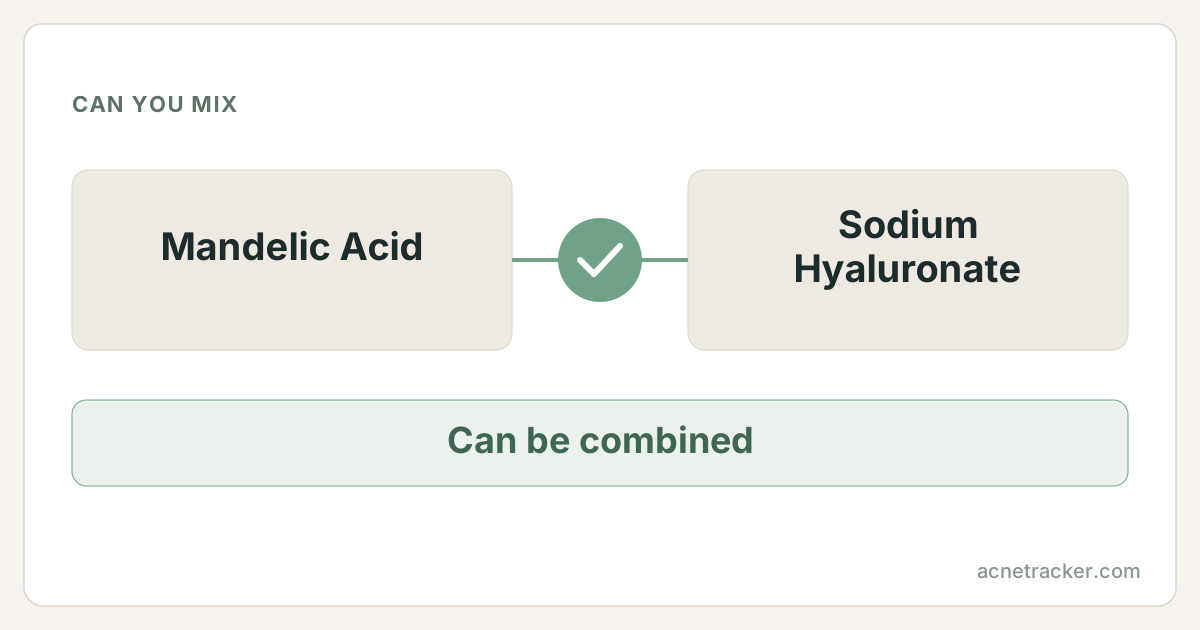
Can You Mix Mandelic Acid and Sodium Hyaluronate?
Yes — this is a hydration-first pairing that makes acid use comfortable. Mandelic acid gently exfoliates, and sodium hyaluronate, the salt form of hyaluronic acid, is a smaller, more stable molecule that carries water into the skin and absorbs cleanly. It replaces the moisture exfoliation costs you without any heaviness, which suits oily and acne-prone skin especially well.
How this pairing resolves
The two ingredients, their published numbers, and where they land together.
The numbers beside each ingredient are its published comedogenic rating and effective pH window, taken from its own profile page.
Show the numbers
| Ingredients | Metric | 0–5 |
|---|---|---|
| Mandelic Acid | Comedogenic rating | 0/5 |
| Mandelic Acid | Effective pH | 3.0–4.0 |
| Sodium Hyaluronate | Comedogenic rating | 0/5 |
| Sodium Hyaluronate | Effective pH | no published pH |
Why
Sodium hyaluronate is hyaluronic acid in its sodium-salt form, and the practical difference is size: its lower molecular weight lets it settle into the upper layers rather than resting purely on the surface, so the hydration feels less like a film and more like plumped, quenched skin. That matters after exfoliation. Mandelic acid's large molecule loosens dead cells slowly and gently, but any acid nudges water loss upward, and freshly resurfaced skin is more receptive to whatever you apply next. Sodium hyaluronate meets that thirst efficiently, binding many times its weight in water and holding it where the acid has just worked. There is no chemical conflict — it is a humectant with no pH demands of its own, applied after the acid absorbs. Compared with heavier, high-molecular-weight hyaluronic acid that sits on top, the salt form penetrates a little deeper and layers cleanly under lightweight moisturisers, which oily and breakout-prone skin tends to prefer. It is treatment-neutral hydration: it will not exfoliate, brighten or clog, it simply keeps skin balanced so you can keep exfoliating.
How to combine them
Apply mandelic acid to clean, dry skin so it can work at its low pH, wait a few minutes, then apply sodium hyaluronate to slightly damp skin — the extra surface water gives it something to bind. Seal with a light moisturiser, since a humectant works best with a little occlusion over it, and never let it sit bare in dry air or it can draw moisture from deeper in the skin. Use sodium hyaluronate every day, morning and night, regardless of whether it is an acid evening, because hydration is ongoing maintenance rather than a scheduled active. Finish mornings with SPF 30+ while using mandelic acid. If your skin is oily, this is often all the moisture you need on off nights; drier skin can layer a richer cream on top.
Example routine
| When | Steps |
|---|---|
| Evening (2–3× week) | Cleanser → Mandelic acid → wait 5 min → Sodium hyaluronate → Moisturizer |
| Off evenings | Cleanser → Sodium hyaluronate → Moisturizer |
| Every morning | Cleanser → Sodium hyaluronate → Moisturizer → SPF 30+ |
Warning signs
Frequently asked questions
What is the difference between sodium hyaluronate and hyaluronic acid here?
Sodium hyaluronate is the salt form and a smaller molecule, so it penetrates the upper layers a little more and feels lighter, which suits oily, acne-prone skin layering under a mandelic acid routine.
Should sodium hyaluronate go before or after mandelic acid?
After. Mandelic acid needs bare skin at its low pH first; apply sodium hyaluronate a few minutes later on slightly damp skin, then seal with a light moisturiser.
Does sodium hyaluronate reduce how well mandelic acid works?
No. It is a humectant with no pH of its own, applied after the acid absorbs, so it hydrates the resurfaced skin without interfering with the exfoliation happening underneath.
Can sodium hyaluronate stop mandelic acid from drying my skin?
Largely, yes. It replaces the surface water exfoliation costs you and binds it in the upper layers, so pairing it with mandelic acid keeps skin hydrated and prevents a tight, flaky feeling.
Sources & further reading
There is no single study of this exact question. The guidance here is reasoned from the ingredient profiles below, each of which carries its own references:
- Mandelic Acid2 refs
- Sodium Hyaluronate2 refs
Show every reference behind this page (4)
- Mandelic acid — PubChem compound summarycited by Mandelic Acid
- DermNet — Alpha hydroxy acidscited by Mandelic Acid
- European Commission CosIng database — Sodium Hyaluronatecited by Sodium Hyaluronate
- PubMed — Effectiveness of topical hyaluronic acid of different molecular weights in xerosis cutis treatment in elderly: a double-blind, randomized controlled trial (Arch Dermatol Res, 2024)cited by Sodium Hyaluronate
Medical disclaimer
Ingredients mentioned on this page
Find your personal acne triggers
Our free Acne Tracker lets you log breakouts, sleep, stress and diet, and shows you which factors correlate with your flare-ups.