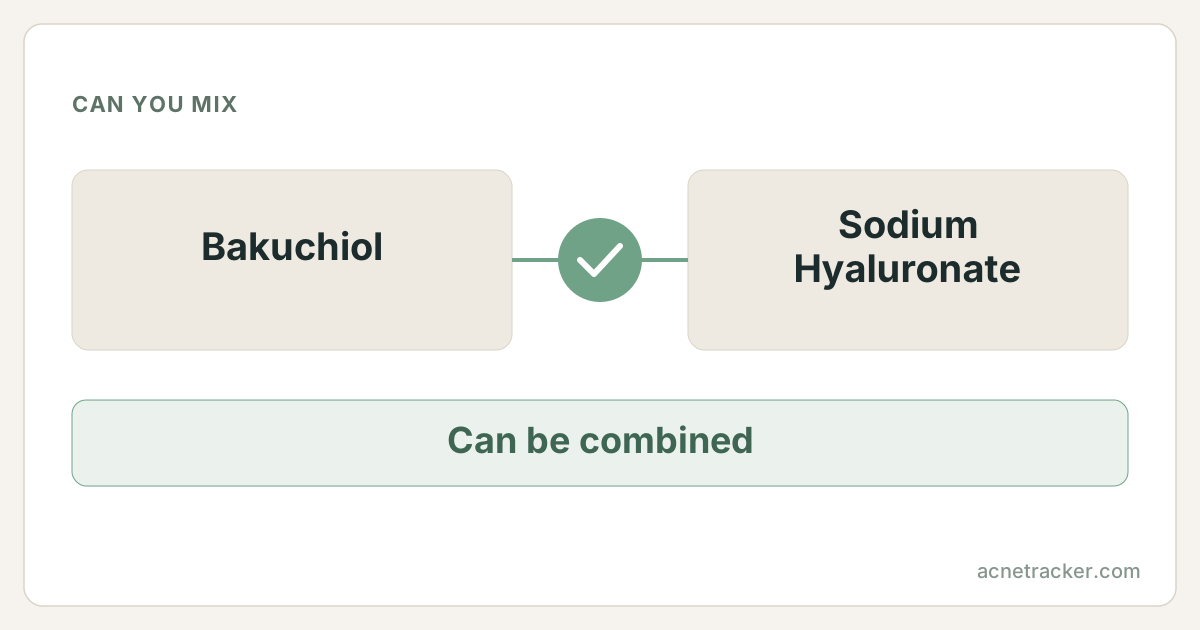
Can You Mix Bakuchiol and Sodium Hyaluronate?
Yes, and it is a fuss-free hydration-plus-renewal pair. Sodium hyaluronate is the salt form of hyaluronic acid, with a smaller molecular size that absorbs more readily and holds water in the skin. Bakuchiol provides the gentle, retinol-like renewal. Sodium hyaluronate plumps and hydrates the skin so bakuchiol's turnover work never leaves it feeling tight or dry.
How this pairing resolves
The two ingredients, their published numbers, and where they land together.
The numbers beside each ingredient are its published comedogenic rating and effective pH window, taken from its own profile page.
Show the numbers
| Ingredients | Metric | 0–5 |
|---|---|---|
| Bakuchiol | Comedogenic rating | 0/5 |
| Bakuchiol | Effective pH | no published pH |
| Sodium Hyaluronate | Comedogenic rating | 0/5 |
| Sodium Hyaluronate | Effective pH | no published pH |
Why
Sodium hyaluronate is hyaluronic acid in its stable, salt form. Because its molecules are generally smaller than large-molecule hyaluronic acid, it absorbs more easily and can hydrate slightly deeper layers, binding water to keep the skin plump and supple. It is purely a humectant — it hydrates but does not exfoliate or alter pH. Bakuchiol is the active partner, signalling collagen and turnover through non-retinoid pathways while acting as an antioxidant. The pairing is textbook complementary: bakuchiol does the renewing and sodium hyaluronate keeps the renewing skin well hydrated, which improves both comfort and how the skin looks day to day. There is zero chemistry to referee — sodium hyaluronate is inert and pH-neutral, and bakuchiol tolerates any normal pH — so this is a safe, universally recommendable base pairing. Well-hydrated skin also tends to tolerate actives better, so sodium hyaluronate quietly makes a bakuchiol routine easier to sustain.
How to combine them
Hydrating molecules work best on damp skin, so timing matters a little. Apply sodium hyaluronate to clean, slightly damp skin first so it has water to bind, let it settle, then apply bakuchiol serum, and lock everything in with a moisturiser — the occlusive step matters, because sodium hyaluronate holds water best when it is sealed rather than left exposed to dry air. Alternatively, if your bakuchiol serum is water-based, apply it to damp skin and follow with a sodium hyaluronate product, then moisturiser; both orders work since neither destabilises the other. Use the pair morning and night, keep daytime SPF, and expect no adjustment period. In dry climates, always seal with a cream so the bound water does not evaporate.
Example routine
| When | Steps |
|---|---|
| Morning | Cleanser → (damp) Sodium hyaluronate → Bakuchiol serum → Moisturiser → SPF 30+ |
| Evening | Cleanser → (damp) Sodium hyaluronate → Bakuchiol serum → Moisturiser |
| Dry climate | Always seal with a cream so bound water cannot evaporate |
| Note | Apply sodium hyaluronate to damp skin for best hydration |
Warning signs
Frequently asked questions
What is the difference between using bakuchiol with sodium hyaluronate versus hyaluronic acid?
Very little in practice. Sodium hyaluronate is the salt form of hyaluronic acid with a smaller molecular size, so it absorbs a little more easily, but both simply hydrate and pair with bakuchiol the same gentle way.
Should sodium hyaluronate go before or after bakuchiol?
Ideally sodium hyaluronate first on damp skin so it can bind water, then bakuchiol, then a sealing moisturiser. Both orders are tolerated, but hydrating on damp skin gives the best result.
Can bakuchiol and sodium hyaluronate be used every day?
Yes. Both are gentle and non-photosensitising, so morning and evening use suits all skin types. Sodium hyaluronate keeps skin hydrated while bakuchiol renews it.
Does sodium hyaluronate stop bakuchiol from drying out my skin?
It helps a lot. Sodium hyaluronate binds water in the skin, cushioning any mild dryness from bakuchiol's turnover activity, so skin stays plump and comfortable.
Sources & further reading
There is no single study of this exact question. The guidance here is reasoned from the ingredient profiles below, each of which carries its own references:
- Bakuchiol3 refs
- Sodium Hyaluronate2 refs
Show every reference behind this page (5)
- PubChem — Bakuchiol compound summarycited by Bakuchiol
- Bakuchiol: a retinol-like functional compound (PubMed)cited by Bakuchiol
- DermNet — Cosmeceuticalscited by Bakuchiol
- European Commission CosIng database — Sodium Hyaluronatecited by Sodium Hyaluronate
- PubMed — Effectiveness of topical hyaluronic acid of different molecular weights in xerosis cutis treatment in elderly: a double-blind, randomized controlled trial (Arch Dermatol Res, 2024)cited by Sodium Hyaluronate
Medical disclaimer
Ingredients mentioned on this page
Find your personal acne triggers
Our free Acne Tracker lets you log breakouts, sleep, stress and diet, and shows you which factors correlate with your flare-ups.