How to Choose a Moisturizer for Fungal Acne
Fungal acne is not true acne at all but Malassezia (pityrosporum) folliculitis, an overgrowth of a yeast that lives on everyone's skin, showing up as uniform small itchy bumps, often on the forehead, chest and back. It matters for moisturizer choice because that yeast feeds on many oils, fatty acids and esters — so ingredients that are harmless or helpful for ordinary skin can actively worsen fungal acne. The safest moisturizer here is a light, oil-free formula built on humectants that the yeast cannot use as food. This page explains what to avoid and what is safe. Persistent fungal acne is a medical condition and often needs antifungal treatment from a doctor.
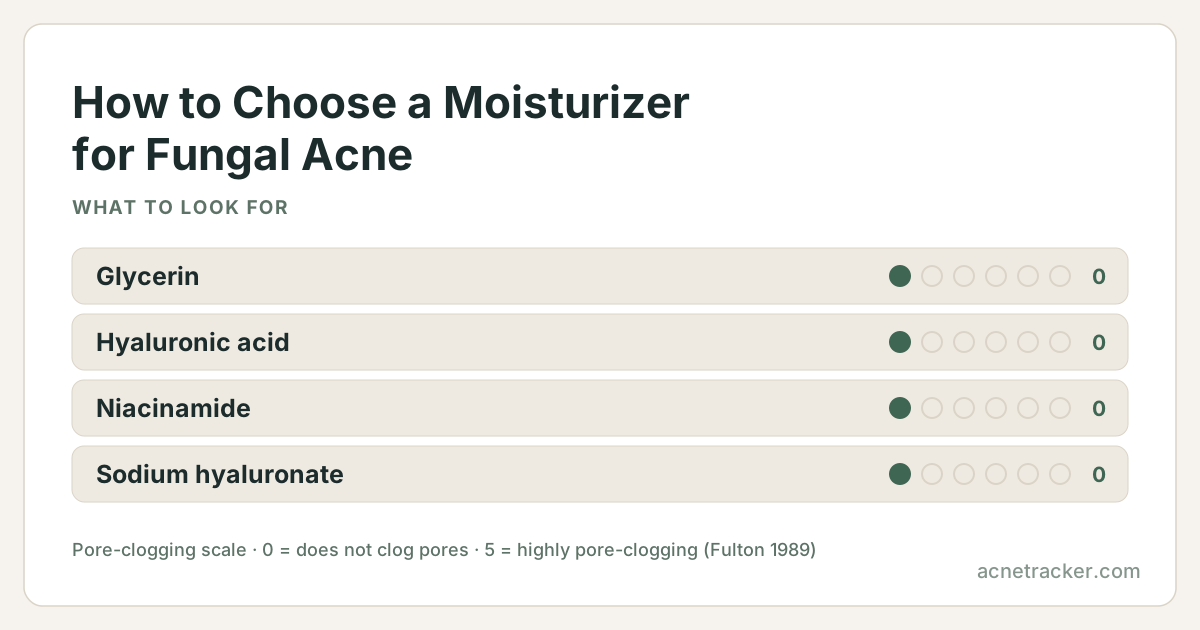
Ingredients to look for
| Ingredient | Why it matters |
|---|---|
| Glycerin | A humectant the yeast cannot feed on, giving safe, oil-free hydration for fungal-acne-prone skin. |
| Hyaluronic acid | Provides water-based hydration with no oils or fatty acids for Malassezia to use, so it is generally well tolerated. |
| Niacinamide | Supports the barrier and helps calm the associated inflammation without feeding the yeast. |
| Sodium hyaluronate | Another oil-free humectant that hydrates safely when heavier emollients are off the table. |
| Squalane | A saturated hydrocarbon rather than a fatty acid, so it is one of the few emollients many people with fungal acne tolerate — patch-test first. |
Ingredients to avoid
| Ingredient | Why it matters |
|---|---|
| Most plant and seed oils, and fatty acids | Malassezia feeds on fatty acids roughly C11–C24, so many oils directly fuel the overgrowth behind fungal acne. |
| Esters (isopropyl myristate, most '-ates' emollients) | Many fatty-acid esters can be metabolised by the yeast, so ester-rich creams often trigger or sustain fungal acne. |
| Polysorbates and some fatty-acid-derived surfactants | These can be broken down into food for Malassezia and are best avoided while clearing a flare. |
| Lauric acid ingredients and coconut-derived emollients | Coconut-derived fatty acids are among the yeast's preferred foods and a common fungal-acne trigger. |
How to choose
Read the ingredient list specifically for oils, fatty acids and esters, because for fungal acne the wrong emollient is the whole problem. A safe pick is essentially a light, oil-free, humectant-based gel or lotion: glycerin, hyaluronic acid and niacinamide are reliable, while most oils and ester emollients are risks. A handful of ingredients are usually tolerated despite being lipids — squalane, mineral oil, petrolatum and dimethicone are not fatty acids and many people use them without a flare — but individual tolerance varies, so patch-test. Community 'fungal-acne-safe' checkers exist and can help you scan a list, though they are guides rather than guarantees. Crucially, moisturizer choice only supports treatment: clearing an actual overgrowth usually needs an antifungal (such as ketoconazole or zinc pyrithione), which is why a persistent case should be confirmed and treated by a doctor rather than managed by skincare alone.
How to apply
Apply a light, oil-free moisturizer to clean skin morning and evening, keeping the whole routine low in oils while a flare clears. If you are using an antifungal wash or cream, apply that as directed first, then a safe moisturizer over it. Avoid heavy occlusive layering and rich night creams on affected areas, since warmth and oils encourage the yeast. Patch-test any new product on a small area for a week before applying it widely, because tolerance to individual lipids is very personal with fungal acne.
Frequently asked questions
What makes a moisturizer 'fungal-acne safe'?
It avoids the oils, fatty acids and esters that Malassezia yeast feeds on. Safe formulas lean on humectants like glycerin and hyaluronic acid and a few non-fatty-acid lipids such as squalane or dimethicone.
Is fungal acne actually acne?
No. It is Malassezia folliculitis, an overgrowth of a skin yeast, not the bacteria-and-clogged-pore process of true acne. That is why it does not respond to normal acne treatments and needs antifungal care.
Can I use any oils if I have fungal acne?
Most oils feed the yeast and are risky, but a few non-fatty-acid lipids like squalane, mineral oil and petrolatum are often tolerated. Patch-test individually, since responses vary from person to person.
Why does my 'acne' itch and look uniform?
Itchy, small, uniform bumps in clusters are typical of fungal acne rather than true acne, which is more varied. If that pattern sounds like yours, a doctor can confirm it and prescribe antifungal treatment.
Do I need to see a doctor for fungal acne?
Often yes. Fungal acne is a medical condition, and persistent cases usually need an antifungal to clear. A doctor can confirm the diagnosis and recommend the right treatment alongside a safe moisturizer.
Sources & further reading
There is no single study of this exact question. The guidance here is reasoned from the ingredient profiles below, each of which carries its own references:
- Glycerin3 refs
- Hyaluronic Acid3 refs
- Niacinamide2 refs
- Sodium Hyaluronate2 refs
- Squalane3 refs
Show every reference behind this page (7)
- PubChem — Glycerol compound summarycited by Glycerin
- DermNet — Moisturiserscited by Glycerin, Hyaluronic Acid, Squalane
- European Commission CosIng database — Glycerincited by Glycerin, Hyaluronic Acid, Niacinamide, Sodium Hyaluronate, Squalane
- PubChem — Hyaluronic acid compound summarycited by Hyaluronic Acid
- Niacinamide: mechanisms of action and its topical use in dermatology (PubMed)cited by Niacinamide
- PubMed — Effectiveness of topical hyaluronic acid of different molecular weights in xerosis cutis treatment in elderly: a double-blind, randomized controlled trial (Arch Dermatol Res, 2024)cited by Sodium Hyaluronate
- PubChem — Squalane compound summarycited by Squalane
Medical disclaimer
Ingredients mentioned on this page
Find your personal acne triggers
Our free Acne Tracker lets you log breakouts, sleep, stress and diet, and shows you which factors correlate with your flare-ups.