Sulfur: Comedogenic Rating & Ingredient Analysis
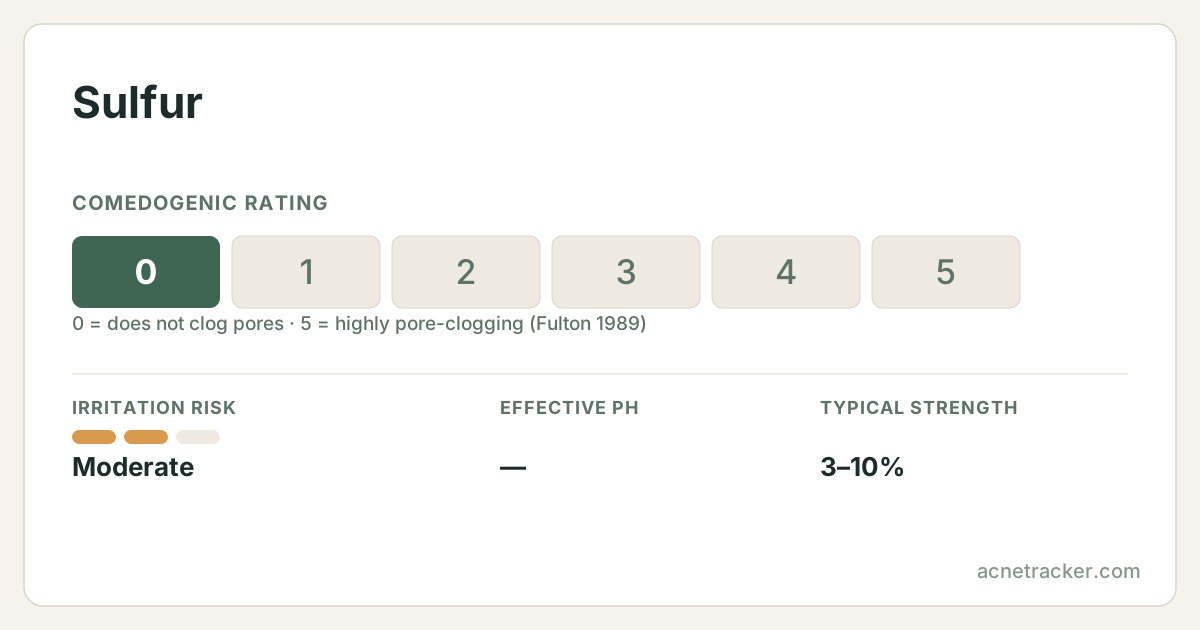
Sulfur is one of the oldest acne treatments still in use, an FDA-recognized over-the-counter acne ingredient found in masks, spot treatments and cleansers at 3–10%. It works differently from acids or benzoyl peroxide, absorbing excess oil, gently loosening dead skin and helping reduce acne-causing bacteria. It is especially popular for inflammatory breakouts and is often chosen by people whose skin cannot tolerate stronger actives. It has a comedogenic rating of 0 but a moderate irritation profile because it is drying, and its distinctive smell is its most famous drawback.
Quick facts
- Comedogenic rating
- measured
- Irritation risk
- Moderate
- Effective pH
- —
- Typical strength
- 3–10%
- Pregnancy
- Ask your doctor
- Suits skin types
- oilycombinationacne-prone
Where this number comes from
Measured in published research. The study is linked below.
Unusually for a comedogenic rating, this rests on human data rather than the rabbit assay. Two investigators tested 5% sulfur on 52 subjects over six weeks with before-and-after biopsies and found no correlation between sulfur and comedone formation. Fulton's 1976 paper likewise could not confirm sulfur as a potent acnegen. Worth noting from the same study: one of the VEHICLES tested, octoxynol-9, did appear comedogenic — a reminder that what an active is dissolved in can matter more than the active.
- Strauss JS et al. A reexamination of the potential comedogenicity of sulfur. Arch Dermatol 114:1340-2 (1978) — 52 human subjects, biopsy-controlled (PubMed)
- Fulton JE et al. Non-comedogenic cosmetics. Cutis 17:344-351 (1976) — could not confirm sulfur as a potent acnegen (PubMed)
Fulton read his own scale as 0-1 not significant, 2-3 borderline, 4-5 positive. The assay is the rabbit ear at 10% dilution, which the paper itself calls extremely sensitive and not fully predictive of human skin. Ratings describe the raw ingredient; concentration and formulation change real-world behaviour.
Caution profile
The four published fields on this page, on one 0–5 scale. Further from the centre means more care is needed — never that the ingredient is worse.
Derived, not measured: pore-clogging is the published comedogenic rating; irritation maps low/moderate/high to 1/3/5; pregnancy maps safe/caution/avoid to 0/3/5; skin-type limits is how many of the seven skin types this entry does NOT list. Every input is printed in words in the quick-facts card above.
Show the numbers
| Metric | 0–5 | Published field |
|---|---|---|
| Pore-clogging | 0 | 0/5 |
| Irritation | 3 | Moderate |
| Skin-type limits | 2.9 | 3/7 |
| Pregnancy | 3 | Ask your doctor |
Working pH and typical strength
Where this ingredient is formulated to sit, and at what concentration.
Both bars come from the fields above: the pH window and the typical strength range published for this ingredient. The tinted column is healthy skin's surface pH (about 4.7–5.75).
Show the numbers
| Metric | 0–5 |
|---|---|
| Typical strength | 3–10% |
What is it?
Sulfur is a naturally occurring element with a long history in dermatology, used for acne, rosacea and conditions like seborrheic dermatitis. In acne products it is typically present as elemental or colloidal sulfur. It has three relevant actions: it is mildly keratolytic, meaning it helps loosen and shed dead skin cells that clog pores; it has antibacterial activity against acne-related bacteria; and it absorbs oil, which reduces surface shine and helps dry out blemishes. This combination makes it a gentle but effective option for many people. Its main practical downsides are dryness and its characteristic eggy odor, which formulators try to mask with varying success.
Benefits
Clears blemishes
Sulfur helps dry out and calm active pimples, and its antibacterial action targets acne-related bacteria, making it effective on inflammatory breakouts.
Absorbs excess oil
Its oil-absorbing property reduces surface shine and helps unclog pores, which is why sulfur masks are popular for oily, congested skin.
Gently exfoliates
As a mild keratolytic, sulfur loosens dead skin cells so they shed properly instead of building up and blocking pores.
A gentler acne option
For people who cannot tolerate benzoyl peroxide or strong acids, sulfur offers an effective alternative that is often better suited to sensitive, reactive skin.
How to use
Sulfur is commonly used as a leave-on spot treatment or an overnight mask on active breakouts, or in a wash-off cleanser or mask a few times a week. Apply to clean skin and start with a couple of times a week to gauge dryness, building up as tolerated. Because sulfur is drying and exfoliating, avoid layering it in the same routine with other drying actives like benzoyl peroxide, strong acids or retinol — alternate instead. Always follow with a moisturizer, and use daily sunscreen, since exfoliating treatments can increase sun sensitivity.
Side effects
The two defining downsides of sulfur are dryness and smell. It can leave skin tight, flaky or irritated, especially if overused or layered with other drying actives, so moisturizing and easing in are important. Its characteristic rotten-egg odor, while reduced in modern formulas, still bothers some users. Overuse can compromise the barrier. It is otherwise well tolerated, and true allergy is uncommon.
Who should avoid it
People with very dry or already compromised skin should be cautious, as sulfur adds to dryness. Avoid combining it with other strong drying actives in the same routine. During pregnancy, topical sulfur is often considered one of the more acceptable acne options, but concentrations and duration matter, so confirm with your doctor before use.
Pairs well with
Avoid combining with
Frequently asked questions
How does sulfur treat acne?
It absorbs excess oil, gently exfoliates dead skin cells that clog pores, and reduces acne-related bacteria. This combination makes it effective, especially for inflammatory breakouts.
Why does sulfur smell bad?
Elemental sulfur has a characteristic eggy odor. Modern formulas reduce it, but some smell often remains, which is sulfur's most common complaint despite its effectiveness.
Can I use sulfur with other acne actives?
Use caution. Sulfur is drying and exfoliating, so avoid layering it with benzoyl peroxide, strong acids or retinol in the same routine. Alternate them and always moisturize.
Does sulfur clog pores?
No. Elemental sulfur has a comedogenic rating of 0 and actually helps unclog pores. Its main drawbacks are dryness and smell rather than clogging.
Is sulfur safe during pregnancy?
Topical sulfur is often regarded as one of the more acceptable acne options during pregnancy, but concentration and duration matter. Confirm with your doctor before using it.
Where this ingredient shows up here
Counted across this database, not the web — these are the pages on this site that reason about this ingredient.
Combination guides 2
Condition pages 1
Sources & further reading
Medical disclaimer
Find your personal acne triggers
Our free Acne Tracker lets you log breakouts, sleep, stress and diet, and shows you which factors correlate with your flare-ups.