How to Choose a Face Mask for Teen Skin
Teenage skin is oily because puberty raises androgen levels, and androgens enlarge sebaceous glands. That is normal biology on a schedule, not a problem to be solved with products, and it is worth knowing because the marketing aimed at this age group is the most aggressive in skincare — and social media has largely replaced it with something worse. The honest picture is small and cheap. A clay mask once a week is a reasonable, enjoyable thing that mops up shine. Almost everything else being recommended to a fourteen-year-old right now is either unnecessary, actively harmful, or a routine designed for a forty-year-old's concerns sold to someone who does not have them yet.
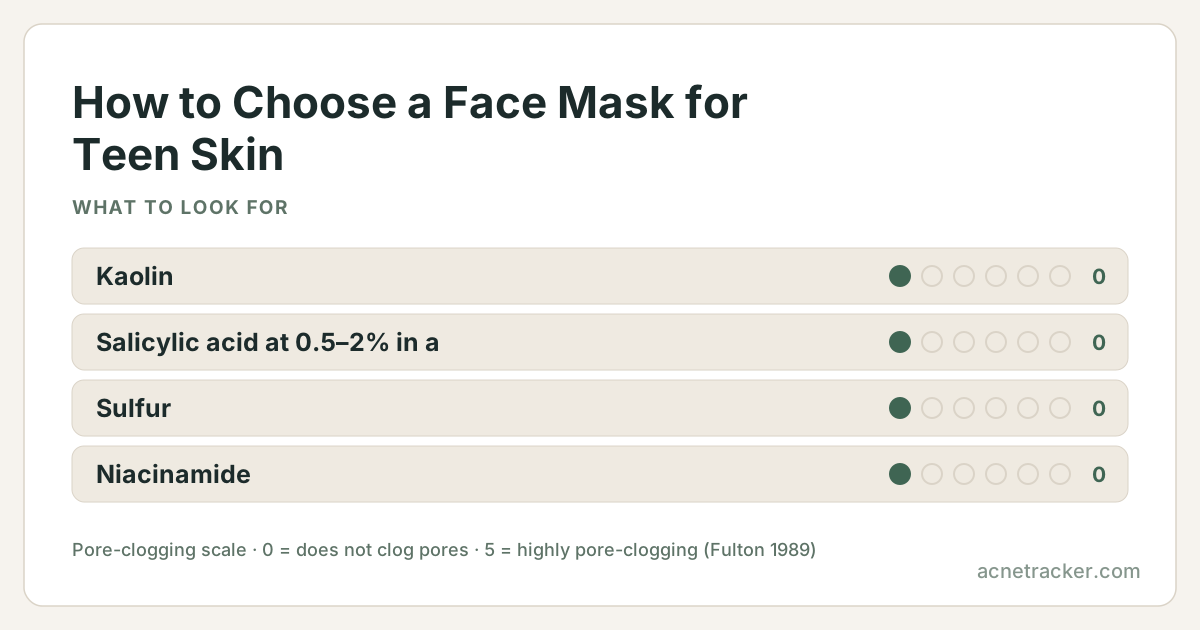
Ingredients to look for
| Ingredient | Why it matters |
|---|---|
| Kaolin | A gentle clay that handles a shiny T-zone without stripping. Fulton rates it 0. The cheapest mask in the shop does this as well as the expensive one. |
| Salicylic acid at 0.5–2% in a rinse-off format | The one active worth having if congestion is part of the picture. In a mask it is maintenance rather than treatment — a leave-on version does more, for less money. |
| Sulfur | An old, well-evidenced acne active that is gentler on young skin than a strong acid. The smell is the price, and it is the honest option in a category full of gimmicks. |
| Niacinamide | Well tolerated and hard to get wrong, which at this age counts for more than potency. It keeps a clay mask from leaving skin tight. |
| Glycerin | Oily skin still gets dehydrated, and dehydrated skin makes more oil. A mask base with glycerin avoids the cycle that makes people wash more and get shinier. |
Ingredients to avoid
| Ingredient | Why it matters |
|---|---|
| Toothpaste, baking soda and lemon juice masks | The three most-shared DIY hacks and all three cause real damage. Toothpaste contains detergents and flavourings that burn skin; baking soda sits around pH 9 and wrecks the acid mantle; lemon juice is phototoxic and can blister in sunlight. |
| Retinol and anti-ageing masks | There is nothing to prevent yet, and these are the products most likely to irritate young skin. The trend of pre-teens buying anti-ageing actives is a marketing success and a dermatological problem. |
| Peel-off and pore-strip masks | The satisfying peel is glue film, vellus hair and surface cells — not blackheads. It is a video, not a treatment, and the irritation is real. |
| Scrubbing hard and masking daily | The instinct with oily skin is more and harder, and it reliably produces a stripped, irritated face that is oilier than before. Frequency is the mistake almost everyone makes here. |
| Buying a ten-step routine | More products means more things that can irritate, more expense and no more benefit. A cleanser, a light moisturiser and sunscreen genuinely covers it, plus a treatment if there is acne. |
How to choose
Buy cheap, buy simple, and buy less than you think. A basic kaolin clay mask used once a week does everything a mask realistically does for teen skin: it takes the shine off, it feels good, and it costs very little. If there is congestion, a salicylic acid wash-off mask is a reasonable addition, though a leave-on salicylic product a few nights a week will do considerably more for the same money — the mask is the fun version, not the effective one. What matters more than the choice is the frequency. Oily skin invites the belief that harder and more often is better, and the actual result is a stripped barrier, rebound oil and a face that looks worse. Once a week is the ceiling. Two ideas are worth pushing back on directly. Masks do not detox or purge anything, because there are no toxins in a pore — it holds sebum, keratin and bacteria, and clay takes some of the oil off the top. And pores do not open with steam or close with cold; they are openings, not doors, and no product resizes them. If there is real acne — inflamed, spreading, painful, or leaving marks — a mask is not the answer and a GP or dermatologist is, early rather than late. Acne treated early scars less, and scarring is permanent in a way that a teenage breakout is not.
How to apply
Once a week, thin layer, on the oily areas only. Rinse with lukewarm water before the clay cracks and moisturise afterwards — skipping moisturiser is the single most common reason people conclude that masks make them oilier. Do not scrub the mask off. Leave spots alone entirely: squeezing turns a spot that would last a week into a mark that lasts months, and that trade is a bad one at any age. Never use a mask on the same day as a treatment product like benzoyl peroxide.
Frequently asked questions
How often should a teenager use a face mask?
Once a week is plenty for a clay mask, and there is no benefit to more. Oily skin tempts people into daily masking, which strips the barrier and often makes oiliness worse. Frequency is where this goes wrong far more than product choice.
Is toothpaste on a spot a bad idea?
Yes, and it is worth being specific about why: toothpaste contains detergents, abrasives, flavourings and sometimes baking soda, none of which are formulated for skin. It commonly causes a chemical burn and leaves a mark that outlasts the spot by months.
Should teens use anti-ageing masks?
No. There is nothing to treat, and these are among the most irritating products on the shelf for young skin. The marketing pushed at this age group is a business decision, not a dermatological recommendation.
Do face masks help teenage acne?
A little, around the edges. Acne is driven by hormones and follicular processes running all day, and a weekly product cannot change them. A sulfur or salicylic mask supports a routine, and real acne needs a real treatment.
Does my teen need an expensive skincare routine?
No. A gentle cleanser, a light moisturiser and sunscreen covers nearly everyone, with an acne treatment added if needed. Multi-step routines aimed at teenagers add cost and irritation risk without adding benefit.
Sources & further reading
There is no single study of this exact question. The guidance here is reasoned from the ingredient profiles below, each of which carries its own references:
- Kaolin3 refs
- Salicylic Acid2 refs
- Sulfur2 refs
- Niacinamide2 refs
- Glycerin3 refs
Show every reference behind this page (9)
- European Commission CosIng database — Kaolincited by Kaolin, Niacinamide, Glycerin
- PubChem — Kaolincited by Kaolin
- Fulton JE. Comedogenicity and irritancy of commonly used ingredients in skin care products. J Soc Cosmet Chem 40:321–333 (1989) — Table I, pp. 324–326 (source of the comedogenic rating)cited by Kaolin
- Salicylic acid as a peeling agent: a comprehensive review (PubMed)cited by Salicylic Acid
- FDA OTC monograph — acne drug products (salicylic acid 0.5–2%)cited by Salicylic Acid, Sulfur
- PubChem — Sulfur (CID 5362487)cited by Sulfur
- Niacinamide: mechanisms of action and its topical use in dermatology (PubMed)cited by Niacinamide
- PubChem — Glycerol compound summarycited by Glycerin
- DermNet — Moisturiserscited by Glycerin
Medical disclaimer
Ingredients mentioned on this page
Find your personal acne triggers
Our free Acne Tracker lets you log breakouts, sleep, stress and diet, and shows you which factors correlate with your flare-ups.