How to Choose a Face Mask for Hormonal Acne
Hormonal acne is driven by androgens acting on sebaceous glands — which is why it clusters on the lower face and jawline, arrives in the week before a period, and shows up as deep, tender lesions rather than surface bumps. A mask sits on top of the skin. There is no argument to be constructed in which a topical rinse-off product reaches an endocrine signal, and the honest version of this page says so before it says anything else. What a mask can do is manage the consequences: absorb the extra oil the cycle brings, deliver a pulse of an active, and calm a face that is having a bad week. Those are real jobs, and the treatments that change hormonal acne are prescriptions.
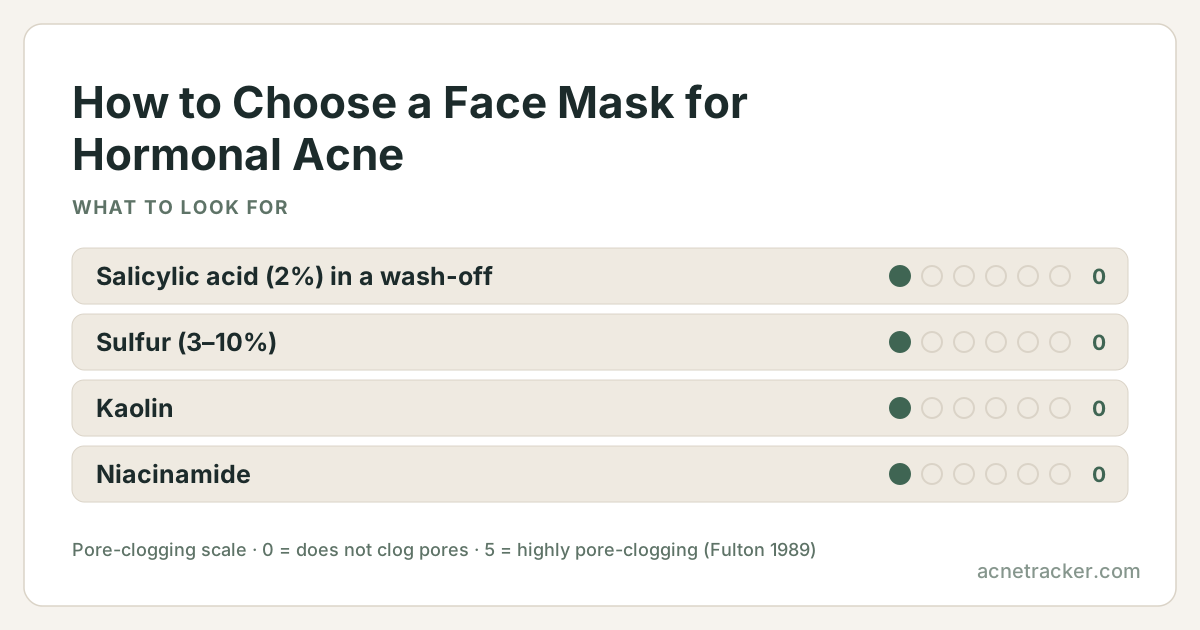
Ingredients to look for
| Ingredient | Why it matters |
|---|---|
| Salicylic acid (2%) in a wash-off mask | Oil-soluble, so it works where the congestion is. Useful in the premenstrual week when oil rises. It manages the surface; it does not touch the driver. |
| Sulfur (3–10%) | Keratolytic and anti-inflammatory, with a long clinical history in acne. A defensible weekly mask, and gentler on a hormonal flare than most acids. |
| Kaolin | Absorbs the surface sebum that increases across the luteal phase. Cosmetic and temporary — which, timed to the week you need it, is exactly what a mask is for. Fulton rates it 0. |
| Niacinamide | Anti-inflammatory with published sebum data from daily leave-on use, and one of the few things that suits both the oily week and the sore one. |
| Azelaic acid | Anti-inflammatory, anticomedogenic and safe in pregnancy — which matters here, since hormonal acne frequently arrives with pregnancy and most acne actives are then off the table. |
Ingredients to avoid
| Ingredient | Why it matters |
|---|---|
| Masking a cyst in the hope of drawing it out | Nodules and cysts sit deep in the dermis, and nothing in a mask reaches them. The 'drawing out' framing is the same claim as clay detox, and it is wrong in the same way. |
| Escalating mask strength when a flare arrives | The instinctive response, and it converts an oily week into an oily, irritated, barrier-damaged week. The flare is hormonal and will pass; the irritation you add will outlast it. |
| Peel-off masks over inflamed lesions | Ripping a glue film off active inflammation is trauma on skin already primed to mark. Hormonal acne is prone to post-inflammatory pigment and this is a direct route to it. |
| Any 'hormone-balancing' or 'detoxifying' mask claim | No topical cosmetic alters hormones — a claim that it does would make it a drug, and it is not one. There is also nothing to detoxify. Both phrases are marketing, not mechanism. |
How to choose
Use the mask as a timing tool, which is the one thing the format is genuinely good at. Hormonal acne is predictable in a way most acne is not: oil production rises in the luteal phase, congestion follows, and lesions arrive a few days later. A clay or salicylic mask in the week before your period, once or twice, is a reasonable and well-targeted intervention — and the same mask used on the week your skin is already inflamed and sore is often a mistake. Match the mask to the phase, not to the panic. Choose gentler than instinct suggests, because hormonal acne is inflammatory and inflamed skin over-responds to acids; sulfur or a low-strength BHA beats a multi-acid mask here almost every time. Then be clear about the ceiling. If your acne is deep, painful, cystic, scarring, or persists past your mid-twenties, the treatments with real evidence are medical: combined oral contraceptives, spironolactone, isotretinoin and prescription topicals, each with its own considerations and none decided from a shelf. A dermatologist or GP is the right next step, and it is worth saying that many people spend years cycling through cosmetics for something a prescription resolves in months. There is no shame in the mask — buy it for the week it helps. Just do not let it stand in for the appointment.
How to apply
Once or twice in the week before your period, and less in the week your skin is already sore. Apply to the affected zone — usually the jaw, chin and lower cheeks — and skip the areas that are not congested. Never mask on the same evening as a retinoid or benzoyl peroxide. Rinse before a clay mask cracks, moisturise afterwards, and leave individual lesions completely alone: squeezing a hormonal papule is how a week-long spot becomes a months-long mark. Track which week you masked and what happened; the pattern is the useful information.
Frequently asked questions
Can a face mask help hormonal acne?
It can manage the surface — absorbing extra sebum and delivering a short pulse of an active. It cannot affect the androgen signalling driving the acne, because that is internal and a mask is not. Expect help with a week, not with the condition.
When in my cycle should I use a clay mask?
The week before your period is the most logical timing, since sebum output rises in the luteal phase. Masking when the flare has already arrived and the skin is inflamed tends to add irritation to lesions that are sore rather than oily.
Do any masks balance hormones?
No, and a cosmetic that genuinely altered hormones would be regulated as a drug. Nothing applied to the skin surface for fifteen minutes reaches endocrine signalling. Read the phrase as decoration on the box.
Will a mask bring a cyst to a head?
No. A cyst is a deep inflammatory lesion in the dermis, and no rinse-off product reaches it. Clay does not draw anything out, and attempting to force one is the reliable way to turn a two-week lesion into a scar.
When should I see a doctor about hormonal acne?
If lesions are deep and painful, if you are scarring, if it persists past your mid-twenties, or if it comes with irregular periods, hair thinning or excess facial hair — that combination warrants investigation. Effective treatments exist and they are prescription.
Sources & further reading
There is no single study of this exact question. The guidance here is reasoned from the ingredient profiles below, each of which carries its own references:
- Salicylic Acid2 refs
- Sulfur2 refs
- Kaolin3 refs
- Niacinamide2 refs
- Azelaic Acid3 refs
Show every reference behind this page (9)
- Salicylic acid as a peeling agent: a comprehensive review (PubMed)cited by Salicylic Acid
- FDA OTC monograph — acne drug products (salicylic acid 0.5–2%)cited by Salicylic Acid, Sulfur
- PubChem — Sulfur (CID 5362487)cited by Sulfur
- European Commission CosIng database — Kaolincited by Kaolin, Niacinamide, Azelaic Acid
- PubChem — Kaolincited by Kaolin
- Fulton JE. Comedogenicity and irritancy of commonly used ingredients in skin care products. J Soc Cosmet Chem 40:321–333 (1989) — Table I, pp. 324–326 (source of the comedogenic rating)cited by Kaolin
- Niacinamide: mechanisms of action and its topical use in dermatology (PubMed)cited by Niacinamide
- PubChem — Azelaic acid compound summarycited by Azelaic Acid
- DermNet — Azelaic acidcited by Azelaic Acid
Medical disclaimer
Ingredients mentioned on this page
Find your personal acne triggers
Our free Acne Tracker lets you log breakouts, sleep, stress and diet, and shows you which factors correlate with your flare-ups.