How to Choose a Body Wash for Fungal Acne
'Fungal acne' is a nickname for pityrosporum (Malassezia) folliculitis — an overgrowth of a normal skin yeast in the follicles, not true acne at all. That distinction changes everything, because the antibacterial acne washes that help genuine breakouts do nothing here, and the fatty ingredients in many gentle body washes can actually feed the yeast. It shows as many small, uniform, often itchy bumps on the chest, back, shoulders and hairline that flare with heat and sweat. A wash cannot cure it, but an antifungal wash used consistently is a recognised maintenance tool. This page explains the profile to look for, the oils to avoid, and why confirming the diagnosis matters.
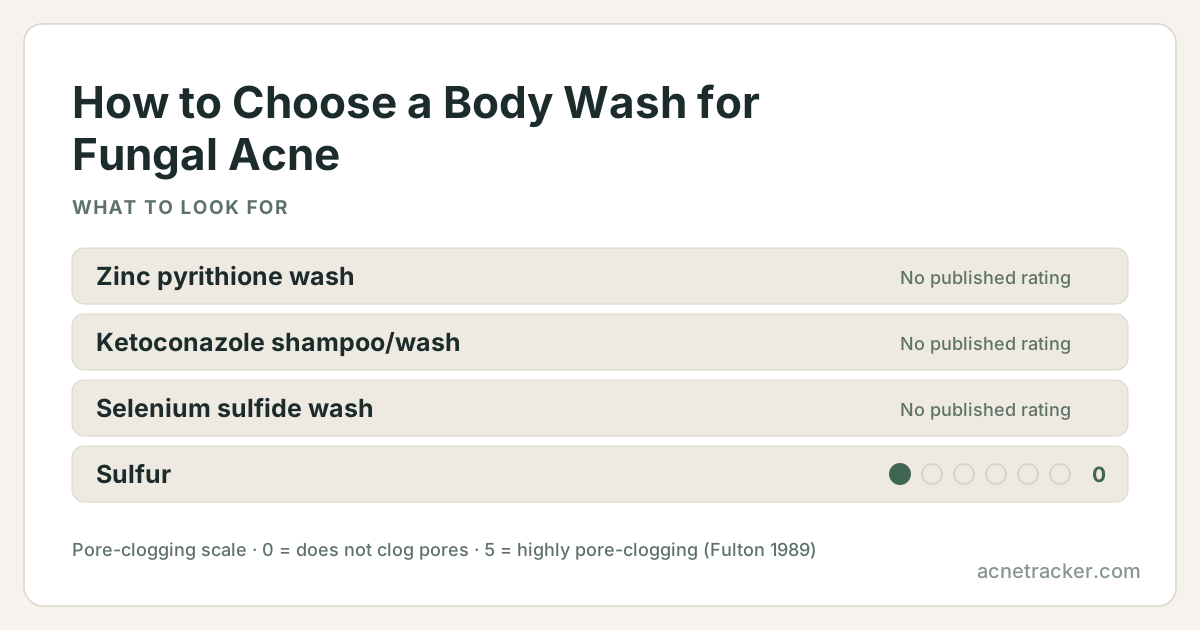
Ingredients to look for
| Ingredient | Why it matters |
|---|---|
| Zinc pyrithione wash | A widely used antifungal that reduces Malassezia on the skin; the everyday first choice in a wash for fungal-acne maintenance. Ask a pharmacist about suitable options. |
| Ketoconazole shampoo/wash | An antifungal often sold as a dandruff shampoo but usable on the body; needs a genuine few minutes of contact. A pharmacist can advise on strength and use. |
| Selenium sulfide wash | Another antifungal option that lowers yeast load; can be drying, so alternate or moisturise. Confirm suitability with a pharmacist first. |
| Sulfur | Has mild antifungal and keratolytic action and appears in some folliculitis washes; a useful supporting ingredient rather than a stand-alone fix. |
| Salicylic acid | Not antifungal itself, but helps keep the follicle openings clear so the antifungal can reach the yeast; a reasonable secondary ingredient. |
Ingredients to avoid
| Ingredient | Why it matters |
|---|---|
| Fatty acids and many plant oils (coconut, olive, lauric-rich oils) | Malassezia feeds on certain fatty acids and esters, so oil-rich washes can worsen fungal acne even when they feel gentle. |
| Antibacterial acne washes as your only step | Benzoyl peroxide and antibacterials target bacteria, not yeast, so they typically fail on true fungal acne and delay the right treatment. |
| Polysorbates and many esters | Some of these ingredients are also reported to feed Malassezia; simpler antifungal formulas are the safer bet during a flare. |
| Occlusive, sweaty layers left on after washing | Heat and trapped sweat are the yeast's favourite conditions, so undoing a good wash by staying in damp clothing is self-defeating. |
How to choose
First, be reasonably sure it is fungal: many small, uniform, itchy bumps that flare with sweat and ignore acne products point that way, but a pharmacist or doctor should confirm it, because true acne, keratosis pilaris and folliculitis can look similar and need different care. Once fungal is likely, choose an antifungal wash — zinc pyrithione for everyday use, or a ketoconazole or selenium-sulfide wash for a more active course — and use it as directed with a real contact time before rinsing. Read the full ingredient list for the fatty acids, esters and oils that feed Malassezia, and favour simpler formulas during a flare. Treat the wash as maintenance: it lowers the yeast load and prevents relapse, but stubborn or widespread cases often need an oral or topical antifungal prescribed by a doctor.
How to apply
Use the antifungal wash on the affected areas and let it sit for the contact time on the label — usually a few minutes — before rinsing, because a quick lather does not give the antifungal time to work. During a flare, many people use it several times a week, then taper to once or twice weekly to hold results. Shower promptly after sweating and change out of damp clothing, since heat and moisture drive the yeast.
Frequently asked questions
Why doesn't my acne body wash work on fungal acne?
Because fungal acne is not caused by bacteria. It is an overgrowth of Malassezia yeast, so antibacterial acne washes like benzoyl peroxide miss the target entirely. You need an antifungal wash such as zinc pyrithione, ketoconazole or selenium sulfide instead.
How long should I leave an antifungal body wash on?
Follow the label, but usually a few minutes rather than a quick rinse. Antifungals need contact time to reduce the yeast in the follicles, so lather the area, leave it while you finish showering, then rinse. A pharmacist can confirm the timing for a specific product.
Can a body wash cure fungal acne for good?
No. A wash lowers the yeast load and helps prevent relapse, but Malassezia is a normal skin resident that regrows, so fungal acne is managed rather than cured. Widespread or persistent cases often need an oral or topical antifungal from a doctor.
Which oils should I avoid if I have fungal acne?
Malassezia feeds on many fatty acids and esters, so coconut oil, olive oil and lauric-acid-rich oils, plus some polysorbates and esters, can worsen it. Simpler antifungal washes without those ingredients are safer during a flare; a pharmacist can help you read labels.
Sources & further reading
There is no single study of this exact question. The guidance here is reasoned from the ingredient profiles below, each of which carries its own references:
- Sulfur2 refs
- Salicylic Acid2 refs
Show every reference behind this page (3)
- FDA OTC monograph — acne drug products (sulfur 3–10%)cited by Sulfur, Salicylic Acid
- PubChem — Sulfur (CID 5362487)cited by Sulfur
- Salicylic acid as a peeling agent: a comprehensive review (PubMed)cited by Salicylic Acid
Medical disclaimer
Ingredients mentioned on this page
Find your personal acne triggers
Our free Acne Tracker lets you log breakouts, sleep, stress and diet, and shows you which factors correlate with your flare-ups.