How to Choose a Moisturizer for a Damaged Skin Barrier
A damaged skin barrier — usually from over-exfoliating, too many actives, or harsh cleansing — shows up as stinging, redness, tightness, flaking and products that suddenly burn where they never used to. The single most effective response is to simplify your routine and let a repair-focused moisturizer rebuild the barrier lipids you have stripped. This is less about finding a miracle cream than about removing what damaged the barrier and supplying the lipids and humectants it needs to heal. This page describes the repair profile to look for and, just as importantly, what to stop doing while the barrier recovers over the coming weeks.
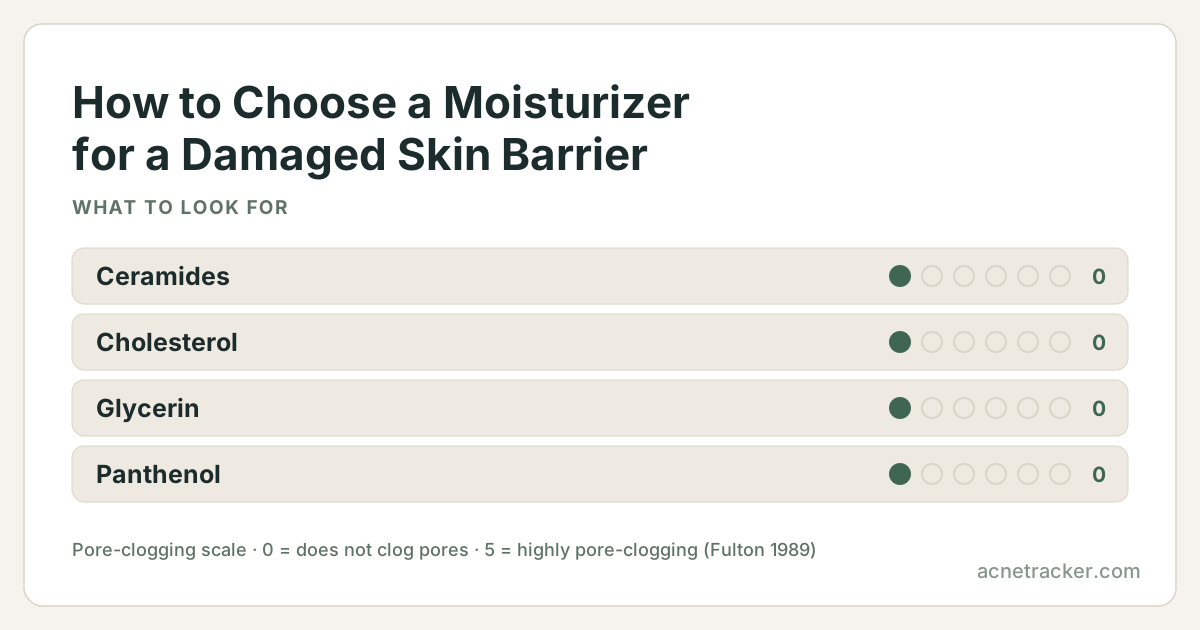
Ingredients to look for
| Ingredient | Why it matters |
|---|---|
| Ceramides | The barrier lipid you have most likely depleted; replacing it is the core of rebuilding a damaged barrier. |
| Cholesterol | The third lipid in the natural barrier trio; with ceramides and fatty acids it speeds repair more than any lipid alone. |
| Glycerin | A gentle humectant that rehydrates a stripped barrier without adding any irritation while it heals. |
| Panthenol | Soothes stinging and supports repair, easing the discomfort of a compromised barrier. |
| Centella asiatica | Calms the redness and reactivity of a damaged barrier and supports its recovery, well tolerated even by irritated skin. |
Ingredients to avoid
| Ingredient | Why it matters |
|---|---|
| Exfoliating acids and retinoids (pause them entirely) | Continuing actives on a damaged barrier prevents healing; a full pause for a few weeks is the fastest route back. |
| Fragrance and essential oils | A compromised barrier lets irritants in more easily, so fragrance stings and slows recovery on damaged skin. |
| SLS and harsh foaming cleansers | Stripping surfactants keep removing the very lipids you are trying to rebuild, so the barrier never catches up. |
| Denatured alcohol and astringent toners | Their drying action re-injures a barrier that needs calm, moist conditions to repair. |
How to choose
Choose a repair cream and simplify everything else. The best formulas supply the barrier lipid trio — ceramides, cholesterol and fatty acids — ideally in skin-like proportions, plus humectants and a soothing agent like panthenol or centella. Fragrance-free and a short ingredient list matter more than usual, because a damaged barrier reacts to things intact skin ignores. Pick a texture rich enough to feel comforting but not so heavy it feels occlusive to the point of clogging. Equally important is subtraction: strip your routine back to a gentle cleanser, this moisturizer and (in the day) sunscreen, and pause all actives, scrubs and strong toners until the stinging and flaking settle. Expect real recovery to take two to four weeks; reintroduce actives one at a time and slowly afterwards. If skin does not improve with simplification, or is cracked, weeping or infected, see a doctor.
How to apply
Apply generously to slightly damp skin at least morning and evening, and reapply whenever the skin feels tight or stings during the day. Use lukewarm water and a soft touch when cleansing, patting the moisturizer on rather than rubbing. Keep the routine minimal while healing — every extra product is another variable and another possible irritant. In the morning, follow with a gentle mineral sunscreen once the cream absorbs, since a damaged barrier is more vulnerable to UV. Resist the urge to 'treat' the flaking with exfoliation; that is what delays repair most.
Frequently asked questions
How do I know my skin barrier is damaged?
Typical signs are new stinging or burning from products you used to tolerate, along with redness, tightness, flaking and increased sensitivity. It often follows over-exfoliation or too many actives at once.
How soon should a repair moisturizer start making a visible difference?
Expect two timescales, and do not confuse them. Comfort — less tightness and stinging — often arrives within days, because a good moisturizer immediately supplies the occlusive layer your own lipids are failing to provide. Actual repair is slower: with a simplified routine and a repair moisturizer, most barriers improve noticeably within two to four weeks. Deeper damage takes longer, and continuing to use actives will stall recovery — which is why early comfort is the most common reason people restart actives too soon.
Should I stop using actives to repair my barrier?
Yes, pause exfoliating acids, retinoids and scrubs entirely while healing. They keep re-injuring the barrier. Reintroduce them one at a time, slowly, only once the stinging and flaking have settled.
What ingredients rebuild a damaged barrier fastest?
The barrier lipid trio of ceramides, cholesterol and fatty acids, supported by humectants like glycerin and soothing panthenol or centella, gives the skin the materials it needs to repair.
When should barrier damage be seen by a doctor?
If the skin is cracked, weeping, infected, or does not improve after a few weeks of a gentle, simplified routine, see a doctor to rule out dermatitis or another condition needing treatment.
Sources & further reading
There is no single study of this exact question. The guidance here is reasoned from the ingredient profiles below, each of which carries its own references:
- Ceramides3 refs
- Cholesterol2 refs
- Glycerin3 refs
- Panthenol3 refs
- Centella Asiatica2 refs
Show every reference behind this page (10)
- DermNet — Skin barrier functioncited by Ceramides
- PubChem — Ceramide compound summarycited by Ceramides
- European Commission CosIng database — Ceramide NPcited by Ceramides, Glycerin, Panthenol, Centella Asiatica
- PubChem — Cholesterol (CID 5997)cited by Cholesterol
- PubMed — Optimization of physiological lipid mixtures for barrier repaircited by Cholesterol
- PubChem — Glycerol compound summarycited by Glycerin
- DermNet — Moisturiserscited by Glycerin
- PubChem — Panthenol compound summarycited by Panthenol
- Safety Assessment of Panthenol, Pantothenic Acid, and Derivatives as Used in Cosmetics (PubMed)cited by Panthenol
- Bylka W et al. Centella asiatica in dermatology: an overview. Phytother Res 2014 Aug (PubMed)cited by Centella Asiatica
Medical disclaimer
Ingredients mentioned on this page
Find your personal acne triggers
Our free Acne Tracker lets you log breakouts, sleep, stress and diet, and shows you which factors correlate with your flare-ups.