How to Choose a Moisturizer for Eczema-Prone Skin
Eczema-prone skin has a genetically weakened barrier that loses water quickly and lets irritants in, which is why frequent, generous moisturizing is a cornerstone of managing it rather than an optional extra. The best moisturizer here is a fragrance-free, barrier-repairing cream applied liberally and often, ideally one that rebuilds the skin's own lipid mix. This page describes that repair-focused profile so you can read a label and judge whether it will help calm an itch-scratch cycle or aggravate it. Eczema is a medical condition, so use a good moisturizer alongside, not instead of, the advice and prescription treatment of a doctor.
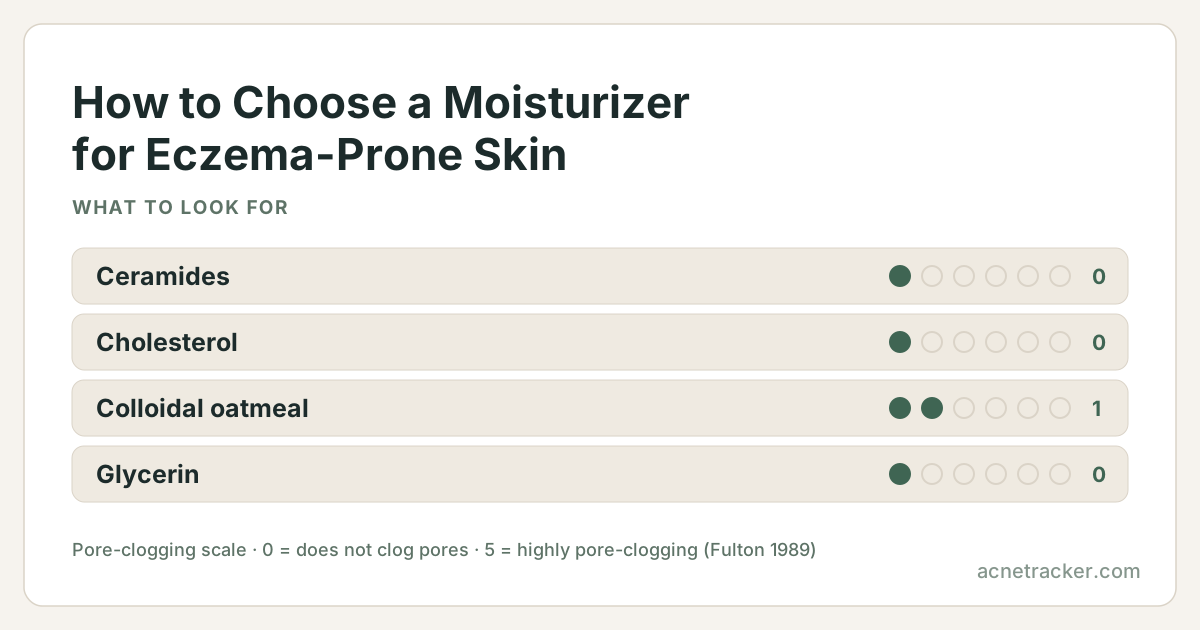
Ingredients to look for
| Ingredient | Why it matters |
|---|---|
| Ceramides | The main barrier lipid eczema-prone skin is short of; replacing them is central to reducing water loss and flares. |
| Cholesterol | Part of the natural barrier lipid trio; combined with ceramides and fatty acids it repairs the barrier more effectively than any one lipid alone. |
| Colloidal oatmeal | A recognised skin-protectant that eases the itch and irritation central to eczema flares. |
| Glycerin | A gentle humectant that hydrates without irritation, safe for the frequent reapplication eczema-prone skin needs. |
| Panthenol | Soothes and supports repair on inflamed, cracked eczema-prone skin. |
Ingredients to avoid
| Ingredient | Why it matters |
|---|---|
| Fragrance and essential oils | Leading triggers of contact allergy and flares in eczema-prone skin; fragrance-free is essential, not optional, here. |
| Sodium lauryl sulfate (SLS) and harsh surfactants | These strip barrier lipids and are a known eczema aggravator, best avoided in anything left on or used often. |
| Denatured alcohol high on the list | Its drying action undermines barrier repair and can sting broken, inflamed skin. |
| Botanical-heavy 'natural' formulas | Long lists of plant extracts multiply the allergens an already reactive, barrier-impaired skin can react to. |
How to choose
Prioritise barrier repair and simplicity. The strongest formulas combine the three barrier lipids — ceramides, cholesterol and fatty acids — in roughly skin-like proportions, so a cream listing that trio is a good sign. Colloidal oatmeal is a useful addition for itch. Insist on fragrance-free labelling and a short list; every extra ingredient is a possible trigger for eczema-prone skin. Favour a thick cream or ointment over a thin lotion, because heavier textures hold moisture in better on skin that loses it fast. Generous amounts used often beat a small amount of a fancier product. Look for the 'National Eczema Association' seal or similar if available, but the ingredient list is the real guide. Above all, treat moisturizing as the daily foundation of eczema care that works alongside the topical steroids or other prescriptions your doctor recommends for active flares.
How to apply
Apply liberally and often — several times a day, not just morning and evening — and always within minutes of bathing while the skin is still damp, to lock in water. Use more than feels normal; eczema-prone skin benefits from a thick, visible layer rather than a thin rub-in. During a flare, apply your doctor's prescribed treatment first to the affected patches, let it absorb, then moisturizer over the top. Keep a tub by the sink and reapply to hands after every wash, since handwashing strips the barrier fastest.
Frequently asked questions
How often should eczema-prone skin be moisturized?
Frequently — at least twice a day and more during flares or dry weather, plus straight after every bath or shower. Regular, generous moisturizing is one of the most effective parts of eczema management.
What ingredients repair the barrier in eczema?
Ceramides, cholesterol and fatty acids together, in roughly skin-like proportions, repair the barrier best. A cream listing this lipid trio is well suited to eczema-prone skin.
Is a thick cream or a lotion better for eczema?
A thick cream or ointment usually works better, because heavier textures reduce water loss more effectively on skin that dehydrates quickly. Thin lotions often are not occlusive enough for eczema-prone skin.
Can moisturizer replace my eczema medication?
No. Moisturizer is the daily foundation, but active flares often need prescribed treatment such as topical steroids. Use both together, following your doctor's guidance, rather than one instead of the other.
When should eczema be seen by a doctor?
See a doctor if eczema is widespread, weeping, infected, or not controlled by moisturizing and over-the-counter care. Prescription treatment and an eczema plan usually improve control substantially.
Sources & further reading
There is no single study of this exact question. The guidance here is reasoned from the ingredient profiles below, each of which carries its own references:
- Ceramides3 refs
- Cholesterol2 refs
- Colloidal Oatmeal2 refs
- Glycerin3 refs
- Panthenol3 refs
Show every reference behind this page (11)
- DermNet — Skin barrier functioncited by Ceramides
- PubChem — Ceramide compound summarycited by Ceramides
- European Commission CosIng database — Ceramide NPcited by Ceramides, Glycerin, Panthenol
- PubChem — Cholesterol (CID 5997)cited by Cholesterol
- PubMed — Optimization of physiological lipid mixtures for barrier repaircited by Cholesterol
- FDA OTC monograph — skin protectant drug products (colloidal oatmeal)cited by Colloidal Oatmeal
- PubMed — Colloidal oatmeal formulations as adjunct treatments in atopic dermatitis (J Drugs Dermatol, 2012)cited by Colloidal Oatmeal
- PubChem — Glycerol compound summarycited by Glycerin
- DermNet — Moisturiserscited by Glycerin
- PubChem — Panthenol compound summarycited by Panthenol
- Safety Assessment of Panthenol, Pantothenic Acid, and Derivatives as Used in Cosmetics (PubMed)cited by Panthenol
Medical disclaimer
Ingredients mentioned on this page
Find your personal acne triggers
Our free Acne Tracker lets you log breakouts, sleep, stress and diet, and shows you which factors correlate with your flare-ups.