How to Choose a Moisturizer for Combination Skin
Combination skin is oily in the T-zone and normal to dry on the cheeks, which makes one-size moisturizing frustrating: a cream rich enough for the cheeks can leave the forehead and nose greasy, while a gel that suits the T-zone leaves the cheeks tight. The workable answer is usually a single light, well-balanced formula that hydrates without heaviness, plus the option to apply more on dry areas and less on oily ones. This page describes the balanced profile to look for, and the multi-zone technique that lets one product serve a face with two different needs.
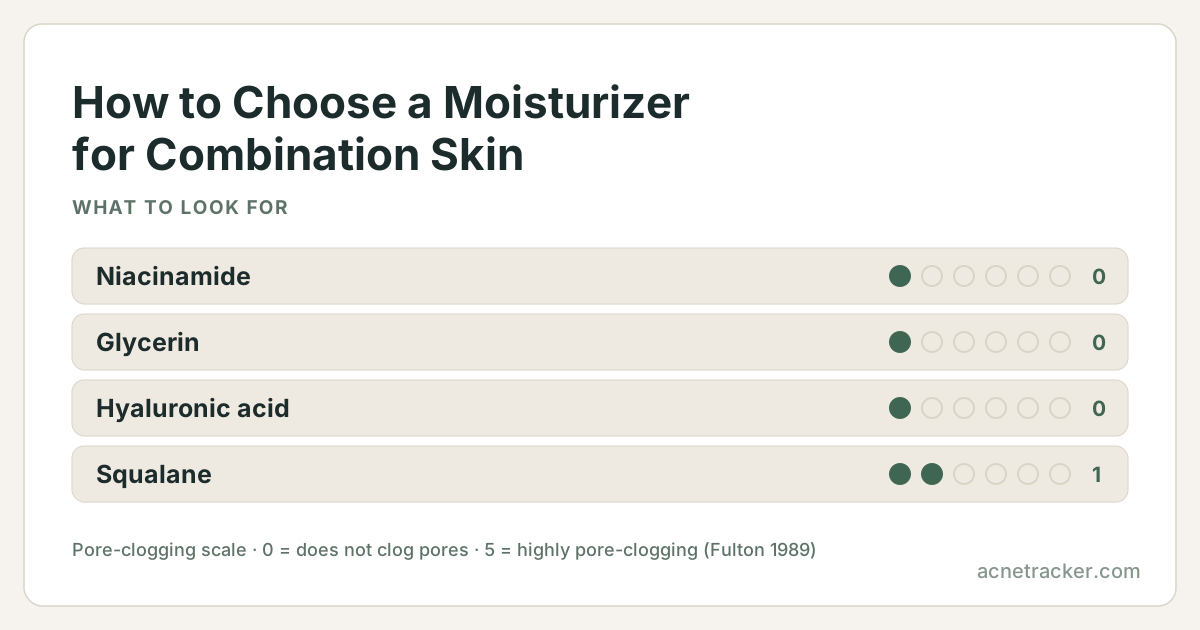
Ingredients to look for
| Ingredient | Why it matters |
|---|---|
| Niacinamide | Helps balance oil in the T-zone while supporting the barrier on drier cheeks, which suits combination skin unusually well. |
| Glycerin | A light humectant that hydrates every zone without adding oiliness to the parts that are already shiny. |
| Hyaluronic acid | Provides water-based hydration in a light gel form that the T-zone tolerates and the cheeks still appreciate. |
| Squalane | A light, low-comedogenic emollient that softens dry cheeks without the heavy feel that would overload the T-zone. |
| Ceramides | Support the barrier across the whole face so both the dry and oily zones stay more balanced over time. |
Ingredients to avoid
| Ingredient | Why it matters |
|---|---|
| Very rich butter-based creams used all over | They suit dry cheeks but overload the T-zone, causing shine and congestion where the skin is already oily. |
| Stripping gels or high-alcohol formulas | They mattify the T-zone but leave the cheeks tight and dehydrated, exaggerating the imbalance rather than evening it out. |
| Rich, highly comedogenic oils such as coconut oil | The oily zone of combination skin clogs easily, so pore-clogging oils tend to trigger breakouts in the T-zone. |
| Heavy fragrance loads | The drier cheek areas are often more reactive, so a strongly fragranced formula raises the irritation risk unnecessarily. |
How to choose
Aim for the middle: a light lotion or gel-cream that hydrates without a greasy after-feel. Check that the top of the ingredient list is water and light humectants rather than heavy butters, but that there is still a real emollient like squalane so the cheeks are not left wanting. Niacinamide is close to an ideal ingredient for this skin type, nudging the oily and dry zones toward each other. Decide whether one product plus zoned application will work for you, or whether you prefer two textures — a gel for the T-zone and a richer cream for the cheeks — which is legitimate but more effort. Ignore 'balancing' as a marketing claim; balance here comes from your technique and a sensible mid-weight formula, not from a word on the front of the jar.
How to apply
Apply to slightly damp skin morning and evening. The simplest effective method is zoning: a thin layer over the whole face, then a little extra worked into dry cheek areas, and nothing added to an already-oily T-zone. If you use two products, apply the lighter one to the forehead, nose and chin and the richer one to the cheeks and any dry patches. In the morning, let everything absorb before sunscreen. Adjust seasonally — most combination skin needs more on the cheeks in winter and can go lighter overall in humid summer weather.
Frequently asked questions
Do I need two different moisturizers for combination skin?
Not necessarily. Many people manage with one balanced light cream applied more heavily on the cheeks and lightly on the T-zone. Two products are an option if the imbalance is large, but they are not required.
What texture is best for combination skin?
A light lotion or gel-cream usually works best because it hydrates the cheeks without overloading the T-zone. Very rich creams and stripping gels both push the skin further out of balance.
Is combination skin a sign something has gone wrong with my skin?
No — it is the default face, not a fault to correct. The T-zone simply has more and larger oil glands than the cheeks, so it produces more sebum. This is normal combination skin, not two separate problems, and it responds well to zoned care. That framing matters when choosing a moisturizer: the goal is to accommodate an uneven gland distribution you were born with, not to hunt for a product that makes the whole face behave identically.
Should combination skin moisturize the oily areas too?
Yes, but lightly. Skipping the T-zone can prompt it to produce more oil. A thin layer of a light, non-greasy formula keeps it hydrated without adding shine.
Does combination skin change with the seasons?
Often. Cold, dry winter air tends to make the cheeks drier and the T-zone less oily, while heat and humidity do the reverse. Adjusting how much you apply where usually handles it.
Sources & further reading
There is no single study of this exact question. The guidance here is reasoned from the ingredient profiles below, each of which carries its own references:
- Niacinamide2 refs
- Glycerin3 refs
- Hyaluronic Acid3 refs
- Squalane3 refs
- Ceramides3 refs
Show every reference behind this page (8)
- Niacinamide: mechanisms of action and its topical use in dermatology (PubMed)cited by Niacinamide
- European Commission CosIng database — Niacinamidecited by Niacinamide, Glycerin, Hyaluronic Acid, Squalane, Ceramides
- PubChem — Glycerol compound summarycited by Glycerin
- DermNet — Moisturiserscited by Glycerin, Hyaluronic Acid, Squalane
- PubChem — Hyaluronic acid compound summarycited by Hyaluronic Acid
- PubChem — Squalane compound summarycited by Squalane
- DermNet — Skin barrier functioncited by Ceramides
- PubChem — Ceramide compound summarycited by Ceramides
Medical disclaimer
Ingredients mentioned on this page
Find your personal acne triggers
Our free Acne Tracker lets you log breakouts, sleep, stress and diet, and shows you which factors correlate with your flare-ups.