Colloidal Oatmeal: Comedogenic Rating & Ingredient Analysis
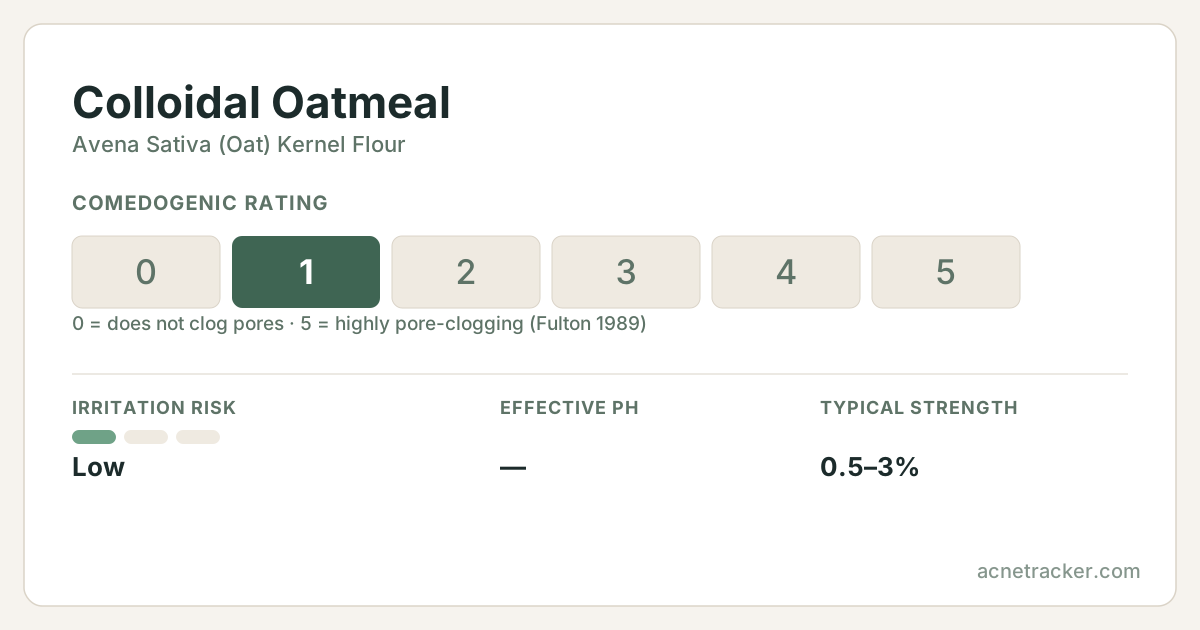
Colloidal oatmeal is finely milled whole oat that is recognized by the FDA as an over-the-counter skin protectant. It is one of very few soothing ingredients with formal regulatory backing for calming itch, irritation and minor skin conditions. In practice it shows up in gentle cleansers, moisturizers and rescue balms aimed at dry, eczema-prone and easily irritated skin. For acne-prone users, its value lies in comfort: it settles the redness and itch that come with drying treatments and barrier stress without stripping the skin. It is very gentle, with a low comedogenic rating and minimal irritation risk.
Quick facts
- Comedogenic rating
- our estimate — not measured
- Irritation risk
- Low
- Effective pH
- —
- Typical strength
- 0.5–3%
- Pregnancy
- Considered safe
- Suits skin types
- drycombinationsensitivenormalacne-prone
Where this number comes from
No one has published a comedogenic rating for this ingredient. Fulton's 1989 table tested about 250 raw materials and this was not among them, and we found no later study measuring it. The figure shown is our own reasoning from the ingredient's chemistry and how it is used — treat it as an estimate, not a measurement.
Fulton read his own scale as 0-1 not significant, 2-3 borderline, 4-5 positive. The assay is the rabbit ear at 10% dilution, which the paper itself calls extremely sensitive and not fully predictive of human skin. Ratings describe the raw ingredient; concentration and formulation change real-world behaviour.
Caution profile
The four published fields on this page, on one 0–5 scale. Further from the centre means more care is needed — never that the ingredient is worse.
Derived, not measured: pore-clogging is the published comedogenic rating; irritation maps low/moderate/high to 1/3/5; pregnancy maps safe/caution/avoid to 0/3/5; skin-type limits is how many of the seven skin types this entry does NOT list. Every input is printed in words in the quick-facts card above.
Show the numbers
| Metric | 0–5 | Published field |
|---|---|---|
| Pore-clogging | 1 | 1/5 |
| Irritation | 1 | Low |
| Skin-type limits | 1.4 | 5/7 |
| Pregnancy | 0 | Considered safe |
Working pH and typical strength
Where this ingredient is formulated to sit, and at what concentration.
Both bars come from the fields above: the pH window and the typical strength range published for this ingredient. The tinted column is healthy skin's surface pH (about 4.7–5.75).
Show the numbers
| Metric | 0–5 |
|---|---|
| Typical strength | 0.5–3% |
What is it?
Colloidal oatmeal is not a single chemical but the whole oat kernel ground into an extremely fine powder that disperses evenly in water. That whole-grain composition is the point: it carries starches and beta-glucans that hold water and form a soothing film, oils that soften, and antioxidant compounds called avenanthramides that are linked to its anti-inflammatory and anti-itch effects. Because it is regulated as a skin protectant, products can legitimately claim to relieve minor skin irritation and itching when it is present at the required level. It buffers the skin surface, holds moisture and reduces the reactivity that makes irritated skin feel raw.
Benefits
Relieves itch and irritation
As an FDA-recognized skin protectant, colloidal oatmeal calms itching and minor irritation, making it a go-to for eczema-prone and over-treated skin.
Soothes redness
Its avenanthramide antioxidants have documented anti-inflammatory activity, helping settle the redness that follows breakouts and harsh actives.
Softens and hydrates
Oat starches and lipids form a soft, moisture-holding film that leaves dry, tight skin feeling comfortable and supple.
Supports a stressed barrier
By protecting and moisturizing the surface, it helps a compromised barrier recover, reducing the stinging and sensitivity that acne routines can cause.
How to use
Colloidal oatmeal is easiest to use in leave-on moisturizers and balms, where it stays in contact with the skin, or in gentle cream cleansers for reactive skin. Apply a soothing oat moisturizer after your actives at night to calm and hydrate, or use it any time skin feels raw and itchy. It layers well over hydrating serums and under heavier occlusives. Because it is a protectant rather than an active treatment, there is no adjustment period and no conflict with other ingredients — use it as often as your skin needs comfort.
Side effects
Colloidal oatmeal is very well tolerated. The main caution is for people with a true oat or gluten-related allergy, who can occasionally react and should patch test first. In rich balms the surrounding oils, rather than the oat itself, are the more likely cause of any congestion on very oily skin. Otherwise, reactions are rare and it is considered safe even for infants and eczema-prone skin.
Who should avoid it
People with a diagnosed oat allergy should avoid it or patch test carefully, as sensitivity is possible. Those with very oily, easily congested skin should favor lightweight oat moisturizers over heavy balms, where the added oils, not the oatmeal, may feel too rich. Everyone else can use it freely.
Pairs well with
Frequently asked questions
Is colloidal oatmeal good for acne-prone skin?
Yes, for soothing. It calms the redness, itch and irritation that come with acne treatments and barrier stress. Choose lightweight formulas rather than heavy balms if your skin clogs easily.
What does the FDA skin protectant status mean?
It means colloidal oatmeal is officially recognized to relieve minor skin irritation and itching, so products containing enough of it can make that claim with regulatory backing.
Does colloidal oatmeal clog pores?
The oatmeal itself is low on the comedogenic scale (rated 1). Any congestion is more likely from the oils in a rich balm, so pick lighter formulas if you are prone to breakouts.
Can I use colloidal oatmeal with retinol?
Yes. It is an excellent soothing partner for retinol, calming the dryness and irritation it causes. Apply an oat moisturizer after your retinol to improve comfort.
Is colloidal oatmeal safe during pregnancy?
Yes. It is a gentle, topical skin protectant with no systemic concern and is considered safe throughout pregnancy and breastfeeding.
Where this ingredient shows up here
Counted across this database, not the web — these are the pages on this site that reason about this ingredient.
Combination guides 1
Sources & further reading
Medical disclaimer
Find your personal acne triggers
Our free Acne Tracker lets you log breakouts, sleep, stress and diet, and shows you which factors correlate with your flare-ups.