How to Choose a Night Cream for a Damaged Skin Barrier
A damaged barrier — from over-exfoliation, too many actives, harsh cleansers or over-washing — leaves skin stinging, red, tight, flaky and suddenly reactive to products it used to tolerate. Night is when the barrier does most of its repair, so a night cream is central to recovery, but the real fix is subtraction: pausing the actives that caused the damage and letting a simple, lipid-rich cream do its work. This guide describes the barrier-repair profile to reach for and, just as importantly, everything to strip out of the routine so skin can actually heal overnight instead of being re-injured each evening.
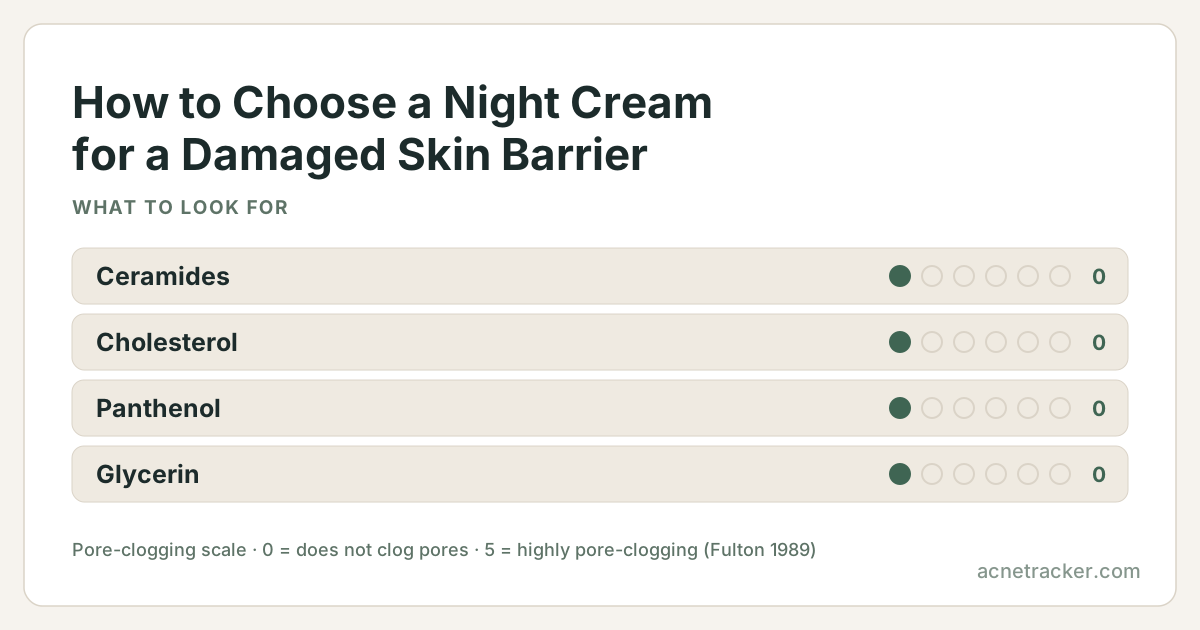
Ingredients to look for
| Ingredient | Why it matters |
|---|---|
| Ceramides | The core barrier lipid; replacing it is the single most direct way to rebuild a damaged barrier overnight. |
| Cholesterol | Works with ceramides and fatty acids in the barrier's natural ratio, making repair faster and more complete. |
| Panthenol | Soothes the stinging and supports healing of a compromised, inflamed surface. |
| Glycerin | A gentle humectant that rehydrates the surface without adding anything an irritated barrier must process. |
| Madecassoside | A centella-derived soother with supportive evidence for calming and aiding barrier recovery. |
Ingredients to avoid
| Ingredient | Why it matters |
|---|---|
| Any exfoliating acid or retinoid until healed | These are usually what caused the damage; continuing them stops the barrier repairing no matter how good the cream is. |
| Fragrance, essential oils and 'active' botanicals | A compromised barrier lets irritants in far more easily, so anything non-essential risks setting recovery back. |
| Foaming, high-pH or stripping cleansers | Harsh cleansing keeps re-damaging the barrier every evening; switch to a mild, non-foaming wash while healing. |
| Over-layering many products | A crowded routine gives more chances to irritate; barrier repair is a case where fewer, blander steps work best. |
How to choose
Choose the blandest, most repairing cream you can and pare everything else back. The gold standard is a formula built around barrier lipids — ceramides plus cholesterol — with a soother like panthenol or madecassoside and a humectant like glycerin, and little else. A short ingredient list is a genuine advantage here. Explicitly fragrance-free is non-negotiable, since a damaged barrier over-reacts to fragrance. Ignore 'active' or 'brightening' versions; you want the opposite of active right now. This is less about buying the perfect night cream than about what you stop doing: pause acids, retinoids and scrubs entirely, and keep the routine to a gentle cleanser and this cream until skin calms, usually one to four weeks. Reintroduce actives one at a time, slowly, only once the barrier feels normal again.
How to apply
Simplify ruthlessly. Cleanse once in the evening with a mild, non-foaming wash and lukewarm water, then apply a generous layer of the barrier cream to slightly damp skin, morning and night. That, plus sunscreen by day, can be the entire routine while healing. Reapply during the day too if skin feels tight. Resist the urge to 'treat' the flaking with exfoliation — that is what set you back. Give it time: barriers typically settle in one to four weeks of this minimal approach. Only when stinging, redness and tightness are fully gone should you cautiously reintroduce one active at a time.
Frequently asked questions
How do I know if I need a barrier-repair night cream?
Typical signs are new stinging when you apply products, redness, tightness, flaking, rough texture and sudden reactivity to things you used to tolerate. It usually follows over-exfoliation, too many actives or harsh cleansing, and it improves with a simplified, barrier-repair routine.
How long does a night cream take to repair a damaged barrier?
With a lipid-rich cream and, crucially, pausing all actives, most barriers calm noticeably within one to two weeks and settle fully within about four. Continuing the actives that caused the damage is the usual reason recovery stalls.
Can I keep using retinol while repairing my barrier at night?
No — pause it. Retinoids and acids are the usual cause of barrier damage, and continuing them prevents the repair a night cream is trying to support. Stop all actives, heal with a bland barrier cream, then reintroduce them slowly once calm.
What ingredients repair a damaged barrier fastest overnight?
Barrier lipids are key: ceramides together with cholesterol, alongside a soother like panthenol or madecassoside and a humectant like glycerin. Just as important is removing irritants — fragrance, actives and harsh cleansers — so the repair is not undone each night.
Sources & further reading
There is no single study of this exact question. The guidance here is reasoned from the ingredient profiles below, each of which carries its own references:
- Ceramides3 refs
- Cholesterol2 refs
- Panthenol3 refs
- Glycerin3 refs
- Madecassoside3 refs
Show every reference behind this page (11)
- DermNet — Skin barrier functioncited by Ceramides
- PubChem — Ceramide compound summarycited by Ceramides
- European Commission CosIng database — Ceramide NPcited by Ceramides, Panthenol, Glycerin, Madecassoside
- PubChem — Cholesterol (CID 5997)cited by Cholesterol
- PubMed — Optimization of physiological lipid mixtures for barrier repaircited by Cholesterol
- PubChem — Panthenol compound summarycited by Panthenol
- Safety Assessment of Panthenol, Pantothenic Acid, and Derivatives as Used in Cosmetics (PubMed)cited by Panthenol
- PubChem — Glycerol compound summarycited by Glycerin
- DermNet — Moisturiserscited by Glycerin
- PubChem — Madecassoside (CID 24825675)cited by Madecassoside
- Therapeutic properties and pharmacological activities of asiaticoside and madecassoside: A review (PubMed)cited by Madecassoside
Medical disclaimer
Ingredients mentioned on this page
Find your personal acne triggers
Our free Acne Tracker lets you log breakouts, sleep, stress and diet, and shows you which factors correlate with your flare-ups.