How to Choose a Face Oil for a Damaged Skin Barrier
A damaged barrier announces itself: water stings, products that were fine last month burn, the skin looks shiny but feels tight, and small rough patches appear where there were none. Almost always the cause is subtraction gone wrong — too many acids, too much retinoid, too hot water, too much washing. Face oil is genuinely useful here, but only if you choose it on lipid chemistry rather than on how luxurious it sounds. Some oils supply the fatty acid the barrier is missing; others sit on top and do nothing structural; a few actively irritate skin in this state.
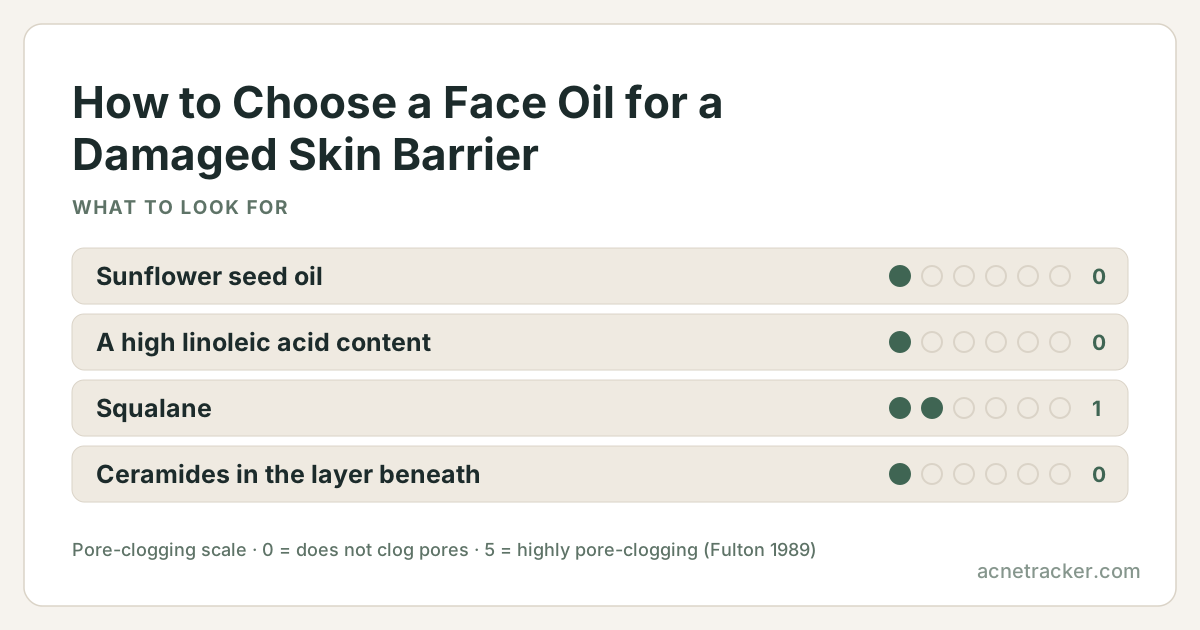
Ingredients to look for
| Ingredient | Why it matters |
|---|---|
| Sunflower seed oil | The most defensible pick. It is high-linoleic, Fulton rates it 0, and barrier studies on infant skin found it supported barrier function where olive oil did not. |
| A high linoleic acid content | Linoleic acid is a building block of the ceramide 1 that holds the lipid layers together. Oleic acid, its counterpart, has been shown to disrupt the barrier in the same studies. |
| Squalane | Occlusion without reactivity, rated 1 by Fulton. When everything stings, an oil with nothing in it to sting is worth a great deal. |
| Ceramides in the layer beneath | The oil supplies fatty acids; a ceramide-containing cream supplies the other side of the barrier's lipid matrix. The two together beat either alone. |
| Hemp seed oil | Linoleic and linolenic dominant, light, and unlikely to congest — a good option if sunflower oil feels too thin to do anything. |
Ingredients to avoid
| Ingredient | Why it matters |
|---|---|
| High-oleic oils (olive, marula, coconut) | Studies have found topical oleic acid increases transepidermal water loss and disrupts the lipid lamellae — the opposite of what a damaged barrier needs. |
| Any exfoliating acid, however gentle | The barrier cannot be repaired while it is being removed. Pause all acids and retinoids until stinging stops, usually two to four weeks. |
| Fragrance and essential oils | A leaky barrier lets sensitisers reach the immune system far more efficiently than intact skin does. This is exactly when contact allergies get established. |
| Oxidised oils | The lipid peroxides in a rancid oil are inflammatory. On damaged skin, an old bottle of rosehip is worse than no oil at all. |
How to choose
Pick on fatty acid profile, and specifically on the linoleic-to-oleic ratio. Studies on both infant and adult skin have found high-oleic oils such as olive can increase water loss and impair barrier integrity, while high-linoleic oils such as sunflower behave better. That is the single most useful piece of evidence in this category, and it inverts the usual instinct that richer means more repairing. Second, keep the formula bland: no fragrance, no essential oil, no botanical extract you cannot justify. Third, check freshness. High-linoleic oils oxidise fastest, so buy small and dark, and bin anything that smells like old nuts. Fourth, look at what you pair it with — an oil alone supplies one of the three lipid families the barrier needs, so a ceramide and cholesterol-containing moisturiser underneath is the other half of the job. Finally, do less. The fastest barrier repair comes from removing products, not adding them: a gentle cleanser, a bland moisturiser, one oil, sunscreen, and nothing else for a month.
How to apply
Strip the routine back first, then add the oil to what remains. Lukewarm water, a non-foaming cleanser, moisturiser onto damp skin, and three to four drops of oil pressed on top at night. Use it morning and evening if you tolerate it — a damaged barrier benefits from consistency more than from strength. Do not massage, exfoliate, or use a cloth or brush. Expect two to four weeks for stinging to settle and up to eight for the rough patches to fully resolve; barrier lipids are rebuilt slowly. If you have been using a retinoid, reintroduce it only after the skin has been comfortable for a full fortnight, and at half the previous frequency.
Frequently asked questions
Can face oil repair a damaged skin barrier?
It supplies fatty acids the barrier uses and reduces water loss, so it supports repair. It cannot rebuild ceramides on its own, which is why an oil works best over a ceramide-containing moisturiser rather than instead of one.
Why is olive oil bad for a damaged barrier?
Because of its oleic acid content. Studies applying olive oil to skin found it increased transepidermal water loss and disturbed the lipid lamellae, whereas high-linoleic sunflower oil in the same work did not.
How long should I keep using a face oil before judging whether the barrier is recovering?
Give it the full lipid timeline, not the comfort timeline. Stinging usually settles in two to four weeks once you stop the cause; full lipid recovery can take two months. An oil is doing slow structural work here rather than a quick fix, so judging it at two weeks tells you mostly about how it feels, not whether it worked. The main variable is whether you actually pause the actives, which most people find harder than they expect.
Should I stop all my actives while repairing my barrier?
Yes, temporarily. Acids, retinoids, benzoyl peroxide and vitamin C all need a functioning barrier to be tolerated. Pause them, keep sunscreen, and reintroduce one at a time once your skin has been comfortable for two weeks.
Sources & further reading
There is no single study of this exact question. The guidance here is reasoned from the ingredient profiles below, each of which carries its own references:
- Sunflower Seed Oil3 refs
- Linoleic Acid3 refs
- Squalane3 refs
- Ceramides3 refs
- Hemp Seed Oil2 refs
Show every reference behind this page (10)
- European Commission CosIng database — Helianthus Annuus Seed Oilcited by Sunflower Seed Oil, Linoleic Acid, Squalane, Ceramides, Hemp Seed Oil
- PubChem — Linoleic acid (major sunflower fatty acid)cited by Sunflower Seed Oil
- Safety Assessment of Helianthus annuus (Sunflower)-Derived Ingredients as Used in Cosmetics (PubMed)cited by Sunflower Seed Oil
- PubChem — Linoleic acid compound summary (CID 5280450)cited by Linoleic Acid
- Essential fatty acids and acne (J Am Acad Dermatol, 1986; PubMed)cited by Linoleic Acid
- PubChem — Squalane compound summarycited by Squalane
- DermNet — Emollients and moisturiserscited by Squalane
- DermNet — Skin barrier functioncited by Ceramides
- PubChem — Ceramide compound summarycited by Ceramides
- Hemp (Cannabis sativa L.) seed oil: analytical and phytochemical characterization of the unsaponifiable fraction (J. Agricultural and Food Chemistry, 2014)cited by Hemp Seed Oil
Medical disclaimer
Ingredients mentioned on this page
Find your personal acne triggers
Our free Acne Tracker lets you log breakouts, sleep, stress and diet, and shows you which factors correlate with your flare-ups.