How to Choose a Micellar Water for a Damaged Skin Barrier
A damaged skin barrier — from over-exfoliation, too many actives, harsh weather or over-washing — struggles to hold water and keep irritants out, so it stings, flakes and reddens at things it once shrugged off. During repair, the guiding principle is to do less, and cleansing is the first place to apply it. Micellar water can be a low-effort way to clean while the barrier heals, but even mild surfactant left on a compromised surface can sting, and cotton-pad friction is unwelcome on tender skin. This page describes the barrier-supportive profile worth seeking, what to strip out of the routine entirely, and how to clean with the least possible disruption. We review ingredient profiles, not brands, because a healing barrier reacts to the formula alone.
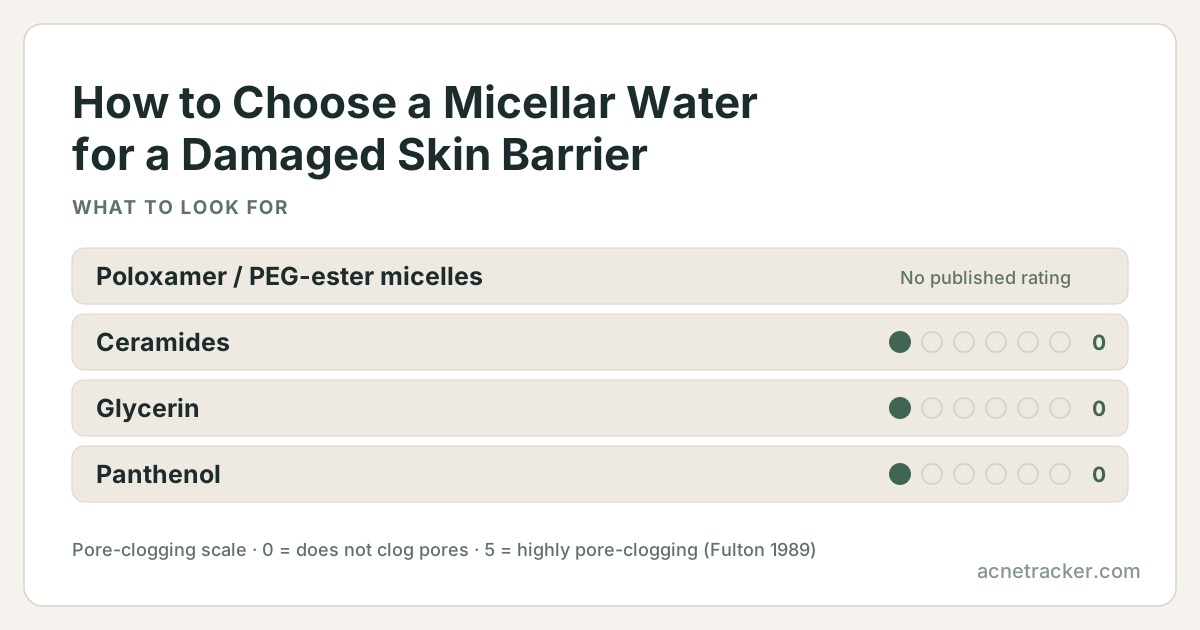
Ingredients to look for
| Ingredient | Why it matters |
|---|---|
| Poloxamer / PEG-ester micelles | The mildest possible non-ionic surfactants, so cleaning happens at the lowest strength that still lifts grime from fragile skin. |
| Ceramides | The lipids a damaged barrier has lost; their presence marks a formula meant to help rebuild rather than deplete. |
| Glycerin | A humectant that holds water at a surface that is currently leaking it, easing the tight, stingy feeling of barrier damage. |
| Panthenol | Provitamin B5 that supports barrier recovery and soothes, valuable when a product lingers on healing skin. |
| Madecassoside | A centella-derived compound associated with calmer, faster-settling skin during repair. |
| Colloidal oatmeal | A gentle soother that quiets the reactivity of a compromised barrier. |
Ingredients to avoid
| Ingredient | Why it matters |
|---|---|
| Any exfoliating acids or actives in the cleanser | A damaged barrier needs a pause from acids and actives, not more of them delivered through the wash step. |
| Denatured alcohol high on the list | It accelerates the very water loss a compromised barrier already cannot control, and stings broken skin. |
| Added fragrance and essential oils | A weakened barrier lets sensitisers penetrate more easily, so fragrance is a bigger risk here than on healthy skin. |
| Coarse pads and repeated wiping | Friction physically disrupts a surface already struggling to hold together; every extra pass sets recovery back. |
How to choose
When the barrier is damaged, choose a micellar water the way you would strip a routine back to essentials: the shorter and plainer, the better. Prioritise a base of water, the mildest surfactant, and barrier-supportive ingredients — ceramides, glycerin, panthenol, madecassoside or colloidal oatmeal — while ruling out anything active. There must be no exfoliating acids, no fragrance and no alcohol denat near the top, because a compromised surface reacts to all three more strongly than intact skin does. A cushioned, faintly milky texture that leaves a soothing film is preferable to a bracing, fast-drying one. Be honest about the bigger picture, though: the fastest route to barrier repair is often to cleanse less, not to find a better cleanser. On no-makeup days, plain lukewarm water may be all a healing barrier needs, with micellar water reserved for actually removing makeup or sunscreen. Reassess as the skin settles.
How to apply
Soak the pad so it never tugs — a healing barrier cannot tolerate friction. Press it flat to let the micelles lift makeup, then wipe once, softly, in one direction and stop. Because lingering surfactant can sting compromised skin, follow with a lukewarm rinse to remove any trace, then apply a simple barrier moisturiser with ceramides while the skin is still damp. Skip toners, acids and other actives entirely until the stinging and flaking settle. On days you wear nothing on your face, a plain water splash may replace the micellar water altogether, giving the barrier the rest it needs.
Frequently asked questions
Is micellar water good for a damaged skin barrier?
It can be, as a low-effort way to clean gently while the barrier heals, provided the formula is fragrance-free, alcohol-free and active-free. Even so, rinse afterwards and wipe softly, because a compromised barrier tolerates neither lingering surfactant nor friction well.
Can micellar water repair a damaged skin barrier?
No. Repair comes from doing less and using barrier-supportive moisturisers, not from a cleanser. A good micellar water simply avoids setting recovery back; ceramides, humectants and time do the actual rebuilding.
Should I stop using micellar water while my barrier heals?
Often you can cut back to plain water on no-makeup days, since the barrier repairs fastest when disturbed least. Keep micellar water for genuinely removing makeup or sunscreen, and rinse after each use.
What must a micellar water not contain for a damaged barrier?
No exfoliating acids or actives, no denatured alcohol high on the list, and no added fragrance. A weakened barrier lets these penetrate and sting more readily, so the plainest possible formula is the safe choice.
Should I rinse micellar water off a damaged barrier?
Yes. Leftover surfactant sitting on an already-stinging surface tends to make things worse, so a short lukewarm rinse followed by a ceramide moisturiser is the sensible sequence during repair.
Sources & further reading
There is no single study of this exact question. The guidance here is reasoned from the ingredient profiles below, each of which carries its own references:
- Ceramides3 refs
- Glycerin3 refs
- Panthenol3 refs
- Madecassoside3 refs
- Colloidal Oatmeal2 refs
Show every reference behind this page (11)
- DermNet — Skin barrier functioncited by Ceramides
- PubChem — Ceramide compound summarycited by Ceramides
- European Commission CosIng database — Ceramide NPcited by Ceramides, Glycerin, Panthenol, Madecassoside
- PubChem — Glycerol compound summarycited by Glycerin
- DermNet — Moisturiserscited by Glycerin
- PubChem — Panthenol compound summarycited by Panthenol
- Safety Assessment of Panthenol, Pantothenic Acid, and Derivatives as Used in Cosmetics (PubMed)cited by Panthenol
- PubChem — Madecassoside (CID 24825675)cited by Madecassoside
- Therapeutic properties and pharmacological activities of asiaticoside and madecassoside: A review (PubMed)cited by Madecassoside
- FDA OTC monograph — skin protectant drug products (colloidal oatmeal)cited by Colloidal Oatmeal
- PubMed — Colloidal oatmeal formulations as adjunct treatments in atopic dermatitis (J Drugs Dermatol, 2012)cited by Colloidal Oatmeal
Medical disclaimer
Ingredients mentioned on this page
Find your personal acne triggers
Our free Acne Tracker lets you log breakouts, sleep, stress and diet, and shows you which factors correlate with your flare-ups.