Zinc Oxide: Comedogenic Rating & Ingredient Analysis
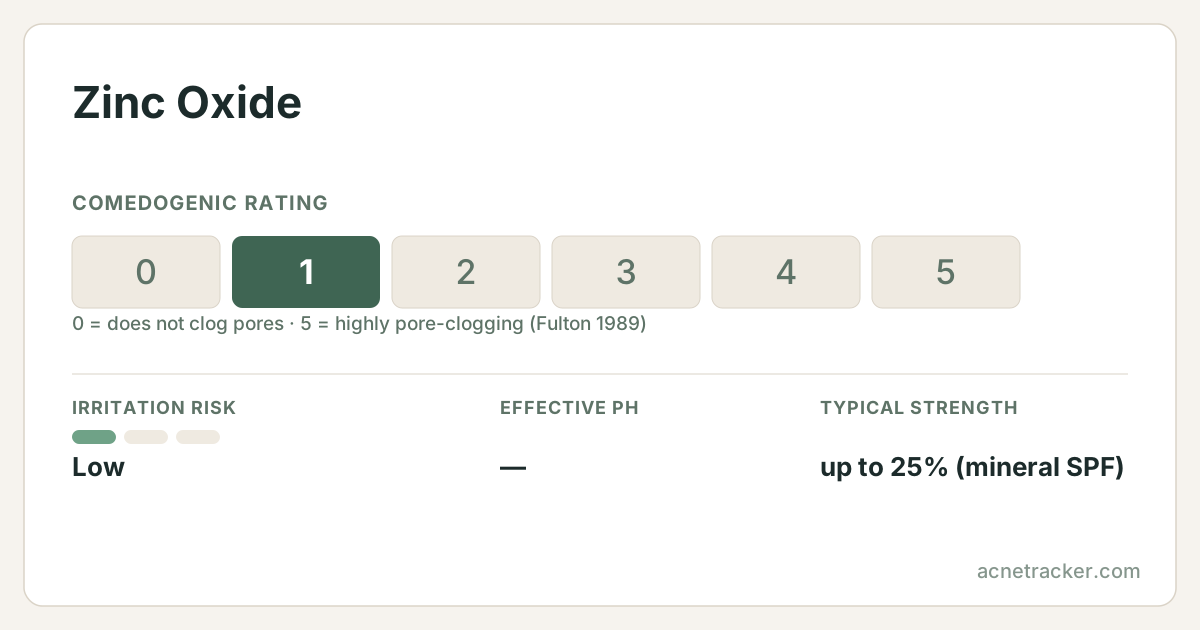
Zinc oxide is the workhorse of mineral sunscreen and one of the few UV filters that protects across the full breadth of the ultraviolet spectrum. Unlike chemical sunscreen filters that absorb UV and convert it to heat, zinc oxide is a physical, or mineral, filter: it sits on the skin as a fine mineral layer that scatters and reflects ultraviolet radiation away from the surface. Because it is inert and non-irritating, it is the filter most often recommended for sensitive, reactive and acne-prone skin, as well as for children. It also doubles as a recognised skin protectant, which is why the same mineral appears in soothing barrier creams and nappy-rash ointments as well as sunscreens.
Quick facts
- Comedogenic rating
- measured (Fulton 1989)
- Irritation risk
- Low
- Effective pH
- —
- Typical strength
- up to 25% (mineral SPF)
- Pregnancy
- Considered safe
- Suits skin types
- sensitiveacne-proneoilycombinationnormaldry
Where this number comes from
Read directly from Table I of Fulton's 1989 paper — the primary source, not one of the copied tables that circulate online.
Fulton read his own scale as 0-1 not significant, 2-3 borderline, 4-5 positive. The assay is the rabbit ear at 10% dilution, which the paper itself calls extremely sensitive and not fully predictive of human skin. Ratings describe the raw ingredient; concentration and formulation change real-world behaviour.
Caution profile
The four published fields on this page, on one 0–5 scale. Further from the centre means more care is needed — never that the ingredient is worse.
Derived, not measured: pore-clogging is the published comedogenic rating; irritation maps low/moderate/high to 1/3/5; pregnancy maps safe/caution/avoid to 0/3/5; skin-type limits is how many of the seven skin types this entry does NOT list. Every input is printed in words in the quick-facts card above.
Show the numbers
| Metric | 0–5 | Published field |
|---|---|---|
| Pore-clogging | 1 | 1/5 |
| Irritation | 1 | Low |
| Skin-type limits | 0.7 | 6/7 |
| Pregnancy | 0 | Considered safe |
Working pH and typical strength
Where this ingredient is formulated to sit, and at what concentration.
Both bars come from the fields above: the pH window and the typical strength range published for this ingredient. The tinted column is healthy skin's surface pH (about 4.7–5.75).
Show the numbers
| Metric | 0–5 |
|---|---|
| Typical strength | up to 25% (mineral SPF) |
What is it?
Zinc oxide is a white mineral powder that the US FDA lists among the sunscreen active ingredients recognised as generally safe and effective (GRASE) for over-the-counter use, at concentrations up to 25%. It provides genuinely broad-spectrum protection, covering both UVB, which causes sunburn, and the longer UVA wavelengths that drive photoaging and pigmentation — a range few single filters match. In sunscreens it works by physically reflecting and scattering UV rather than being absorbed into the skin, which is part of why it is so well tolerated. Modern formulas often use micronised zinc oxide to reduce the heavy white cast that older mineral sunscreens were known for, though a slight whitening can remain, especially on deeper skin tones. Beyond sun protection, zinc oxide is a classic skin protectant valued for its soothing, non-reactive nature.
Benefits
Broad-spectrum UV protection
Zinc oxide is one of the few single filters that covers both UVB and the full UVA range, so a well-formulated zinc sunscreen guards against burning, photoaging and UV-driven pigmentation together.
Gentle on sensitive skin
As an inert mineral that sits on the surface rather than being absorbed, zinc oxide is low-irritation and a go-to filter for sensitive, reactive, rosacea-prone and acne-prone skin, as well as for children.
Soothing skin protectant
Beyond sunscreen, zinc oxide is a recognised skin protectant with a calming quality, which is why it appears in barrier creams and soothing ointments as well as in sun care.
Suits blemish-prone complexions
With a low comedogenic rating and a non-chemical mechanism, zinc oxide is a sensible sun-protection choice for acne-prone skin that reacts to heavier or more irritating chemical sunscreens.
How to use
Use zinc oxide the way you would any sunscreen: as the final skincare step every morning, applied generously and evenly to all exposed skin, and reapplied through the day when you are outdoors, sweating or swimming, following the product's own directions. Because it is a mineral filter, it works immediately on application rather than needing to absorb first. To reduce any white cast, warm the product between your fingers and press it in, and choose a tinted mineral sunscreen if you have a deeper skin tone. Zinc oxide layers over your serums and moisturiser and under makeup. This is general guidance on using mineral sunscreen, not a substitute for the SPF instructions on your specific product.
Side effects
Zinc oxide is among the best-tolerated sunscreen filters, with low irritation potential and a comedogenic rating of 1, meaning a very low pore-clogging risk. The most common complaint is cosmetic rather than medical: a white or ashy cast, particularly noticeable on deeper skin tones, which tinted formulas help address. Some mineral sunscreens can feel heavier or drier than chemical ones depending on the base. True allergic reactions to zinc oxide itself are rare, though other ingredients in a given sunscreen can cause reactions.
Who should avoid it
Very few people need to avoid zinc oxide, and it is generally the safe-harbour filter recommended when other sunscreens cause irritation. Those who dislike any white cast may prefer a tinted mineral or a well-formulated chemical sunscreen instead, purely for cosmetic reasons. If a particular mineral sunscreen causes a reaction, the cause is usually another ingredient in the formula rather than the zinc oxide itself, so trying a different base is often the fix.
Pairs well with
Frequently asked questions
Is zinc oxide a physical or chemical sunscreen?
Zinc oxide is a physical, or mineral, sunscreen. Rather than absorbing UV like chemical filters, it forms a mineral layer on the skin that reflects and scatters ultraviolet radiation, and it works immediately on application.
Is zinc oxide sunscreen good for acne-prone skin?
Yes. Zinc oxide has a low comedogenic rating and is inert and non-irritating, so it is one of the most recommended sunscreen filters for acne-prone and sensitive skin that reacts to heavier chemical sunscreens.
Why does zinc oxide sunscreen leave a white cast?
Because zinc oxide is a white mineral that reflects light, it can leave a whitish film on the skin, most visible on deeper tones. Micronised particles and tinted formulas reduce this cast considerably.
Does zinc oxide protect against UVA and UVB?
Yes. Zinc oxide is a genuinely broad-spectrum filter, covering both UVB, which causes sunburn, and the longer UVA wavelengths responsible for much of photoaging and pigmentation, which few single filters achieve.
Is zinc oxide safe during pregnancy?
Yes. Mineral sunscreens with zinc oxide are widely considered a safe sun-protection choice during pregnancy and breastfeeding, since the filter sits on the skin's surface rather than being absorbed. Confirm your routine with your doctor.
Where this ingredient shows up here
Counted across this database, not the web — these are the pages on this site that reason about this ingredient.
Combination guides 1
Condition pages 1
Sources & further reading
Medical disclaimer
Find your personal acne triggers
Our free Acne Tracker lets you log breakouts, sleep, stress and diet, and shows you which factors correlate with your flare-ups.