Bakuchiol: Comedogenic Rating & Ingredient Analysis
Bakuchiol is a plant-derived ingredient that has gained attention as a gentler alternative to retinol. Extracted from the seeds and leaves of the babchi plant (Psoralea corylifolia), it is not chemically a retinoid at all, yet early research suggests it can switch on some of the same skin pathways that retinol does — supporting a smoother, firmer, more even-looking complexion — while being far better tolerated. That combination makes it popular with people whose skin cannot cope with the dryness and irritation of true retinoids, including those with sensitive or reactive skin. It is generally regarded as a preferred alternative during pregnancy, though the data are still limited.
Quick facts
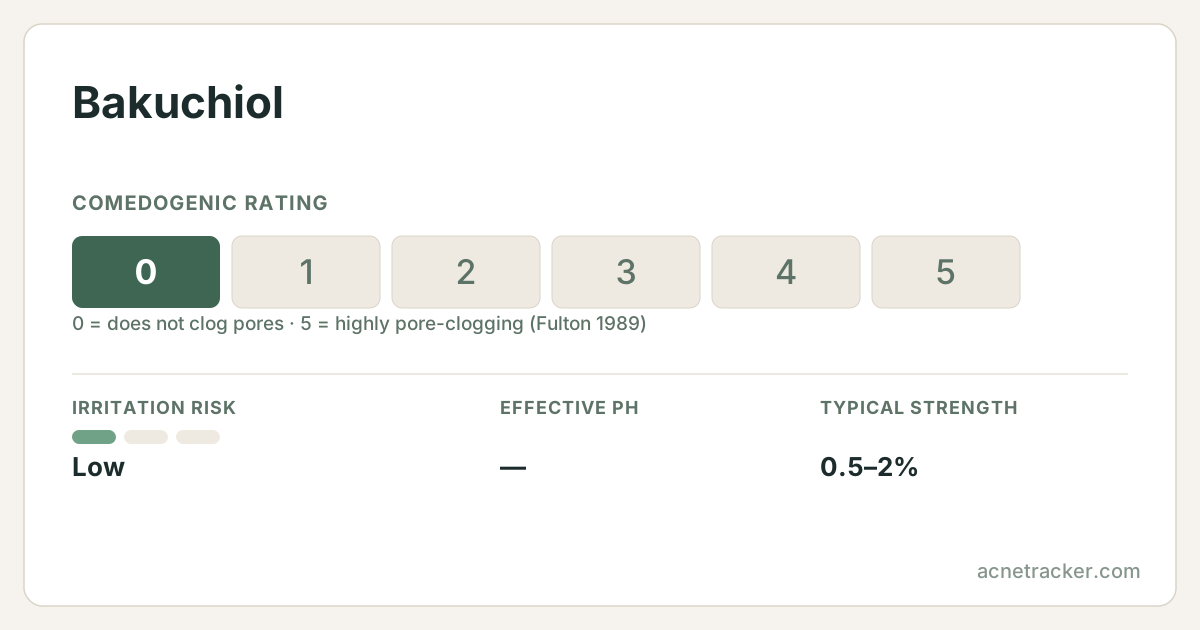
- Comedogenic rating
- our estimate — not measured
- Irritation risk
- Low
- Effective pH
- —
- Typical strength
- 0.5–2%
- Pregnancy
- Considered safe
- Suits skin types
- drycombinationsensitivenormalmatureacne-prone
Where this number comes from
No one has published a comedogenic rating for this ingredient. Fulton's 1989 table tested about 250 raw materials and this was not among them, and we found no later study measuring it. The figure shown is our own reasoning from the ingredient's chemistry and how it is used — treat it as an estimate, not a measurement.
Fulton read his own scale as 0-1 not significant, 2-3 borderline, 4-5 positive. The assay is the rabbit ear at 10% dilution, which the paper itself calls extremely sensitive and not fully predictive of human skin. Ratings describe the raw ingredient; concentration and formulation change real-world behaviour.
Caution profile
The four published fields on this page, on one 0–5 scale. Further from the centre means more care is needed — never that the ingredient is worse.
Derived, not measured: pore-clogging is the published comedogenic rating; irritation maps low/moderate/high to 1/3/5; pregnancy maps safe/caution/avoid to 0/3/5; skin-type limits is how many of the seven skin types this entry does NOT list. Every input is printed in words in the quick-facts card above.
Show the numbers
| Metric | 0–5 | Published field |
|---|---|---|
| Pore-clogging | 0 | 0/5 |
| Irritation | 1 | Low |
| Skin-type limits | 0.7 | 6/7 |
| Pregnancy | 0 | Considered safe |
Working pH and typical strength
Where this ingredient is formulated to sit, and at what concentration.
Both bars come from the fields above: the pH window and the typical strength range published for this ingredient. The tinted column is healthy skin's surface pH (about 4.7–5.75).
Show the numbers
| Metric | 0–5 |
|---|---|
| Typical strength | 0.5–2% |
What is it?
Bakuchiol is a meroterpene phenol, an antioxidant compound structurally unrelated to vitamin A. What makes it interesting is functional rather than structural: laboratory and small clinical studies have found that it can influence some of the same gene expression associated with collagen support and cell renewal that retinol affects, which is why it is described as retinol-like in effect rather than in chemistry. Because it does not rely on the retinoid receptor pathway in the same aggressive way, it tends not to trigger the classic retinization of peeling and stinging. It is also stable in daylight and can be used morning or night, and unlike retinol it does not increase photosensitivity, though daily sunscreen remains sensible.
Benefits
Retinol-like results, gentler experience
Small studies comparing bakuchiol with retinol found comparable improvements in the look of fine lines and uneven tone, but with notably less dryness, redness and stinging, which makes it approachable for sensitive skin.
Antioxidant protection
As a natural antioxidant, bakuchiol helps neutralize free radicals generated by UV and pollution, supporting the skin's defenses against the everyday oxidative stress that contributes to visible aging.
Soothing rather than irritating
It has calming, anti-inflammatory properties, so instead of the barrier disruption typical of retinoids it tends to leave skin looking more even and comfortable, a rare quality among renewal-focused actives.
Flexible and photostable
Because it does not degrade in sunlight or raise sun sensitivity, bakuchiol can be worn morning or evening and layered with a wide range of ingredients, making it easy to slot into almost any routine.
How to use
Bakuchiol is one of the more forgiving actives to introduce. Apply a serum or cream containing 0.5–2% once or twice daily after cleansing, before heavier moisturizers. Most people can use it daily from the outset without the slow ramp-up that retinoids demand, though patch testing a new product for a few days is always wise. It layers comfortably with vitamin C, niacinamide, hyaluronic acid and peptides. Even though bakuchiol does not increase sun sensitivity, daily broad-spectrum sunscreen is still recommended to protect the results you are working toward.
Side effects
Bakuchiol is well tolerated by most skin types and side effects are uncommon and usually mild. Occasional users report slight dryness or a transient tingle, and as with any botanical there is a small possibility of contact sensitivity, which is why patch testing a new formula is sensible. It does not cause the peeling and photosensitivity associated with retinoids. If a product containing bakuchiol irritates, the cause is often another ingredient such as an essential oil or fragrance in the same formula.
Who should avoid it
Very few people need to avoid bakuchiol. Those with a known sensitivity to the babchi plant or related botanicals should skip it. While it is often chosen as a retinol alternative during pregnancy and breastfeeding, the safety research is still limited, so anyone pregnant should confirm with their doctor before starting it. As always, discontinue use if a specific product causes a reaction.
Pairs well with
Frequently asked questions
Is bakuchiol the same as retinol?
No. Bakuchiol is a plant compound with no chemical relationship to vitamin A, but research suggests it can produce some retinol-like effects on skin renewal and firmness while being much gentler and non-irritating.
Is bakuchiol safe during pregnancy?
Bakuchiol is frequently chosen as a retinol alternative in pregnancy because, unlike retinoids, it is not a vitamin A derivative. However, safety data are still limited, so confirm with your doctor before using it while pregnant or breastfeeding.
Can I use bakuchiol with vitamin C?
Yes. Bakuchiol pairs well with vitamin C, niacinamide and hyaluronic acid. Because it is stable and does not increase sun sensitivity, it can even be used in the morning alongside an antioxidant serum.
Does bakuchiol cause purging?
Bakuchiol is not a retinoid and does not typically trigger the purging associated with retinol or adapalene. Most people can begin daily use without the adjustment breakouts common when starting a true retinoid.
Can bakuchiol be used every day?
Yes. Its gentle profile means most people tolerate once- or twice-daily use from the start, without the slow build-up that retinoids require. Patch test a new product first if your skin is reactive.
Where this ingredient shows up here
Counted across this database, not the web — these are the pages on this site that reason about this ingredient.
Combination guides 24
+16 more on the site
Sources & further reading
Medical disclaimer
Find your personal acne triggers
Our free Acne Tracker lets you log breakouts, sleep, stress and diet, and shows you which factors correlate with your flare-ups.