Elderberry Extract: Comedogenic Rating & Ingredient Analysis
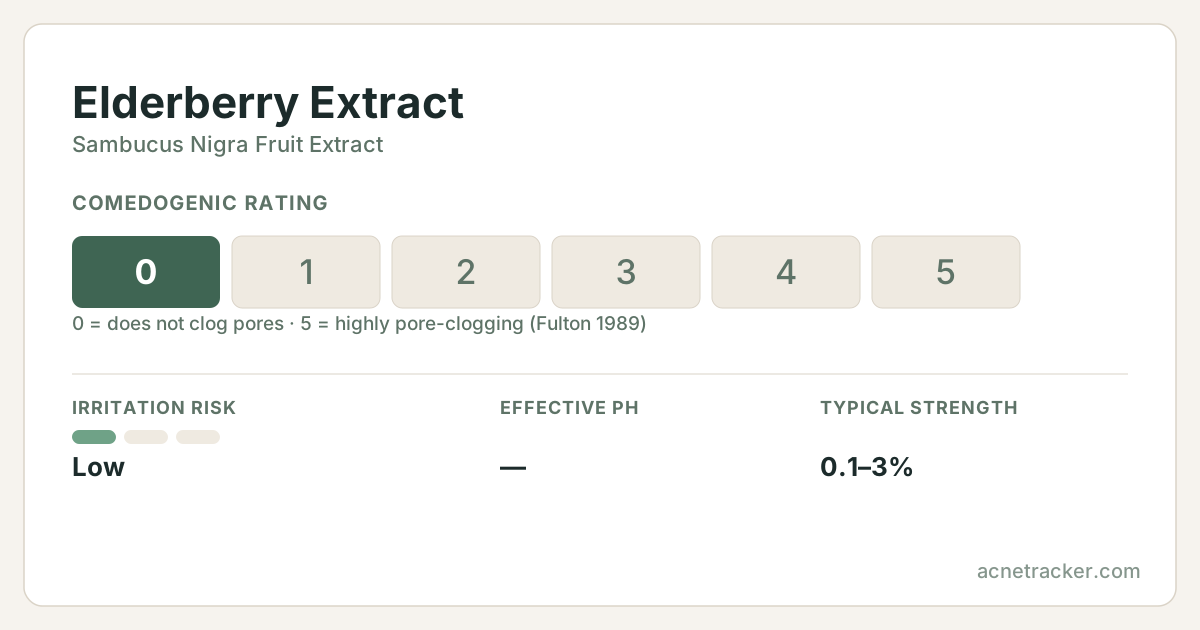
Elderberry extract is drawn from the deep-purple berries of the European elder tree, best known as a folk remedy but increasingly popular in antioxidant skincare. Those dark berries owe their colour to anthocyanins, the same pigment family found in blueberries and blackberries, and pigment usually signals antioxidant activity. In cosmetics, elderberry appears in brightening serums, antioxidant moisturisers and products marketed for dull, environmentally-stressed skin. It is a gentle, non-comedogenic fruit extract used for protection and radiance rather than exfoliation or acne control. As with most fruit extracts, its cosmetic evidence is modest, so it is best understood as a pleasant antioxidant support rather than a proven active.
Quick facts
- Comedogenic rating
- our estimate — not measured
- Irritation risk
- Low
- Effective pH
- —
- Typical strength
- 0.1–3%
- Pregnancy
- Considered safe
- Suits skin types
- normaldrycombinationsensitivemature
Where this number comes from
No one has published a comedogenic rating for this ingredient. Fulton's 1989 table tested about 250 raw materials and this was not among them, and we found no later study measuring it. The figure shown is our own reasoning from the ingredient's chemistry and how it is used — treat it as an estimate, not a measurement.
Fulton read his own scale as 0-1 not significant, 2-3 borderline, 4-5 positive. The assay is the rabbit ear at 10% dilution, which the paper itself calls extremely sensitive and not fully predictive of human skin. Ratings describe the raw ingredient; concentration and formulation change real-world behaviour.
Caution profile
The four published fields on this page, on one 0–5 scale. Further from the centre means more care is needed — never that the ingredient is worse.
Derived, not measured: pore-clogging is the published comedogenic rating; irritation maps low/moderate/high to 1/3/5; pregnancy maps safe/caution/avoid to 0/3/5; skin-type limits is how many of the seven skin types this entry does NOT list. Every input is printed in words in the quick-facts card above.
Show the numbers
| Metric | 0–5 | Published field |
|---|---|---|
| Pore-clogging | 0 | 0/5 |
| Irritation | 1 | Low |
| Skin-type limits | 1.4 | 5/7 |
| Pregnancy | 0 | Considered safe |
Working pH and typical strength
Where this ingredient is formulated to sit, and at what concentration.
Both bars come from the fields above: the pH window and the typical strength range published for this ingredient. The tinted column is healthy skin's surface pH (about 4.7–5.75).
Show the numbers
| Metric | 0–5 |
|---|---|
| Typical strength | 0.1–3% |
What is it?
Elderberries (Sambucus nigra) are rich in anthocyanins and other polyphenols, along with vitamin C and flavonoids — a combination that gives the extract genuine free-radical-scavenging power in laboratory tests. These antioxidants are why elderberry is grouped with other berry extracts prized for defending skin against UV and pollution damage. The extract also has a light conditioning, soothing quality on the skin surface. It is worth noting that raw elderberries and other parts of the plant are not safe to eat uncooked, but the processed cosmetic extract is applied topically at low levels and is well tolerated. Its comedogenic rating is 0 with a low irritation profile, suiting most skin types.
Benefits
Anthocyanin antioxidants
The purple anthocyanins in elderberry are potent free-radical scavengers that help defend skin against UV and pollution, working alongside antioxidants like vitamin-c and vitamin-e.
Supports radiance
By protecting against oxidative dullness, elderberry helps skin look brighter and fresher, which is why it appears in glow-focused serums and moisturisers.
Light conditioning and soothing
Its flavonoids and fruit compounds condition and calm the skin surface, complementing soothing actives such as niacinamide.
Gentle and non-comedogenic
With a rating of 0 and low irritation risk, elderberry suits sensitive, dry and mature skin and layers easily into antioxidant routines.
How to use
Elderberry extract is best used as antioxidant support in a morning serum or moisturiser under sunscreen, where it reinforces your UV defence, though it also works at night. It layers comfortably with other antioxidants such as vitamin-c, vitamin-e and resveratrol, and with soothing actives like niacinamide. Anthocyanins are pigments that mop up free radicals; they do not exfoliate and they do not make skin more UV-reactive, so nothing about your sun routine needs to change. Elderberry carries no notable contact-allergy signal in the literature we cite, so patch testing here is general new-product caution rather than an elder-specific warning. Use cosmetic products rather than home preparations, since raw elderberry plant material is not safe to consume.
Side effects
Topical elderberry fruit extract is generally well tolerated, and skin reactions are uncommon. If you have reacted to other berry-fruit extracts before, that is the most useful reason to try an elderberry product on a small area first. The important distinction is between the cosmetic extract, which is processed and safe on skin, and raw elderberries or plant parts, which are not safe to eat uncooked. Any stinging from an elderberry serum is more likely due to other ingredients such as acids, fragrance or alcohol in the same formula.
Who should avoid it
Almost everyone can use topical elderberry extract, including sensitive and mature skin. People with a specific berry or elder allergy should patch test or avoid it. Topical cosmetic use in pregnancy is unrestricted, which is worth stating plainly because elder's whole reputation is built on things you swallow. The cautions about raw elderberries relate to eating them, not to a topical cosmetic extract, so they do not apply to skincare use.
Pairs well with
Frequently asked questions
Does elderberry extract clog pores?
No. Elderberry fruit extract has a comedogenic rating of 0 and does not clog pores, so it is suitable for combination and even oily skin seeking antioxidant benefits.
What does elderberry do for skin?
It acts mainly as an antioxidant, using anthocyanins and polyphenols to defend skin against free radicals and support a brighter, fresher look, plus light conditioning and soothing.
Is elderberry extract safe if raw elderberries are toxic?
Yes, on skin. Raw elderberries and plant parts are not safe to eat uncooked, but the processed cosmetic extract is applied topically at low levels and is well tolerated.
Can elderberry replace my vitamin C serum?
Not really. Elderberry is a supportive antioxidant, but a dedicated, stabilised vitamin-c serum is more potent and better studied. Use elderberry to complement rather than replace your main antioxidant.
Sources & further reading
Medical disclaimer
Find your personal acne triggers
Our free Acne Tracker lets you log breakouts, sleep, stress and diet, and shows you which factors correlate with your flare-ups.