How to Choose a Serum for Sensitive Skin
Sensitive skin reacts — with stinging, redness, or flushing — to ingredients other people tolerate easily, usually because its barrier is thinner or more reactive. The right serum works by strengthening that barrier and calming inflammation, using a short list of gentle ingredients rather than a long roster of actives. With sensitive skin, what you leave out matters as much as what you include. This guide describes the soothing, barrier-building ingredients to look for on any label, the common triggers to avoid, and how to introduce anything new safely with a patch test, so you can find what works without repeated flare-ups.
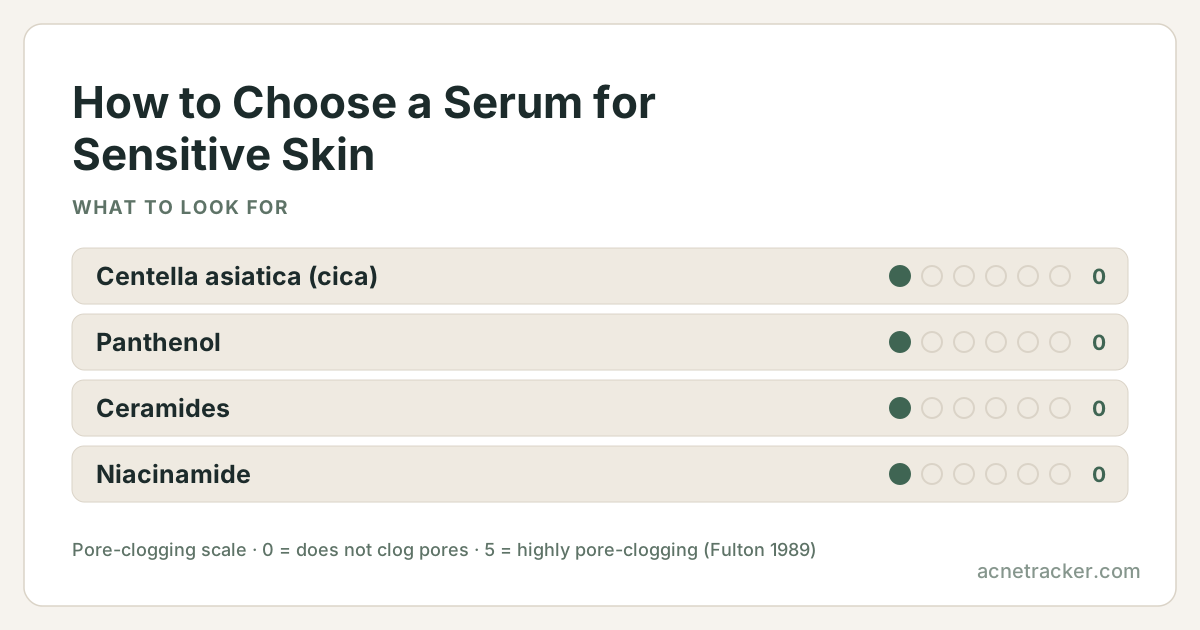
Ingredients to look for
| Ingredient | Why it matters |
|---|---|
| Centella asiatica (cica) | A gentle botanical that calms irritation and supports barrier repair, a mainstay of formulas aimed at reactive skin. |
| Panthenol | Soothes and hydrates while helping the barrier heal, easing the tight, stinging feeling sensitive skin knows well. |
| Ceramides | Rebuild the barrier lipids that sensitive skin often lacks, so fewer irritants get in and reactivity drops over time. |
| Niacinamide | Calms inflammation and strengthens the barrier at a moderate concentration; start low, since very high levels can flush. |
| Bakuchiol | A gentler plant-derived alternative to retinol for those who want anti-ageing benefits without the usual irritation. |
Ingredients to avoid
| Ingredient | Why it matters |
|---|---|
| Fragrance and essential oils | The single most common trigger for sensitive skin; 'unscented' can still contain masking fragrance, so look for 'fragrance-free'. |
| Denatured alcohol high on the list | It dries and disrupts an already-reactive barrier, provoking stinging and redness. |
| High-strength acids and retinoids from the start | Sensitive skin needs a slow, gentle introduction; jumping to potent actives almost guarantees a reaction. |
| Long ingredient lists with many botanical extracts | More ingredients means more chances to hit a personal trigger; simpler formulas are safer for reactive skin. |
How to choose
Choose by simplicity and gentleness rather than by how many actives a serum promises. The safest options are fragrance-free, have short ingredient lists, and centre on barrier and soothing ingredients — centella, panthenol, ceramides and moderate niacinamide. Avoid formulas led by fragrance, essential oils or high alcohol, whatever their soothing claims. If you want an anti-ageing serum but react to retinol, bakuchiol is a gentler alternative worth trying. Introduce only one new product at a time so that if a reaction happens, you know the culprit. 'Hypoallergenic', 'dermatologist-tested' and 'for sensitive skin' are unregulated phrases, so treat them as hints, not guarantees, and read the actual ingredients. Above all, patch test: a few days of applying a new serum to a small area is the single most reliable way to protect sensitive skin from a full-face reaction.
How to apply
Patch test first — apply a small amount to the inner forearm or behind the ear for a few days before using it on your face. Then apply the serum to clean skin before a barrier-supporting moisturiser, morning and evening. Use lukewarm water and pat dry gently. Introduce actives slowly, a couple of times a week, and add only one new product at a time. Daily sunscreen is important, and mineral filters suit some sensitive skin better than chemical ones. If a serum stings, stop using it.
Frequently asked questions
How do I patch test a new serum?
Apply a small amount to a discreet area like the inner forearm or behind the ear once a day for several days. If there is no redness, itching or stinging, it is likely safe to use on your face — introduce it slowly even then.
Is fragrance-free really better for sensitive skin?
Generally yes, since fragrance is a leading cause of reactions. Note that 'unscented' can still contain masking fragrance, so look specifically for 'fragrance-free' if your skin is reactive.
Can sensitive skin use anti-ageing serums?
Yes, but introduce them carefully. Retinol can be irritating, so start low and infrequent, or try bakuchiol as a gentler alternative. Pair any active with soothing, barrier-supporting ingredients to keep reactivity down.
What should I do if a serum stings?
Stop using it. A brief tingle can be normal for some actives, but real stinging, burning or redness signals irritation, and continuing risks damaging an already-reactive barrier. Return to gentle, barrier-supporting products until skin settles.
Sources & further reading
There is no single study of this exact question. The guidance here is reasoned from the ingredient profiles below, each of which carries its own references:
- Centella Asiatica2 refs
- Panthenol3 refs
- Ceramides3 refs
- Niacinamide2 refs
- Bakuchiol3 refs
Show every reference behind this page (10)
- Bylka W et al. Centella asiatica in dermatology: an overview. Phytother Res 2014 Aug (PubMed)cited by Centella Asiatica
- European Commission CosIng database — Centella Asiatica Extractcited by Centella Asiatica, Panthenol, Ceramides, Niacinamide
- PubChem — Panthenol compound summarycited by Panthenol
- Safety Assessment of Panthenol, Pantothenic Acid, and Derivatives as Used in Cosmetics (PubMed)cited by Panthenol
- DermNet — Skin barrier functioncited by Ceramides
- PubChem — Ceramide compound summarycited by Ceramides
- Niacinamide: mechanisms of action and its topical use in dermatology (PubMed)cited by Niacinamide
- PubChem — Bakuchiol compound summarycited by Bakuchiol
- Bakuchiol: a retinol-like functional compound (PubMed)cited by Bakuchiol
- DermNet — Cosmeceuticalscited by Bakuchiol
Medical disclaimer
Ingredients mentioned on this page
Find your personal acne triggers
Our free Acne Tracker lets you log breakouts, sleep, stress and diet, and shows you which factors correlate with your flare-ups.