How to Choose a Toner for Rosacea
Rosacea-prone skin is defined by reactivity — flushing, persistent redness, sometimes bumps and a barrier that is quick to complain. For this skin a toner is entirely optional, and the wrong one can flare things badly, so the guiding principle is minimalism: fewer ingredients, nothing harsh, nothing that stings. If a toner earns a place, it should be a simple, alcohol-free, fragrance-free soothing layer. This guide describes the calming ingredient profile suited to rosacea-prone skin and the long list of common toner additives that act as triggers. Rosacea is a medical condition, so this is skincare guidance to keep skin calm, not a treatment; a dermatologist can advise on prescription options and confirm the diagnosis.
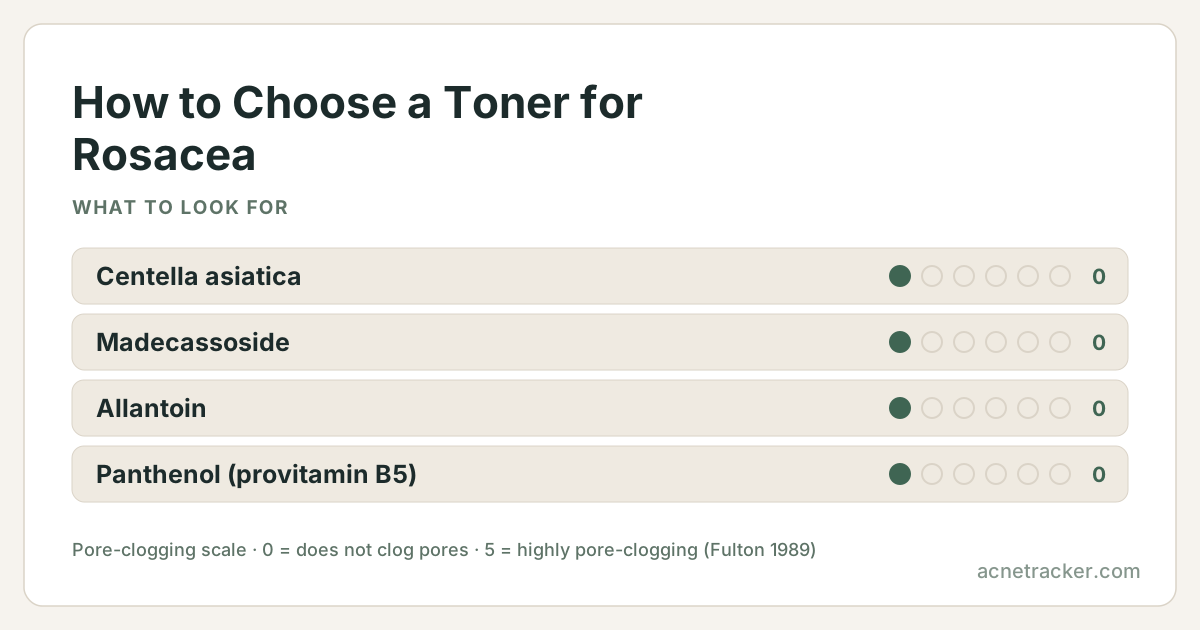
Ingredients to look for
| Ingredient | Why it matters |
|---|---|
| Centella asiatica | A gentle soothing botanical often chosen for reactive, redness-prone skin to help calm and support the barrier. |
| Madecassoside | A purified centella component valued for reducing visible redness and aiding barrier repair in sensitive skin. |
| Allantoin | A mild, non-irritating conditioner that comforts easily-provoked skin without any active sting. |
| Panthenol (provitamin B5) | Soothes and strengthens a fragile barrier, easing tightness in rosacea-prone skin. |
| Green tea extract | An antioxidant with anti-inflammatory properties that can help quiet redness-prone skin. |
Ingredients to avoid
| Ingredient | Why it matters |
|---|---|
| Denatured alcohol (alcohol denat.) | A frequent rosacea trigger: it stings, dries and destabilises an already fragile barrier, worsening flushing. |
| Camphor and menthol, plus mint and eucalyptus oils | 'Cooling' agents dilate vessels and provoke flushing — among the most reliable ways to flare rosacea. |
| Fragrance and essential oils | Very common triggers for rosacea-prone skin, offering no benefit against clear reaction risk. |
| Exfoliating acids and astringents | Both tend to inflame reactive skin and set off flushing; rosacea-prone skin does best with calm, not exfoliation. |
How to choose
For rosacea-prone skin, choose a toner the way you would defuse a trigger list: the fewer potential irritants, the better. Alcohol-free and fragrance-free are non-negotiable, and you must also rule out menthol and any cooling sensation, which reliably provoke flushing. Favour short formulas built on gentle soothers — centella, madecassoside, allantoin, panthenol — over long botanical blends that raise the odds of a reaction, and be wary of 'natural' products hiding essential oils. Skip exfoliating acids and astringents, which inflame reactive skin. Do not trust 'anti-redness' or 'for rosacea' claims without checking the ingredient list. Because rosacea-prone skin reacts easily and sometimes on a delay, patch test any new toner over several days before using it on your face, and remember that skipping a toner altogether is a perfectly valid, low-risk choice.
How to apply
Patch test for several days first, ideally on an area near but not on the most reactive skin. Apply by gently pressing with the fingertips rather than wiping, since friction and rubbing can trigger flushing. Keep the overall routine short and introduce one product at a time so any flare can be traced. Use lukewarm, never hot, water nearby, as heat is a classic rosacea trigger. Follow with a simple barrier-repair moisturizer, and wear a gentle mineral broad-spectrum SPF every day, since sun is one of the most common rosacea aggravators. Stop immediately at any sting or increased flushing.
Frequently asked questions
Should people with rosacea use a toner?
It is optional and easy to skip. If you want one, choose a simple, alcohol-free, fragrance-free soothing toner with no cooling agents. For many rosacea-prone people, fewer products means fewer flares, so no toner is a perfectly good choice.
Which toner ingredients trigger rosacea?
Common culprits are denatured alcohol, fragrance, essential oils, and cooling agents like menthol and camphor, plus exfoliating acids and astringents. All can provoke flushing and redness, which is why simple, soothing formulas are safest.
Are cooling or 'refreshing' toners good for rosacea?
No. The cooling comes from agents like menthol that dilate blood vessels and are among the most reliable rosacea triggers. Genuine soothing does not involve any tingling, so avoid anything that feels cool or fresh on contact.
Can a toner cure rosacea?
No. Rosacea is a chronic medical condition that skincare can only help manage by keeping skin calm and avoiding triggers. A dermatologist can advise on prescription treatments; a toner at best supports comfort and does not treat the underlying condition.
Sources & further reading
There is no single study of this exact question. The guidance here is reasoned from the ingredient profiles below, each of which carries its own references:
- Centella Asiatica2 refs
- Madecassoside3 refs
- Allantoin3 refs
- Panthenol3 refs
- Green Tea Extract3 refs
Show every reference behind this page (10)
- Bylka W et al. Centella asiatica in dermatology: an overview. Phytother Res 2014 Aug (PubMed)cited by Centella Asiatica
- European Commission CosIng database — Centella Asiatica Extractcited by Centella Asiatica, Madecassoside, Allantoin, Panthenol, Green Tea Extract
- PubChem — Madecassoside (CID 24825675)cited by Madecassoside
- Therapeutic properties and pharmacological activities of asiaticoside and madecassoside: A review (PubMed)cited by Madecassoside
- PubChem — Allantoin compound summarycited by Allantoin
- Final report of the safety assessment of allantoin and its related complexes (PubMed)cited by Allantoin
- PubChem — Panthenol compound summarycited by Panthenol
- Safety Assessment of Panthenol, Pantothenic Acid, and Derivatives as Used in Cosmetics (PubMed)cited by Panthenol
- PubChem — Epigallocatechin gallate (EGCG)cited by Green Tea Extract
- Green tea and the skin (PubMed)cited by Green Tea Extract
Medical disclaimer
Ingredients mentioned on this page
Find your personal acne triggers
Our free Acne Tracker lets you log breakouts, sleep, stress and diet, and shows you which factors correlate with your flare-ups.