Green Tea Extract: Comedogenic Rating & Ingredient Analysis
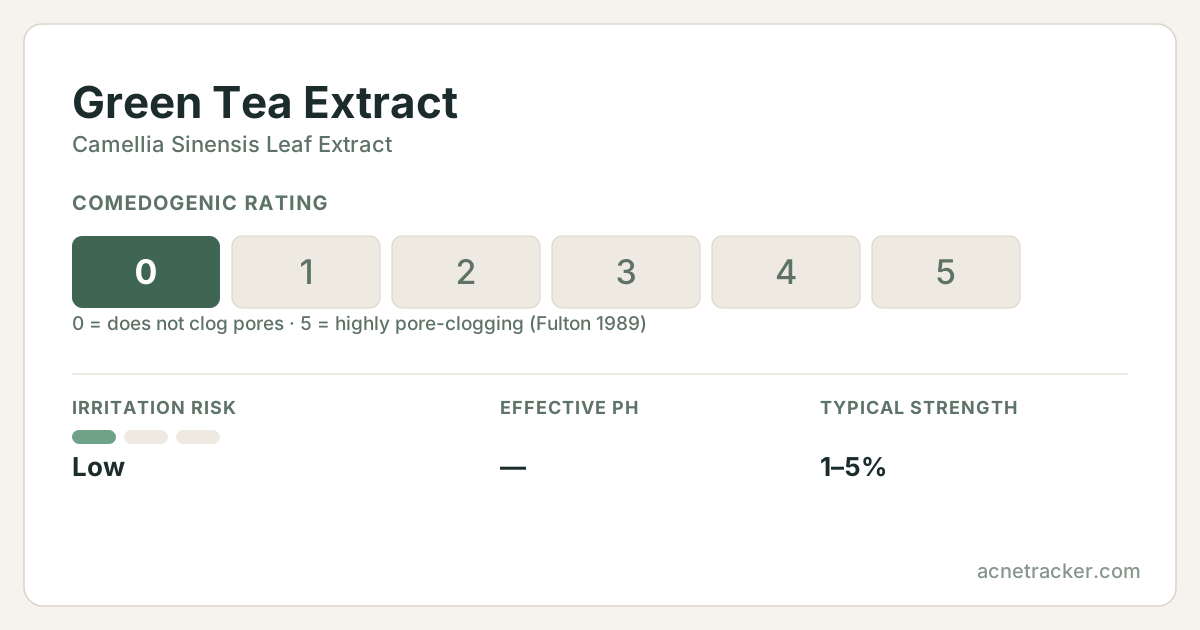
Green tea extract brings the antioxidant reputation of the drink into topical skincare, and it earns its place particularly well on oily, sensitive and blemish-prone skin. The leaves of Camellia sinensis are rich in polyphenols called catechins, the most studied of which is EGCG, and these compounds combine antioxidant, anti-inflammatory and oil-regulating actions in a single gentle ingredient. Rather than aggressively treating one problem, green tea extract quietly supports skin on several fronts: calming visible redness, dampening the inflammation behind breakouts and helping to keep excess shine in check, all without stinging or drying.
Quick facts
- Comedogenic rating
- our estimate — not measured
- Irritation risk
- Low
- Effective pH
- —
- Typical strength
- 1–5%
- Pregnancy
- Considered safe
- Suits skin types
- oilycombinationsensitivenormalacne-prone
Where this number comes from
No one has published a comedogenic rating for this ingredient. Fulton's 1989 table tested about 250 raw materials and this was not among them, and we found no later study measuring it. The figure shown is our own reasoning from the ingredient's chemistry and how it is used — treat it as an estimate, not a measurement.
Fulton read his own scale as 0-1 not significant, 2-3 borderline, 4-5 positive. The assay is the rabbit ear at 10% dilution, which the paper itself calls extremely sensitive and not fully predictive of human skin. Ratings describe the raw ingredient; concentration and formulation change real-world behaviour.
Caution profile
The four published fields on this page, on one 0–5 scale. Further from the centre means more care is needed — never that the ingredient is worse.
Derived, not measured: pore-clogging is the published comedogenic rating; irritation maps low/moderate/high to 1/3/5; pregnancy maps safe/caution/avoid to 0/3/5; skin-type limits is how many of the seven skin types this entry does NOT list. Every input is printed in words in the quick-facts card above.
Show the numbers
| Metric | 0–5 | Published field |
|---|---|---|
| Pore-clogging | 0 | 0/5 |
| Irritation | 1 | Low |
| Skin-type limits | 1.4 | 5/7 |
| Pregnancy | 0 | Considered safe |
Working pH and typical strength
Where this ingredient is formulated to sit, and at what concentration.
Both bars come from the fields above: the pH window and the typical strength range published for this ingredient. The tinted column is healthy skin's surface pH (about 4.7–5.75).
Show the numbers
| Metric | 0–5 |
|---|---|
| Typical strength | 1–5% |
What is it?
The extract is a concentrate of the leaf's water-soluble polyphenols, chiefly catechins such as epigallocatechin gallate. On skin, EGCG is a strong scavenger of free radicals and a modulator of inflammatory pathways, which is why it soothes irritated, reactive complexions. Research also links green tea polyphenols to reduced sebum production and a mild effect against acne-associated bacteria, giving it relevance for oily and breakout-prone skin. Because it is water-soluble and non-comedogenic, it slots easily into lightweight serums, gels and moisturisers without adding heaviness, and it partners naturally with other antioxidants and soothing agents.
Benefits
Calms redness and inflammation
The catechins in green tea dampen inflammatory signalling, easing the redness and irritation of reactive skin and reducing the angry look of active breakouts.
Fights free radicals
As a potent antioxidant it neutralises the reactive molecules generated by UV and pollution, helping protect skin from oxidative stress that contributes to dullness and ageing.
Helps regulate oil
Studies suggest green tea polyphenols can moderate sebum production, making skin look less shiny and reducing one of the raw ingredients of clogged pores.
Gentle and soothing
Non-irritating and non-comedogenic, it suits even sensitive skin and pairs well with stronger actives to offset their potential for irritation.
How to use
Green tea extract is versatile and can be used morning or night in a serum, toner, gel or moisturiser. In the morning it complements sunscreen by adding antioxidant defence; at night it soothes after stronger actives. It layers comfortably with niacinamide for oil control and with vitamin C for extra antioxidant protection. As a supportive ingredient rather than a headline active, it works best as a steady part of a routine rather than a quick fix, and freshly formulated products retain more polyphenol activity than old, oxidised ones.
Side effects
Green tea extract is among the gentlest cosmetic ingredients and rarely causes irritation. Very sensitive individuals could react to a specific formula, but that usually reflects other components. Because catechins oxidise over time, an old product turning brown may simply have lost potency rather than become harmful, though replacing it is sensible.
Who should avoid it
There is little reason to avoid topical green tea extract, and it is considered low risk, including in pregnancy, though you should still review your complete routine with your clinician. Anyone with a known sensitivity to a particular product should patch test, but reactions to the extract itself are uncommon.
Pairs well with
Frequently asked questions
Is green tea extract good for acne?
It helps as a supportive ingredient: its anti-inflammatory action calms breakouts, it can moderate oil production, and it shows mild activity against acne bacteria. It works best alongside dedicated acne actives rather than as a standalone cure.
Can green tea extract reduce oily skin?
Research suggests its polyphenols can moderate sebum production over time, making skin look less shiny. Pairing it with niacinamide gives a stronger overall approach to oil control.
Can I use green tea extract every day?
Yes, it is gentle enough for daily use morning and night. It layers well with most other ingredients and is a low-risk addition for calming and antioxidant support.
Does green tea extract have antioxidants?
Yes, it is rich in catechin polyphenols, especially EGCG, which are strong antioxidants that neutralise free radicals from sun and pollution and help defend the skin against oxidative stress.
Where this ingredient shows up here
Counted across this database, not the web — these are the pages on this site that reason about this ingredient.
Sources & further reading
Medical disclaimer
Find your personal acne triggers
Our free Acne Tracker lets you log breakouts, sleep, stress and diet, and shows you which factors correlate with your flare-ups.