Madecassoside: Comedogenic Rating & Ingredient Analysis
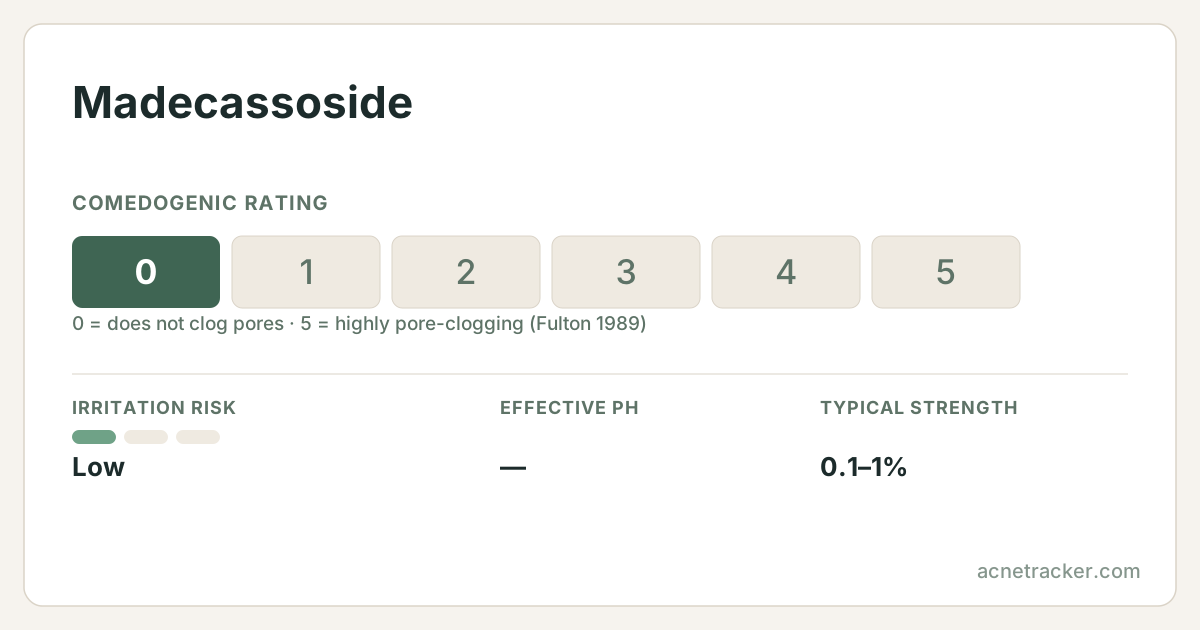
Madecassoside is one of the key active compounds isolated from Centella asiatica, the plant behind the wildly popular cica trend. Where a whole Centella extract is a mix of many molecules, madecassoside is a single, well-characterized component prized for its soothing and repair-supporting properties. It has become a staple in products designed to rescue stressed, red and over-exfoliated skin. For acne-prone users navigating retinoids and acids, it offers targeted calm and barrier support with a rating of 0 and very low irritation risk, making it suitable even for the most reactive skin.
Quick facts
- Comedogenic rating
- our estimate — not measured
- Irritation risk
- Low
- Effective pH
- —
- Typical strength
- 0.1–1%
- Pregnancy
- Considered safe
- Suits skin types
- oilydrycombinationsensitivenormalacne-pronemature
Where this number comes from
No one has published a comedogenic rating for this ingredient. Fulton's 1989 table tested about 250 raw materials and this was not among them, and we found no later study measuring it. The figure shown is our own reasoning from the ingredient's chemistry and how it is used — treat it as an estimate, not a measurement.
Fulton read his own scale as 0-1 not significant, 2-3 borderline, 4-5 positive. The assay is the rabbit ear at 10% dilution, which the paper itself calls extremely sensitive and not fully predictive of human skin. Ratings describe the raw ingredient; concentration and formulation change real-world behaviour.
Caution profile
The four published fields on this page, on one 0–5 scale. Further from the centre means more care is needed — never that the ingredient is worse.
Derived, not measured: pore-clogging is the published comedogenic rating; irritation maps low/moderate/high to 1/3/5; pregnancy maps safe/caution/avoid to 0/3/5; skin-type limits is how many of the seven skin types this entry does NOT list. Every input is printed in words in the quick-facts card above.
Show the numbers
| Metric | 0–5 | Published field |
|---|---|---|
| Pore-clogging | 0 | 0/5 |
| Irritation | 1 | Low |
| Skin-type limits | 0 | 7/7 |
| Pregnancy | 0 | Considered safe |
Working pH and typical strength
Where this ingredient is formulated to sit, and at what concentration.
Both bars come from the fields above: the pH window and the typical strength range published for this ingredient. The tinted column is healthy skin's surface pH (about 4.7–5.75).
Show the numbers
| Metric | 0–5 |
|---|---|
| Typical strength | 0.1–1% |
What is it?
Madecassoside is a triterpenoid saponin, one of a family of active compounds in Centella asiatica that also includes madecassic acid, asiaticoside and asiatic acid — together often called the cica actives. Traditionally the plant has been used to support skin recovery, and modern research on Centella derivatives points to soothing, antioxidant and collagen-supporting activity. Madecassoside specifically is studied for calming inflammation and helping the skin barrier repair itself after damage. Because it is purified rather than a crude extract, its behavior is more predictable and its irritation potential is low, which is why formulators favor it in gentle, barrier-focused products.
Benefits
Calms inflammation and redness
Madecassoside's most valued action is soothing: it helps quiet the redness and irritation of stressed, sensitized or breakout-prone skin.
Supports barrier repair
It aids the skin's natural recovery process, helping a damaged or over-exfoliated barrier rebuild and feel less reactive over time.
Antioxidant defense
As a plant-derived antioxidant, it helps protect the skin surface from the oxidative stress that contributes to dullness and premature aging.
Comforts sensitized skin
Its gentle, non-acidic nature makes it ideal for cushioning strong actives, easing the sting and tightness that acne routines often bring.
How to use
Madecassoside appears in serums, essences, moisturizers and soothing masks. Apply it after cleansing, on its own or layered with other calming and hydrating ingredients, and seal with a moisturizer. It is especially useful in the evening to settle skin after exfoliating acids or retinol, and it can be used morning and night. Because it is soothing rather than active, there is no adjustment period and no conflict with other ingredients — reach for it whenever your skin feels irritated, tight or over-treated.
Side effects
Madecassoside is very well tolerated and side effects are rare. Some people are sensitive to Centella-based products in general, and reactions, when they occur, are usually to other components of a whole extract or to added fragrance rather than to purified madecassoside itself. As always, patch test a new product if your skin is highly reactive.
Who should avoid it
There is no group that specifically needs to avoid madecassoside. Anyone who has reacted to Centella (cica) products before should check whether the trigger was the extract or an accompanying fragrance and patch test carefully. Otherwise it suits all skin types, including sensitive and acne-prone skin.
Pairs well with
Frequently asked questions
What is the difference between madecassoside and Centella asiatica?
Centella asiatica is the whole plant extract; madecassoside is one purified active compound from it. The isolated form is more predictable and gentle than a crude extract.
Is madecassoside good for acne?
It does not treat acne directly but is excellent for calming the redness, irritation and barrier stress that come with acne and its treatments, making the whole routine more tolerable.
Can I use madecassoside with retinol?
Yes, and it is a great pairing. Its soothing and barrier-repair action offsets the dryness and irritation retinol can cause, improving comfort and tolerance.
Does madecassoside clog pores?
No. It has a comedogenic rating of 0 and is a lightweight, oil-free active, so it soothes acne-prone skin without contributing to clogged pores.
Is madecassoside safe during pregnancy?
Topical madecassoside is generally considered low risk and is widely used in gentle products. As with any active during pregnancy, confirm with your doctor for your situation.
Where this ingredient shows up here
Counted across this database, not the web — these are the pages on this site that reason about this ingredient.
Buying guides 7
- How to Choose a Micellar Water for a Damaged Skin Barrier
- How to Choose a Moisturizer for Redness-Prone Skin
- How to Choose a Moisturizer for Rosacea-Prone Skin
- How to Choose a Night Cream for a Damaged Skin Barrier
- How to Choose a Toner for Redness
- How to Choose a Toner for Rosacea
+1 more on the site
Sources & further reading
Medical disclaimer
Find your personal acne triggers
Our free Acne Tracker lets you log breakouts, sleep, stress and diet, and shows you which factors correlate with your flare-ups.