How to Choose a Face Mask for Rosacea
Rosacea is a chronic inflammatory condition of the facial skin and its blood vessels, and it needs saying plainly at the top: no cosmetic mask treats it. The treatments with evidence behind them are prescriptions — topical metronidazole, ivermectin, azelaic acid, brimonidine, oral options and vascular laser — and they are prescribed by a doctor who has confirmed the diagnosis, because rosacea is easily mistaken for seborrhoeic dermatitis, acne, lupus and contact dermatitis. What a mask can do is avoid making things worse and provide some comfort. That is a low ceiling, and in a category where most products are built around sensation and botanicals, clearing it is harder than it sounds.
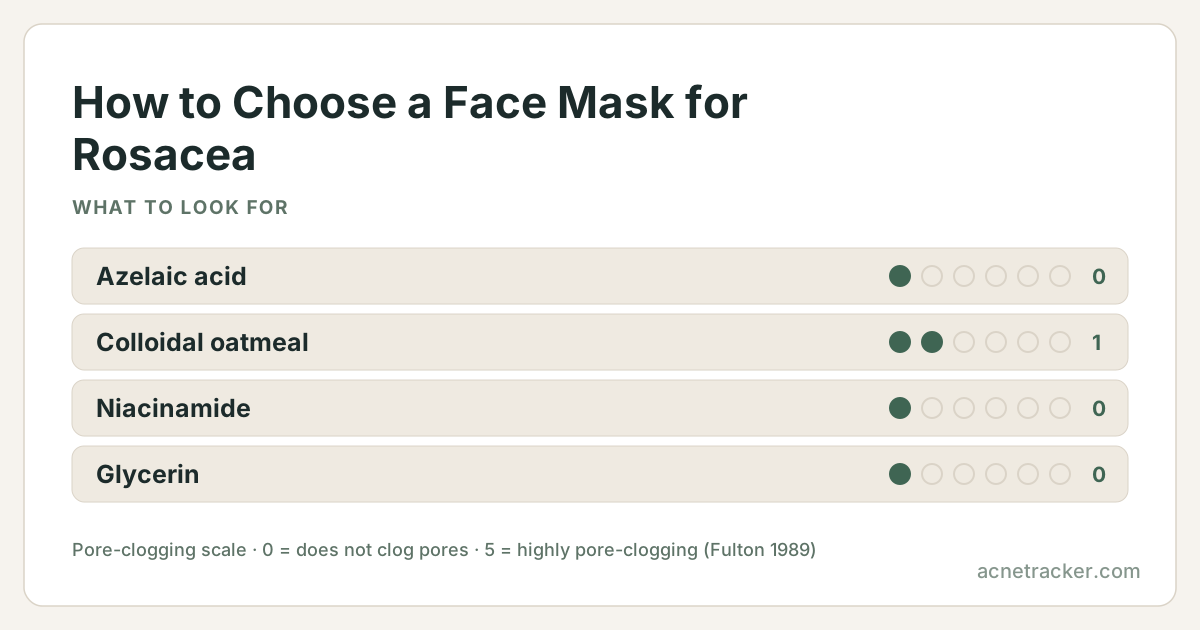
Ingredients to look for
| Ingredient | Why it matters |
|---|---|
| Azelaic acid | The one active on this page with real rosacea evidence, though the trials use daily prescription-strength leave-on gel. If you have it, your dermatologist gave it to you — a mask is not the format. |
| Colloidal oatmeal | Bland, protective and unlikely to provoke. It will not treat rosacea, and comfort without provocation is a genuine contribution here. |
| Niacinamide | Generally well tolerated and supports barrier function, which matters because rosacea-affected skin has measurably impaired barrier. A minority find it flushing — introduce it slowly. |
| Glycerin | Hydration with no mechanism that can misfire. The most valuable property any rosacea product can have is being boring, and glycerin is exemplary. |
| Allantoin | Soothing, fragrance-free and unreactive. Nothing about it is impressive, which is exactly why it belongs in a mask for skin that reacts to impressive things. |
Ingredients to avoid
| Ingredient | Why it matters |
|---|---|
| Heat in any form — warming masks, steam, hot towels | Heat is one of the best-documented rosacea triggers there is. A self-heating mask is a flush delivered on purpose, and steam before masking is the same mistake with better PR. |
| Menthol, camphor, peppermint and witch hazel | All four appear in 'soothing' and 'anti-redness' formulas, and all four are recognised rosacea triggers. The category's marketing and the condition's triggers overlap almost perfectly. |
| Fragrance and essential oils | Among the commonest triggers reported by patients, and a mask is the format that pushes the most of them into the skin. Fragrance-free is not a preference here. |
| Clay masks and physical scrubs | Rosacea-affected skin has a compromised barrier already. Stripping lipids and abrading the surface makes it more permeable to everything that triggers you. |
| Alcohol-based astringent masks | Denatured alcohol high in a formula both dries and irritates, and irritation is the engine of a flare. This includes many products sold specifically for redness. |
How to choose
The honest advice is to be sceptical of the whole category and treat any mask as a comfort measure that has to earn its place by not causing a flare. If you want one, choose a bland, fragrance-free cream or gel mask with a short ingredient list, and understand that you are buying twenty minutes of pleasant hydration rather than any effect on the disease. Read the ingredient list against your own trigger list, not against the marketing, because the words 'calming', 'soothing' and 'anti-redness' have no regulated meaning and appear routinely on formulas containing menthol or witch hazel. Introduce one product at a time with a week between, since a flare with three new suspects teaches you nothing. Patch test behind the jaw for the full wear time and wait two days. Skip masking entirely while you are actively flaring — skin mid-flare is more permeable and more reactive, and this is the moment a tolerated product stops being tolerated. Most importantly, do not let the aisle substitute for the appointment. Rosacea is progressive in some people: untreated, it can advance from flushing to persistent redness and visible vessels, and the ocular form can threaten the eye. If you have facial flushing, persistent central redness, visible vessels, bumps without blackheads, or gritty and irritated eyes, see a doctor. Effective treatment exists, it is prescription-only, and a mask is not a step on the way to it.
How to apply
Only on calm skin, never mid-flare. Lukewarm or cool water — never hot, and no steam. Apply with fingertips in a thin layer, no massage, no cloths, no brushes: friction is a trigger of its own. Keep the sitting short, ten minutes rather than twenty, and rinse at the first hint of warmth or sting rather than waiting for it to pass. Follow with your usual moisturiser and never mask on the same day you start or adjust a prescription. If a mask flares you once, it is not a tolerance to build — it is a product to stop.
Frequently asked questions
Can a face mask treat rosacea?
No. Rosacea is a medical condition and the treatments with evidence are prescription topicals, oral medication and vascular laser. A well-chosen mask can be comfortable and avoid provoking a flare, which is worth having and is not treatment.
Are clay masks safe with rosacea?
Generally not advisable. Clay removes surface lipids, and rosacea-affected skin already has a measurably impaired barrier — a more permeable barrier lets more triggers in. If you have an oily nose alongside rosacea, keep clay strictly to that spot.
Why do 'anti-redness' masks make my rosacea worse?
Because the category's favourite ingredients and the condition's classic triggers are largely the same list: menthol, camphor, witch hazel, essential oils and warming bases. The cooling sensation is an irritant response, and irritation drives flares.
Is steaming before a mask bad for rosacea?
Yes, and it is worth avoiding entirely. Heat is among the most consistently reported rosacea triggers, and steam delivers it directly to the affected area. It also does not open pores, so there is no benefit on the other side of the ledger.
When should I see a doctor about facial redness?
If redness across your nose and cheeks persists rather than coming and going, if you see fine visible vessels, if you get bumps and pustules without blackheads, or if your eyes feel gritty and irritated. Those patterns need a diagnosis, and rosacea can progress untreated.
Sources & further reading
There is no single study of this exact question. The guidance here is reasoned from the ingredient profiles below, each of which carries its own references:
- Azelaic Acid3 refs
- Colloidal Oatmeal2 refs
- Niacinamide2 refs
- Glycerin3 refs
- Allantoin3 refs
Show every reference behind this page (10)
- PubChem — Azelaic acid compound summarycited by Azelaic Acid
- DermNet — Azelaic acidcited by Azelaic Acid
- European Commission CosIng database — Azelaic Acidcited by Azelaic Acid, Niacinamide, Glycerin, Allantoin
- FDA OTC monograph — skin protectant drug products (colloidal oatmeal)cited by Colloidal Oatmeal
- PubMed — Colloidal oatmeal formulations as adjunct treatments in atopic dermatitis (J Drugs Dermatol, 2012)cited by Colloidal Oatmeal
- Niacinamide: mechanisms of action and its topical use in dermatology (PubMed)cited by Niacinamide
- PubChem — Glycerol compound summarycited by Glycerin
- DermNet — Moisturiserscited by Glycerin
- PubChem — Allantoin compound summarycited by Allantoin
- Final report of the safety assessment of allantoin and its related complexes (PubMed)cited by Allantoin
Medical disclaimer
Ingredients mentioned on this page
Find your personal acne triggers
Our free Acne Tracker lets you log breakouts, sleep, stress and diet, and shows you which factors correlate with your flare-ups.